How Does Gold Panning Work?
Gold panning works because gold is much denser than sand, gravel, and most other sediment. Water carries lighter material away while careful shaking and tilting leave heavier gold near the bottom of the pan.
On this page (9 sections)
- What is the basic idea behind gold panning?
- Why does panning for gold work?
- What is a gold pan?
- How do you pan for gold step by step?
- Why is classification important before panning?
- How does water movement separate gold from sediment?
- Where does gold settle in natural water?
- Can you pan for gold at home?
- What should beginners remember about gold panning?
Gold panning works because gold is much denser than ordinary sediment. When water moves through a pan, sand, clay, and small gravel wash away more easily, while gold settles toward the bottom.
The process is simple, but recovery depends on gentle movements. If you move too fast or pour material out carelessly, fine gold can leave with the lighter sediment.
What is the basic idea behind gold panning?
The basic idea is to use gravity and water to sort particles by density. Gold is heavy for its size, so it drops lower in the pan while less-dense material stays suspended or moves toward the rim.
You start with sediment that may contain gold, then add water and break apart the material. Shaking helps the heavy particles settle.
Tilting and washing carry the lighter material away.
This is the meaning behind facts about metal detecting: a straight answer, too: successful prospecting depends on how a target behaves in its surroundings, not just on the tool you use.
Gold panning is different from using a detector. A detector responds to metal signals, while panning separates physical particles.
The ideas can work together when you search an area with both surface clues and recovered material.
Why does panning for gold work?
Panning for gold works because gold is denser than the sediment around it. Density describes how much mass is packed into a given amount of space, so a small gold flake can behave like a heavier particle than a much larger piece of sand.
Water creates the sorting action. When the pan is shaken, heavier material works downward.
When the pan is tilted and washed, lighter particles move across the surface and out of the pan.
Gold is also malleable, so flakes and small pieces can remain in the lower part of the pan instead of breaking apart like some rocks. Still, fine gold can be lost if the water flow is too strong or the pan is overloaded.
Material can also contain black sand and other heavy minerals. Knowing what is ferrous and non ferrous metal: facts to know can help explain why some dark material may respond to a magnet while gold does not behave the same way.
What is a gold pan?
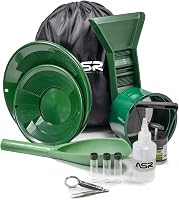
A gold pan is a shallow bowl used to wash and inspect gold-bearing sediment. Its wide shape holds material while water passes over it, and many modern pans use riffles to help trap heavy particles.
The pan should give you enough room to wash material without spilling it. A larger pan can hold more sediment, while a smaller pan may be easier to control for cleanup work.
The SE 14 Inch Gold Panning Pan has dual riffles, including deep ¼ in riffles and micro riffles for finer sediment. Its green plastic body is lightweight, circular, and designed to help make gold flakes easier to see.
Choose this type of pan if you want one main tool for learning the process and working through small batches. Its plastic construction does not rust or corrode, and the pan is designed for hand washing only.
A pan with riffles still needs careful use. Riffles can hold heavy material, but they cannot replace slow shaking, controlled tilting, and regular inspection.
How do you pan for gold step by step?
To pan for gold, classify the material, soak it, shake it, wash away lighter sediment, and inspect the remaining concentrate. Keep enough water in the pan to move material without creating a strong flow.
- Fill the pan with a manageable amount of sediment.
- Submerge the material and break apart clay or compacted soil.
- Shake the pan side to side while keeping it level.
- Tilt the pan slightly and let lighter material wash over the edge.
- Add water as needed and repeat the shaking and washing.
- Slow down when only heavier sand and small particles remain.
- Inspect the bottom and riffles for flakes or nuggets.
The best results come from small batches. Overloading the pan makes it harder to keep the material moving evenly and increases the chance of losing fine gold.
For a more detailed method, follow how to pan gold properly. If you are working beside flowing water, how to gold pan in a river covers the setting-specific choices.
Why is classification important before panning?
Classification removes large rocks, gravel, and debris before the final panning step. Smaller, more even material is easier to wash and gives gold less space to hide among large pieces.
A classifier is a screen placed over the pan or another container. You shovel material into it, shake it, and let smaller particles pass through while larger waste stays above.
The SE Gold Prospecting-Sifting-Panning is a 13.25 in stackable classifier with a 1/12 in stainless steel mesh. Its 0.08 in mesh openings screen out larger gravel, rocks, soil, and debris before panning.
This tool suits prospectors who want more even material and easier cleanup. Its stackable design can nest into a 5-gallon bucket, which helps with transport and storage.
Classification does not prove that a location contains gold. It only improves the consistency of the material you process.
The best gold panning dirt still depends on where the sediment came from and whether local conditions support gold deposition.
How does water movement separate gold from sediment?
Water separates gold from sediment by carrying lighter particles farther than heavier ones. The pan's angle, the amount of water, and the speed of your movements all affect how much material leaves.
Start with gentle water movement while the sediment is packed together. As the material breaks apart, increase the washing action only enough to move the lighter layer toward the rim.
Fast water can remove fine gold along with sand. If the pan empties too quickly, stop, add material back if possible, and slow down the next pass.
A hand pump can help move collected water in a contained setup, but it is not a substitute for the pan itself. The SeaSense Hand Bilge Pump is a manual, self-priming pump for water removal in small boats, kayaks, canoes, bilges, or other places where water collects.
The pump has a plastic construction, a large ergonomic handle, and a removable hose. It may suit home practice or water-related emergencies where manual water removal is useful.
Use it for moving water, not for separating gold. Gold recovery still depends on the pan, the sediment, and controlled washing.
Where does gold settle in natural water?
Gold often settles where water slows down or changes direction. Common places include cracks near bedrock, inside bends, low areas behind obstacles, and spots where a strong current loses energy.
Heavy gold can drop when fast water enters a slower pocket. Floods and changing water levels can also move sediment and expose new material.
Look for natural traps rather than random gravel bars. Pay attention to bedrock cracks, compact layers, and areas where black sand or other heavy minerals collect.
Always follow local access, collecting, and land-use rules. A promising location does not remove the need for permission or safe water practices.
Can you pan for gold at home?
You can pan for gold at home with a tub, water, a gold pan, and suitable practice material. Home panning lets you learn the hand motion without standing in cold or moving water.
Use a container large enough to catch overflow. Start with clean material or pay dirt, then practice classifying, shaking, tilting, and inspecting the pan.
Home practice also helps you learn how fine material behaves. If you want a full indoor setup, see how to pan for gold at home.
You can also explore how to make gold prospecting equipment for simple supporting tools. Keep the setup controlled so sediment does not enter drains or spread across the work area.
What should beginners remember about gold panning?
Beginners should process small amounts, keep the pan level during shaking, and slow down during the final cleanup. Most losses happen when the pan is overloaded, the water moves too fast, or the concentrate is discarded without inspection.
Choose the SE 14 Inch Gold Panning Pan if you need a main pan with dual riffles. Add the SE classifier when large rocks and uneven gravel make washing difficult.
Use the SeaSense pump only when controlled water removal is part of your setup.
The answer to “how does gold panning work” is simple: density puts gold lower, and water carries lighter sediment away. Pick a manageable location, classify the material, and use slow, repeatable movements until you can inspect the final concentrate with confidence.
Frequently asked questions
How does gold panning work?
Gold panning works by using density and water movement. Gold sinks because it is heavier than common sand, gravel, and clay.
As you shake and tilt the pan in water, lighter material washes over the rim while heavier particles settle toward the bottom and behind the riffles.
Why does panning for gold work?
Panning for gold works because gold has a high density and does not float away as easily as lighter sediment. Water carries sand, clay, and small gravel out of the pan when you wash them gently, while gold remains lower in the pan if you keep the material moving carefully.
What is a gold pan used for?
A gold pan is used to wash sediment and separate heavier gold from lighter material. You place gravel, sand, or pay dirt in the pan, add water, break apart clumps, and use repeated shaking and tilting to move waste material away from the gold.
Can you pan for gold at home?
Yes, you can pan for gold at home with a tub, water, a gold pan, and suitable material. Home practice helps you learn the shaking, washing, and inspection steps before working in moving water.
Use a controlled setup that keeps sediment and water contained.