How to Set Sluice Box Angle and Water Flow
Start with a sluice box angle of about 1 inch of drop per foot, then adjust water flow until the riffles clear without washing out gold. Watch the material, not a fixed number, because slope, water depth, and riffle design all change the setup.
On this page (10 sections)
- What is the best sluice box angle?
- How do you set sluice box angle and water flow?
- How can you tell when the angle is too steep?
- How can you tell when the angle is too flat?
- What should beginners use for small-scale setup?
- How does matting affect sluice box angle?
- Can a pump help control sluice box water flow?
- How should you adjust water flow for different material?
- What are the most common sluice setup mistakes?
- How do you choose the right setup?
The best sluice box angle starts at about 1 inch of drop per foot, but the real setting comes from the water pattern. Adjust the angle and flow until material moves steadily, the riffles stay active, and heavy particles have room to settle.
A sluice box separates gold because water carries lighter material away while heavier material drops into riffles, matting, or other traps. If the slope is too steep or the flow is too strong, gold can leave with the tailings.
Before changing the setup, gather the right gold panning equipment. A pan, scoop, classifier, magnet, or small sluice can help you prepare and inspect material before it reaches the recovery area.
What is the best sluice box angle?
Begin with a drop of about 1 inch for every foot of sluice length. For a 3 ft sluice, that means the outlet sits about 3 inches lower than the inlet, measured along the box.
This is a starting point, not a rule that works in every stream. A narrow box with strong water may need less slope, while a wider box with slower water may need more.
Watch the riffles after water enters the box. You want a repeating, active pattern where water moves over each riffle without creating a smooth sheet that carries everything away.
The box should also be level from side to side. If one edge is lower, water may form a fast lane on one side and leave the opposite side with little useful flow.
For background on the separation process, read how does a sluice box work. Understanding where heavy material settles makes it easier to judge changes in angle.
How do you set sluice box angle and water flow?
Set the box securely, start with moderate flow, and test a small amount of material before processing more. Change one variable at a time so you can see what improved or weakened the recovery pattern.
Use this basic sequence:
- Place the sluice in a stable position.
- Level it from side to side.
- Raise the inlet to create about 1 inch of drop per foot.
- Add water until it covers the recovery surface.
- Check the riffles and the material path.
- Run a small sample.
- Adjust the slope or flow based on what you see.
The first sample matters because still water can look correct before material enters. Gravel, clay, black sand, and larger rocks all change how water moves through the box.
If you are new to the process, follow this how to set up a sluice box guide for the full preparation sequence. Pay special attention to supports, inlet water, and the discharge area.
How can you tell when the angle is too steep?
A sluice box angle is too steep when material moves rapidly across the riffles, waves become harsh, or fine particles fail to settle. The box may look active, but speed alone does not mean good recovery.
Lower the inlet slightly and run another small sample. You can also reduce the water flow if the source allows it, but avoid changing both at the same time.
A steep angle can be useful when the box is receiving heavy amounts of gravel, but only if the recovery area still holds dense material. If the riffles wash clean immediately, the setup may be losing the material you want to keep.
Do not judge the result from one large load. Process a small amount, inspect the concentrate, and adjust before continuing.
How can you tell when the angle is too flat?
A sluice box angle is too flat when gravel stops moving, the riffles fill with packed material, or the surface develops dead spots. A slow-looking box can still lose gold if the recovery area becomes clogged.
Raise the inlet a small amount or increase water flow if the source is steady. Remove oversized rocks and break up clay before they enter, because blockage can look like an angle problem.
The goal is steady movement, not the slowest possible water. Light material should travel toward the discharge while the riffles continue to create places where heavy particles can settle.
Longer designs may need different support spacing. A long tom sluice box has more channel length, so check the water pattern across the full recovery area instead of judging only the first section.
What should beginners use for small-scale setup?
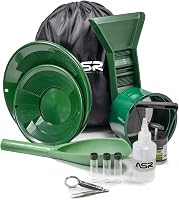
A compact kit can suit beginners who want basic tools for field panning and short test runs. The ASR Outdoor Lightweight Backpack Gold Panning Kit includes 10 in and 12 in dual riffle pans, a brass probe scoop, black sand magnet tool, tweezers, a mini sluice box, a 30 holes/inch sifter, and a drawstring backpack.
Its mini sluice box measures 12 inches and uses TPR rubber with 3 built-in riffle patterns. It is ready to use without tools or assembly, so it can help you compare material flow in a small setup before moving to a longer sluice.
The kit weighs 2 lb and is organized in a black drawstring backpack. Choose it when portability and basic field tools matter more than processing large amounts of material.
A short box gives you less room to correct an uneven flow pattern. Keep it level from side to side, use small test amounts, and inspect the concentrate often.
How does matting affect sluice box angle?
Matting affects how quickly water moves across the recovery surface and how material settles. If the matting traps too much material, a slightly stronger flow may be needed to keep the surface active.
The Sluice Box Rubber V Matting from Sluice Fox uses mini and micro V-trap patterns for fine gold recovery. It is rubber, comes as 1 item, and can be trimmed with scissors to fit an application.
The matting is listed in Mini Black with a 10 x 24 size designation. Its V-trap grooves are intended to hold gold nuggets, flakes, and smaller flour gold particles while water moves lighter material onward.
Check the surface after a short run. If grooves fill with sand or clay, clean the matting and retest rather than increasing the angle until material is forced through.
Read our guide to best sluice box matting before replacing a recovery surface. Match the mat pattern to the material you plan to process and the space inside your box.
Can a pump help control sluice box water flow?
A pump can help when you need a recirculating setup with a more controlled water supply. The Martin Prospecting Gold Mining Fine Gold Recovery Mini Sluice Box Recirculating with 110V Pump includes a valve for adjusting water flow and a 110V submersible pump.
This unit measures 24 x 4.5 inches and weighs 2 lb. It uses a corded electric power source, a NEMA 1-15 connector, automatic operation, and 1 count.
Choose it when adjustable flow and recirculation are more useful than a simple stream setup. The valve gives you a direct way to make small flow changes while keeping the sluice angle steady.
Electrical equipment and water require careful placement. Keep the power connection away from standing water, follow safe operating practices, and do not treat a pump as a substitute for checking the riffle pattern.
For more pump options, see best sluice box pump. The useful comparison is not just flow strength, but whether you can adjust the water smoothly for your box and material.
How should you adjust water flow for different material?
Start with the material you are processing, then adjust flow until it moves without packing or racing through the box. Coarse gravel, clay, black sand, and fine material do not behave the same way.
Break up clay before it enters the sluice. Large clumps can roll over the riffles and carry fine gold away, while packed clay can block matting and create a false impression that the slope is too flat.
Remove heavy magnetic material during cleanup when appropriate. A black sand magnet can help separate magnetic material from a concentrate, but it does not replace careful inspection of the sluice contents.
If you are comparing gold recovery methods with a detector, our guide to what metal does not set off a metal detector explains why some targets need different recovery methods.
What are the most common sluice setup mistakes?
The most common mistakes are guessing the angle, tilting the box sideways, changing several settings at once, and feeding material too quickly. Each mistake makes it harder to connect the water pattern with the recovery result.
Do not set the sluice once and walk away. Check the supports after rocks shift, the water source changes, or the box begins to fill with sediment.
Do not chase a fast, dramatic flow. A useful setup moves light material while preserving stable recovery zones behind riffles and inside the matting.
Do not run a full load before testing. A few shovelfuls can show whether the angle and water flow need correction.
How do you choose the right setup?
Choose a compact kit when you need portable tools and small test runs. Choose replacement V matting when your box needs a flexible fine-gold recovery surface, and choose the recirculating mini sluice when adjustable flow from a 110V pump suits your workspace.
The best sluice box angle is the one that keeps material moving while preserving heavy-particle traps. Start near 1 inch of drop per foot, keep the box level from side to side, and make small changes after each test.
If you are still choosing a box, compare the best sluice box for beginners guide. Then adjust the final sluice box angle and water flow to the actual material, water source, and recovery surface you use.
Frequently asked questions
What is the best sluice box angle?
A practical starting point is about 1 inch of drop per foot of sluice length. Adjust from there until light material moves steadily, the riffles remain visible between waves, and heavy material can settle without being swept away.
The correct angle depends on water flow, material size, and the sluice design.
How do you know if sluice box water flow is too fast?
Water flow is too fast when material skips across the riffles, gold-sized particles move out of the box, or the water forms deep, turbulent waves. Reduce the slope or slow the flow, then run a small test sample.
The riffles should clear enough to keep receiving material without becoming flat and inactive.
Should a sluice box be level from side to side?
Yes, keep the sluice box level from side to side so water spreads across the full recovery area. A sideways tilt can create a fast channel on one edge and a dead zone on the other.
Use stable supports, then check the water pattern before adding pay dirt.
How often should you check sluice box angle?
Check the angle whenever you move the sluice, change the water source, add a pump, or switch to material with a different amount of clay and gravel. Also inspect the riffles after the first few shovels.
Small changes in support height can alter the water pattern enough to affect recovery.