How to Pan for Gold in a River
To gold pan in a river, work from a stable spot, control the current, classify the gravel, and wash lighter material away in small batches. Keep the pan level, protect your concentrate, and check river cracks and inside bends for heavier material.
On this page (9 sections)
- What do you need to gold pan in a river?
- How do you choose a safe river spot?
- How do you manage the current while panning?
- Should you classify river gravel before panning?
- How do you pan for gold in a river step by step?
- Which pan works well for river panning?
- How do you finish a river panning session?
- Can you practice river panning at home first?
- What is the simplest river panning method?
To gold pan in a river, work from a stable spot, control the current, classify the gravel, and wash lighter material away in small batches. Keep the pan level, protect your concentrate, and check river cracks and inside bends for heavier material.
River panning is mostly a water-control problem. A good location lets you move sediment through the pan without standing in unsafe current or allowing valuable material to spill away.
Before going, check land access, local prospecting rules, seasonal closures, and water conditions. Never work beneath an unstable bank, near a strong drop, or in water deep enough to make recovery difficult.
What do you need to gold pan in a river?
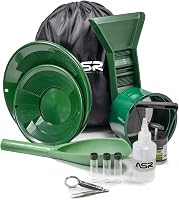
You need a gold pan, a small digging tool, a classifier, a snuffer bottle, and a safe place to process material. Gloves, a bucket, and a vial can make the work easier, but the pan and a controlled water source matter most.
A classifier helps remove large rocks before panning. A small digging tool helps you sample cracks, packed gravel, and layers near bedrock without moving an entire bank.
Our guide to gold panning equipment covers the main tools and how each one fits into a basic setup. If you're new to the motion, review how to pan gold properly before working in moving water.
How do you choose a safe river spot?
Choose slow, shallow water beside a natural trap, not the strongest part of the current. Inside bends, the downstream side of large rocks, exposed bedrock, and low-pressure pockets can collect dense material.
Gold moves with sediment during high flow, then settles where water loses energy. The best-looking spot still needs testing, so take several small samples from different layers and compare the concentrate.
Avoid undercut banks and loose shelves. River edges can collapse without warning, and digging into them can also damage the stream.
Why do inside bends and bedrock matter?
Inside bends slow water as the channel curves, which can allow heavier particles to settle. Bedrock cracks can catch dense material that lighter sand passes over.
Search for packed material rather than loose surface gravel. Use a small tool to clear the top layer and sample the material sitting in cracks or behind natural obstructions.
The best gold crevice tool can help when material is lodged in narrow cracks. Work gently and keep removed material in a pan or bucket so you can process it instead of losing it downstream.
How do you manage the current while panning?
Set the pan in calm water and keep the rim slightly below the surface only when washing. Strong current can push gravel out, disturb your footing, and carry fine gold away before you see it.
Stand with a stable stance and keep your feet clear of loose edges. If the water is too forceful, move toward the bank, find a protected pocket, or carry material to a calmer pool.
A hand pump can help remove pooled water from a small boat, canoe, kayak, or other place where water collects, but it isn't a replacement for safe footing in a river.
The SeaSense Hand Bilge Pump is 27.13 in high, made from plastic, and weighs 1.8 lb. Its manual operation suits situations where you need to move water without a power source, while the removable hose helps with storage.
Use it for water management around your gear or small watercraft, not as a tool for moving river gravel. Keep it out of the panning process unless you have a separate water-removal task.
Should you classify river gravel before panning?
Classify river gravel before panning when the material contains large rocks, sticks, or oversized debris. Screening makes the feed more even and reduces the amount of unnecessary material in the pan.
Place the classifier over a bucket or pan and add small amounts of gravel. Shake it gently, inspect what remains for visible targets, and process the smaller material instead of dumping it back without checking.
The SE Gold Prospecting-Sifting-Panning classifier has a 13.25 in width and a 0.08 in mesh opening. Its stainless steel wire mesh is rust-resistant, and its stackable design can nest into a 5-gallon bucket.
A 1/12 in screen may remove a useful amount of oversized material, but no single mesh suits every target or location. Check the material left in the classifier and pan it if it could contain coarse gold or small nuggets.
How do you pan for gold in a river step by step?
Fill the pan with classified material, submerge it, break up the contents, and wash away lighter sediment with slow controlled movements. Learn more about the gold panning process.
Keep the pan level during the first stages and reduce the load as the concentrate becomes heavier.
- Add a manageable amount of material to the pan.
- Submerge the pan and break apart clay, compacted gravel, and clumps by hand.
- Shake the pan gently from side to side while it stays underwater.
- Tilt the pan slightly and let water carry the light top layer away.
- Add water often, but keep the rim controlled and the material inside.
- Repeat until only a small amount of dark sand and heavy material remains.
- Inspect the concentrate in good light and recover visible gold carefully.
The goal is not to rush the wash. Fast movements can throw heavy particles over the rim, while slow washing gives dense material time to settle behind the riffles.
Which pan works well for river panning?
A good river pan should be large enough for your sample, light enough to carry, and shaped to separate heavy material from sand. Riffles help retain dense particles while water carries lighter sediment away.
The SE 14 Inch Gold Panning Pan is circular, made from plastic, and weighs 3.04 oz. It has dual riffles, including deep 1/4 in riffles and micro riffles, plus a 1/8 in base pan.
The green color can make gold flakes easier to see in bright sunlight, while plastic avoids rust and corrosion. The pan is also lightweight for carrying between river spots and hand wash only for care.
Compare it with the best plastic gold pan if you want more options in plastic designs. A larger pan can process more material, but a smaller pan may be easier to control when the current is awkward or the water is shallow.
How do you finish a river panning session?
Finish by reducing the concentrate slowly, checking the pan and tools, and storing recovered material before leaving the river. Fine gold can remain hidden in black sand, so inspect the final concentrate rather than discarding it quickly.
Move to calm water for the final cleanup. Use small amounts of water, keep the pan tilted only slightly, and stop whenever the concentrate starts moving unpredictably.
A 14 in pan gives you room to work larger samples, while a classifier helps keep oversized debris from slowing the process. For a different pan size, see the best 14-inch gold pan.
Rinse tools away from the main sample area only when local rules allow it. Pack out trash, fill small test holes, and leave stream banks and bedrock as close to their original condition as possible.
Can you practice river panning at home first?
You can practice the hand movements at home with water and clean material before working in a river. Home practice helps you learn how to keep the pan level, tilt it gradually, and control the wash without current adding difficulty.
Use a tub or bucket that can contain the water and sediment. Practice with gravel and sand that you can legally handle, and avoid putting unknown material into household drains.
Our guide to how to pan for gold at home explains a contained setup. If you're deciding whether the hobby is still active, read do people still pan for gold for a broader look at modern prospecting.
What is the simplest river panning method?
The simplest method is to sample safe traps, classify the gravel, pan small batches in calm water, and repeat only where the concentrate shows promise. Don't judge a river from one pan or one attractive bend.
Pick a stable location first. Use the SE classifier when oversized gravel slows your work, then use the SE 14 Inch Gold Panning Pan to wash the smaller feed in controlled stages.
The SeaSense Hand Bilge Pump fits water-removal tasks around small boats and collected water, but it doesn't replace a safe river position. Choose calm water, protect your footing, and keep every final concentrate sample until you have checked it carefully.
Frequently asked questions
Where is the best place to pan for gold in a river?
Look for areas where fast water slows and heavy material can settle, such as inside bends, behind large rocks, below drops, and along exposed bedrock. Test several spots with small samples instead of assuming one location is productive.
Check access rules and avoid digging into unstable banks.
How do you keep river water from washing gold out of a pan?
Use a calm edge, shallow water, or a protected pool instead of standing in the strongest current. Keep the pan level, move material slowly, and support the rim while washing.
If waves or current keep entering the pan, move to a more sheltered position before continuing.
Should you classify material before panning?
Yes, screening out larger rocks and gravel makes panning more controlled and helps you process more material evenly. A classifier with a 1/12-inch mesh can separate oversized debris before the smaller material reaches the gold pan, but test the screen size against the material you expect to recover.
Can you pan for gold in any river?
No. Gold panning depends on local geology, access rights, land ownership, environmental rules, and stream conditions.
Research the river before you go, confirm that prospecting is allowed, and avoid protected areas or private land without permission.