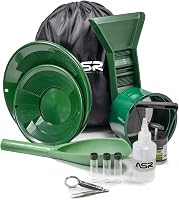
What Is Miners Moss and How Do You Use It?
Miners moss is a ribbed or woven sluice mat that catches fine gold as gravel and water pass over it. Place it under the riffles, run classified material through the sluice, then clean the mat into a pan so you can recover the trapped concentrate.
On this page (7 sections)
- How does miners moss help recover gold?
- How do you set up miners moss in a sluice box?
- How should you run water over miners moss?
- How do you clean miners moss without losing gold?
- How do you pan the miners moss concentrate?
- What mistakes reduce miners moss recovery?
- Is miners moss right for your sluice setup?
Miners moss is sluice box matting that catches fine gold and heavy concentrate while lighter gravel washes downstream. It gives dense particles textured spaces where they can settle instead of leaving with the water.
That texture matters most for material that is too fine, flat, or light in shape to lodge behind riffles alone. Gold often arrives mixed with black sand and very fine sediment, so a second capture surface helps keep it in play.
It is usually used below riffles, which create turbulence and small holding zones. The mat then works as a quieter trap for particles that slip past the riffles or settle after the turbulence eases.
This suits prospectors who run a sluice for fine gold rather than only coarse nuggets. It also suits anyone who wants a removable layer that can be lifted out and washed into a pan for final separation.
The mat does not do the whole job by itself. Water speed, sluice angle, feed size, and cleanout care still decide whether heavy particles stay put or wash through.
Choose it when your setup already moves material steadily and you need better retention of fine heavies. Skip it if your sluice has no stable place for matting or if you cannot clean it over a collection container.
Set the textured side up, keep it flat against the sluice floor, and check the edges often. A mat that lifts, folds, or channels water along one side will lose the benefit it was meant to add.
How does miners moss help recover gold?
Miners moss helps hold fine gold in the spaces of a sluice mat. Water carries lighter sand and gravel across the surface, while gold and other heavy material can settle into the textured backing.
The backing slows heavy particles just enough for them to drop out of the flow. Lighter grains keep moving because the water still has a clear path over the top of the mat.
That difference in behaviour is the whole point of using matting in a sluice. Riffles stir the load and create holding zones, and the mat gives fine heavies another place to stay after that stirring.
The mat is not a replacement for correct water flow. Too much water can wash fine material out, while too little flow can let the sluice fill with mud and reduce its capture ability.
A steady, even flow is easier to judge when you feed classified material slowly. Watch how gravel moves across the riffles and mat, and pause if a thick layer starts to cover the capture surface.
Clay is a common problem because it can coat the texture and make heavies harder to trap. Pausing to clear a packed section protects the mat better than pushing more feed through it.
Your complete gold panning equipment guide can help you plan the pan, classifier, sluice, and cleanup tools around the type of material you expect to process.
Plan the rest of the kit around the mat as well. You need a way to classify feed, a pan for final cleanup, and a container that catches every rinse from the mat.
How do you set up miners moss in a sluice box?
Cut the mat to fit the sluice floor, place the textured side up, and secure it beneath or beside the riffle section. The mat should lie flat, with no large gaps along the sides or at the upstream edge.
Start with a clean sluice box. Remove stones, old sediment, and loose debris from the mat area so the new feed reaches the capture surface instead of building up around it.
A basic setup looks like this:
- Confirm the sluice box is stable and level enough for an even flow.
- Place miners moss under the riffles or in the section designed for matting.
- Keep the textured surface facing the incoming material.
- Secure the mat so water cannot lift or fold it.
- Test the water flow with clean material before adding pay dirt.
- Feed classified material slowly and watch for packing or channeling.
The correct layout depends on your sluice design. Review best sluice box parts if you need to match matting with riffles, expanded metal, or a removable tray.
What size material should go through miners moss?
Feed classified material with large rocks removed so the mat can focus on fine gravel, black sand, and possible gold. Oversized stones can roll across the surface, disturb settled material, and block the spaces that should hold heavy particles.
Classification also makes water flow easier to read. A classifier such as the SE Gold Prospecting-Sifting-Panning has a 13.25 in width and 0.08 in mesh openings for screening material before it reaches the sluice.
Its stackable design can help organize more than one screening stage when the mesh sizes suit your material. The unit is green and made with 304 stainless steel wire, so rinse it after use and let it dry.
Choose a different setup if the 0.08 in openings do not match the gold size or material you are processing. Classification should reduce oversize without screening out the particles you want to recover.
How should you run water over miners moss?
Use a steady flow that moves light material while leaving heavy particles in the capture zone. The best setting depends on the sluice angle, mat texture, feed size, and amount of clay or black sand.
Add material slowly at first. Watch whether gravel moves across the riffles and mat or builds into a thick layer that covers the capture surface.
If the mat packs with clay, pause the feed and clear the blockage. If fine material appears to wash straight through, reduce the feed rate and check the angle and water speed.
A manual pump can help move water in areas without a convenient flow source. The SeaSense Hand Bilge Pump is a self-priming manual pump with a removable 24 in x 36 in hose for water removal in small boats, kayaks, canoes, bilges, or other places water collects.
Its plastic construction is corrosion-resistant, and its ergonomic handle is designed for repeated hand pumping. It weighs 1.8 lb and is one count with the pump and removable hose.
This pump suits a portable water-moving task, not every sluice setup. Check the space around your water source and keep the pump clear of stones and sediment that could interfere with its operation.
For a powered or higher-volume setup, compare best sluice box pumps before choosing how to supply water.
How do you clean miners moss without losing gold?
Remove the mat carefully, wash it over a gold pan or container, and save every rinse. Cleaning is where trapped gold, black sand, and other heavy concentrate leave the mat, so work slowly.
First stop the water flow and remove the riffle or retaining hardware according to your sluice design. Lift the mat without shaking it over the ground.
Place it in a tub, bucket, or pan. Wash from the clean side toward the collection container, working the fibers with your fingers or a soft brush if the mat allows it.
Rinse until loose gravel and visible sediment have left the mat. Keep the muddy water and concentrate together until you finish checking it with a pan.
Avoid blasting the mat with a stream that sends concentrate outside the recovery container. Do not clean it over running water unless you can collect the discharge.
How do you pan the miners moss concentrate?
Pan the collected concentrate in small amounts after the mat is clean. Remove larger stones first, then reduce the material with controlled water and gentle movements.
The SE 14 Inch Gold Panning Pan has deep 1/4 in riffles, micro riffles, a 1/8 in base, and a green plastic body. These features give you separate areas for moving larger sediment and working finer sediment or black sand.
The pan weighs 3.04 oz and has a circular shape with a plastic handle. Its green color can make small yellow flakes easier to see against the pan during final cleanup.
Use only as much concentrate as you can control. Keep the pan low over the water, retain the heavy material near the riffles, and stop often to inspect what remains.
For mat texture and fiber choices, see best sluice box matting. If your target is very fine dust gold, compare best sluice box matting materials for fine gold before replacing the capture surface.
What mistakes reduce miners moss recovery?
The biggest problems are poor classification, excessive feed, uneven flow, and careless cleanout. Each one can reduce the mat's ability to hold heavy particles.
Avoid these common mistakes:
- Feeding large rocks that disturb the mat and riffles.
- Pouring material faster than the water can carry it.
- Letting clay coat the capture surface.
- Allowing the mat to fold or leave open side gaps.
- Changing the sluice angle without checking the flow.
- Removing the mat over bare ground.
- Rinsing concentrate where it cannot be collected.
- Waiting until the mat is fully packed before cleaning.
A clean mat does not guarantee gold recovery. It gives heavy particles a useful capture surface, but the full system still depends on material size, water flow, sluice design, and careful final panning.
Is miners moss right for your sluice setup?
Miners moss is useful when you want a removable capture layer for fine gold and heavy concentrate in a sluice box. Choose a mat that fits the sluice, stays flat, and can be removed without spilling concentrate.
Use a classifier before the sluice, feed slowly, and inspect the mat often. Choose the SeaSense pump when you need manual water removal, the SE classifier when oversize material is the problem, and the SE 14 in pan when you need controlled cleanup.
The simple decision rule is this: match the mat to the sluice, match the mesh to the material, and clean the mat over a pan. That process gives you the best chance of keeping the fine material miners moss was meant to catch.
Frequently asked questions
What is miners moss made for?
Miners moss is made to catch fine gold and heavy minerals inside a sluice box. Its texture slows part of the material flow while water carries lighter gravel away.
Use it with riffles or another matting layer, then remove and wash it into a pan for final separation.
Which side of miners moss faces up?
The textured, open side faces up toward the material and water flow. The backing sits against the sluice box.
Follow the mat's own direction if it has a marked top or bottom, and make sure the surface lies flat without folds that can create escape paths.
How often should you clean miners moss?
Clean miners moss whenever the mat is loaded with black sand, clay, pebbles, or other heavy material, and always at the end of a session. A clogged mat can reduce water flow through its capture spaces.
Shorter cleanout intervals also reduce the chance of losing concentrate.
Can you use miners moss without riffles?
You can place miners moss in a sluice without separate riffles, but the setup may not provide the same drop-and-trap action as a riffled section. The mat still needs steady water flow and a secure fit.
Check your sluice design before choosing matting thickness or layout.