How Does a Sluice Box Work?
A sluice box separates gold from gravel by using flowing water and a recovery surface. Water carries lighter material downstream while riffles and matting slow heavier particles so they can settle and remain in the box.
On this page (11 sections)
- How does a sluice box work?
- What is a sluice box?
- What do riffles and matting do?
- How do water flow and box angle affect recovery?
- How does gravel move through the box?
- What does a sluice box catch?
- Can a sluice box work without a stream?
- How should you choose a sluice box for your work?
- What is the simplest way to understand sluice box gold rush methods?
- More guides on this topic
- What should you remember about how a sluice box works?
A sluice box separates gold from gravel by using flowing water and a recovery surface. Water carries lighter material downstream while riffles and matting slow heavier particles so they can settle and remain in the box.
A sluice is a channel set in moving water, or supplied with recirculated water, so you can process gold-bearing gravel in a steady flow. The box helps sort material, but you still need to feed it carefully and check what it catches.
How does a sluice box work?
A sluice box works by washing gravel over riffles or matting, where the flow can carry lighter material away and leave some heavier particles behind. The recovery surface interrupts the water and creates small pockets where gold may settle.
Gold is dense, but density alone doesn't make every particle stay put. Water speed, the angle of the box, the size of the material, and how quickly you feed gravel all affect whether a particle moves through or settles.
The box's upper end receives gravel and water. Lighter sand and small stones move along the channel, while riffles and textured surfaces slow parts of the flow and collect heavier material in their gaps.
What is a sluice box?
A sluice box is a narrow channel used to separate gold-bearing gravel with moving water. A basic box has side walls and a bottom lined with riffles, matting, or another surface that helps retain particles.
The term “sluice” refers to a channel that directs water. In gold prospecting, the box channels water and gravel across a recovery surface; “sluice box meaning” and “sluice box definition” usually describe this same tool.
Boxes range from short portable units to longer channels. A long tom sluice box is a larger historical style of sluice used to process more material than a small field box.
What do riffles and matting do?
Riffles and matting create sheltered spots that can hold heavy particles as water moves through the channel. Riffles are raised bars or patterns; matting adds a textured layer beneath or around them.
The flow changes around each ridge or groove. Some gravel keeps moving, while heavier particles may settle into the slower water behind a riffle or inside a mat's pattern.
A surface with fine grooves may suit small particles, while a larger riffle pattern can handle coarser material. The Sluice Fox rubber V matting has mini and micro V-trap patterns and can be cut to fit a sluice.
Matting is only one part of recovery. If water runs too fast, or gravel is fed too quickly, fine gold can pass through even when the mat has a fine pattern.
See options for a sluice box for fine gold.
How do water flow and box angle affect recovery?
Water needs enough movement to carry lighter gravel through the box, while allowing heavier particles time to settle. Too much flow can wash particles through; too little can let gravel build up and cover the recovery surface.
A steeper box usually makes water move faster, but the best angle depends on the box and conditions. Use the maker's setup instructions as a starting point, then watch the water and material before changing the angle a little at a time.
The water should move gravel across the surface without creating a deep pile. Keep an eye on the riffles and matting as you work, since a packed surface may no longer separate material well.
For a first setup, use the instructions in our guide to how to set up a sluice box. That guide covers placement and adjustment before you start processing material.
How does gravel move through the box?
Feed gravel gradually at the upper end so water can spread it across the recovery surface. A steady, thin flow of material gives the box room to separate particles as they travel.
Break up clumps and remove oversized rocks that could block the channel. Add material in small batches at first, then adjust the pace only if the water continues to carry the lighter gravel through.
Don't judge recovery by the visible gold alone. Check the material caught in the box and inspect tailings as you learn what the setup retains.
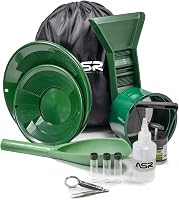
A compact option for field use is the ASR Outdoor kit, which includes a 12 in mini rubber sluice box with 3 built-in riffle patterns, plus pans, a scoop, and other recovery tools.
Its short channel may suit small batches and portable trips. For a larger box or a different recovery surface, compare the best gold sluice boxes.
What does a sluice box catch?
A sluice box can retain gold and other heavy material that settles into its recovery surface, along with black sand and fine gravel. The contents you recover will depend on the material you feed and how your box is set up.
The caught material is often called concentrate. You still need to clean and inspect it to separate gold from other heavy grains.
A sluice doesn't identify gold for you, and it can't guarantee that every particle will stay in the box. Check both the concentrates and the tailings, especially when changing water flow or feed rate.
Can a sluice box work without a stream?
Yes, a sluice can work with recirculated water from a pump and a basin or tub. This lets you process material where a suitable stream isn't available, provided the setup supplies enough water flow.
The Martin Prospecting mini sluice is a recirculating model with a 110V submersible pump and a valve to adjust water flow. Its listed dimensions are 24 x 4.5 in.
A recirculating setup needs a suitable power source and room to manage water and gravel. It may fit bench or home processing better than a streamside box; compare portable sluice boxes with pumps if you need a pump-powered option to carry.
How should you choose a sluice box for your work?
Choose a box by matching its size, recovery surface, and water source to the material and location. A portable box can be easier to carry, while a longer channel may provide more room to process material.
For a starter kit with a small sluice and several tools, the ASR Outdoor set combines a mini box with pans, a scoop, and cleaning tools. If you want to build your own, start with how to make a sluice box.
A mini box can suit short trips or small batches. Compare mini gold sluice boxes if portability and a compact channel are priorities.
Think about how much material you expect to process, whether a stream or pump will supply water, and how easily you can clean the recovery surface. The gold panning equipment guide covers tools that can support a prospecting setup.
What is the simplest way to understand sluice box gold rush methods?
Gold rush prospectors used sluices to process more gravel than a pan could handle by directing water through a lined channel. The basic principle remains the same: moving water carries material across a recovery surface, where some heavier particles can settle.
Historical setups varied in size and design, and modern boxes use a range of riffle and mat patterns. The name “sluice box gold rush” describes this link between the channel and placer mining, where water helps sort material from stream or river deposits.
More guides on this topic
- Best Sluice Boxes for Beginners
- Best Folding Sluice Boxes
- How to 3D Print a Sluice Box
- Best Portable Gold Sluice Boxes
- How to Build a Sluice Box for Kids
- Best Large Sluice Boxes
- How to Choose a Fluid Bed Sluice Box
- How to Build a Recirculating Sluice Box
- Best Plastic Sluice Boxes
What should you remember about how a sluice box works?
A sluice box works when water carries gravel across a recovery surface that slows and retains some heavier particles. The result depends on flow, angle, feed rate, and the box's riffles or matting.
Start with a modest feed, watch the material move, and make small setup changes. Choose a compact box for portability, a longer box for more channel space, or a recirculating model when a pump suits your location.
Frequently asked questions
How does a sluice box separate gold from gravel?
A sluice box uses moving water to carry gravel over a textured recovery surface. Riffles and matting disrupt the flow and create places where heavier gold particles can settle, while lighter sand and gravel continue downstream.
You still need to check and clean the material the box catches.
What is a sluice box?
A sluice box is a channel that directs water and gold-bearing material across riffles, matting, or another recovery surface. The changing water flow helps retain some heavier particles while washing lighter material away.
Its shape, surface, water flow, and feed rate affect how it works.
How fast should water flow through a sluice box?
Water should move material through the box without sweeping the recovery surface clean or letting gravel pile up. The right flow depends on the box, its angle, the material, and the stream.
Follow the box maker's guidance, then adjust gradually while watching how the material travels.
Do sluice boxes catch fine gold?
A sluice box can retain fine gold when its recovery surface and water flow suit the material. Fine-gold patterns such as small V-shaped grooves are designed to catch small particles, but no surface guarantees recovery.
Check concentrates and tailings as you learn how your setup handles local gravel.