Do People Still Pan for Gold?
Yes, people still pan for gold as a recreational hobby. Beginners usually need a pan, a way to classify gravel, a small tool for tight cracks, and permission to collect in the area.
On this page (11 sections)
- Why do people still pan for gold?
- Can you still pan for gold in natural waterways?
- What equipment do beginners need?
- Why should you classify material first?
- What does the basic panning process involve?
- How should you choose a place to pan?
- Is plastic or metal better for a gold pan?
- Can you pan for gold at home?
- Can a hand pump help during a panning trip?
- What are the main trade-offs for beginners?
- So, do people still pan for gold?
Yes, people still pan for gold.
Some people pan in creeks and rivers, while others use legal pay dirt or set up a small practice area at home. Gold panning can be inexpensive to start, but the rules for collecting natural material depend on the land, waterway, claim status, and local authority.
Why do people still pan for gold?
People still pan for gold because the hobby combines outdoor exploring with a simple recovery method. You don't need a motor, battery, or large machine to learn the basic process.
The goal is to wash away lighter sand, soil, and gravel while keeping heavier material in the bottom of the pan. Learn more about the gold panning process.
Gold is dense, so it can remain behind with black sand and other heavy concentrates.
The result is never guaranteed. A good day may produce visible gold, fine color, or no gold at all, depending on the location and the material you process.
Can you still pan for gold in natural waterways?
You can still pan in some natural waterways when local rules allow it. Before collecting, check land access, mining claims, seasonal restrictions, tools allowed, and limits on removing gravel or waterway material.
Public access doesn't always mean mineral collection is allowed. A creek may cross private land, a river may sit inside a protected area, or a claim may control mineral rights.
Keep your work small and low impact. Avoid damaging stream banks, blocking flowing water, disturbing spawning areas, or leaving holes and loose material where another person could trip.
A creek offers a manageable place to learn because shallow water can make the washing motion easier to control. Our guide to how to pan for gold in a creek explains where to position yourself and how to work with moving water.
Rivers can carry stronger current and deeper material. Read how to pan for gold in a river before choosing a riverbank or stepping into water.
What equipment do beginners need?
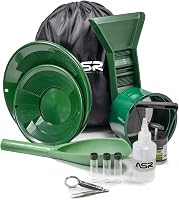
Beginners need a pan, a classifier, and a small tool for removing material from cracks. Add a bucket or container for concentrates, gloves, boots, and a safe way to store any recovered gold.
Start with a plastic pan that has riffles. Riffles give heavier particles places to settle as water and lighter material move across the pan.
A classifier screens out large rocks before you begin washing. This saves space in the pan and helps you focus on smaller material that can contain fine gold.
A crevice tool helps remove packed material from narrow gaps in exposed bedrock. It is useful when gold-bearing material may sit in cracks that a pan cannot reach.
For a wider look at pans, classifiers, tools, and supporting gear, see our guide to gold panning equipment.
SE 14 Inch Gold Panning Pan
The SE 14 Inch Gold Panning Pan gives beginners a large plastic pan with dual riffles. Its deep 1/4 in riffles are intended for larger sediment, while its micro riffles help trap finer sediment and black sand.
The pan has a 1/8 in base, a circular shape, and a green plastic body. It weighs 3.04 oz, so it is easier to carry than a heavier metal pan.
Green can make small gold flakes easier to see in bright conditions. The plastic also won't rust or corrode, and it won't interfere with using a magnet during separation.
Hand wash the pan after use. Choose this size if you want one main pan with room to process material, then learn how to pan gold properly before judging your results.
Why should you classify material first?
Classifying material first removes large rocks and gives your pan a more even load. It also makes each panning cycle easier to control because you are washing smaller pieces instead of a mixed pile of stones, sand, and debris.
Screen material over a bucket or tub so you can inspect what remains. Don't throw away oversize material until you know it contains nothing useful, especially when you are learning what gold-bearing material looks like in your area.
SE Gold Prospecting-Sifting-Panning
The SE Gold Prospecting-Sifting-Panning is a 13.25 in wide stackable classifier with a 1/12 in stainless steel mesh. Its 0.08 in mesh openings screen gravel, rocks, soil, and debris before panning.
The classifier weighs 2.89 oz and has a green body. The stackable design can nest into a 5-gallon bucket and can be stored with other compatible sifting pans.
Its stainless steel wire mesh is rust-resistant. Choose it when you want to reduce oversized material before it reaches your pan, especially during repeated outdoor panning sessions.
What does the basic panning process involve?
The basic process is classify, submerge, mix, wash, and inspect. Work slowly enough to keep the heavy material in the pan while lighter material leaves over the rim.
- Screen the material through a classifier.
- Put a manageable amount into the pan.
- Submerge the pan and break apart clumps.
- Shake and wash gently so lighter material moves out.
- Tilt the pan and use controlled water movement.
- Inspect the remaining concentrate for gold.
The correct motion takes practice. If you tilt too far or move too quickly, you can lose fine material along with the unwanted sediment.
Keep the pan level during the early washing stage. As the load gets smaller, tilt it slightly and use short movements that let water carry away light particles.
Don't rush the last part. Fine gold can be hard to see among black sand and dark concentrate, so inspect the remaining material in good light.
How should you choose a place to pan?
Choose a legal location where heavy material could collect behind natural changes in the stream. Inside bends, exposed bedrock, cracks, and areas behind larger obstructions can hold dense material after high water.
Look for natural traps instead of digging randomly. Changes in water speed can cause heavier particles to settle, but a promising shape does not prove that gold is present.
Stay away from unsafe current, unstable banks, and deep water. You can find a better practice spot without putting yourself in a hazardous position.
Use only tools and methods allowed by the land manager. Some areas restrict digging, motorized equipment, suction devices, or removal of stream material.
For tight cracks, compare options in our guide to the best gold crevice tool. A narrow tool can help remove small amounts of material without turning every target area into a large excavation.
Is plastic or metal better for a gold pan?
Plastic is usually easier for beginners because it is light, does not rust, and makes gold easier to see in a contrasting color. Metal pans can feel different in the hand, but the best choice is the pan you can control steadily.
A plastic pan also works with magnets because the pan material won't interfere with magnet use. That can help when you are separating magnetic black sand from a concentrate.
Size affects handling. A larger pan holds more material but may take more water and wrist control, while a smaller pan can suit limited water or lighter loads.
Compare the features in our guide to the best plastic gold pan before choosing your first pan. If you want more room for material, see the options in our best 14 inch gold pan guide.
Can you pan for gold at home?
You can practice gold panning at home with water, a tub, and legal material that you are allowed to use. Home practice helps you learn how to classify, tilt, wash, and inspect without river current or uneven ground.
Use a container large enough to catch overflow and keep sediment out of drains. Practice with clean gravel or legal pay dirt, and store the remaining concentrate so you can review your technique.
Home panning won't teach you every outdoor condition. Natural water depth, current, bedrock, and stream material feel different from a controlled tub.
Our guide to how to pan for gold at home covers a simple practice setup and ways to control water and cleanup.
Can a hand pump help during a panning trip?
A hand pump is not a gold pan, classifier, or recovery tool. It may still suit a water-related trip when water collects in a small boat, kayak, canoe, or bilge and you need manual water removal.
SeaSense Hand Bilge Pump
The SeaSense Hand Bilge Pump is a self-priming manual pump for water removal in small boats, kayaks, canoes, bilges, or other places where water collects. It includes a removable hose measuring 24 in x 36 in.
The pump has an ergonomic high-impact handle, a removable hose, and a plastic construction described as corrosion-resistant. Its dimensions are 3.5 in L x 3.75 in W x 27.13 in H, and it weighs 1.8 lb.
Choose it only for the water-removal task it is designed for. It can make sense for a panning trip that includes a small boat or canoe, but it does not replace the pan and classifier used to recover gold.
What are the main trade-offs for beginners?
A simple pan teaches the core skill, while a classifier makes repeated processing easier. A crevice tool adds access to narrow cracks, but it is only useful where collecting material is legal and safe.
The SE 14 Inch Gold Panning Pan is the main recovery tool in this group. Its dual riffles, green plastic, and 14 in size suit a beginner who wants one pan for regular practice.
The SE classifier reduces large material before panning. Its 13.25 in width and 1/12 in stainless steel mesh make it the better choice when rocks and debris slow down your washing cycles.
The SeaSense pump solves a different problem. It is relevant to water removal in small boats or similar spaces, not to separating gold from gravel.
So, do people still pan for gold?
The key is to check access rules first, start with a pan and classifier, and treat gold recovery as uncertain.
Choose the SE 14 Inch Gold Panning Pan if you want a main beginner pan. Add the SE classifier when large rocks make processing slow, and use a crevice tool only where the site permits crack work.
Start at home or in a legal creek with a small amount of material. A slow, controlled washing motion will teach you more than buying extra equipment before you understand how the pan behaves.
Frequently asked questions
Do people still pan for gold?
Yes. Recreational gold panning remains a simple outdoor hobby in areas where local rules allow it.
People use a shallow pan to wash lighter gravel away from heavier material, then inspect the remaining concentrate for gold.
Permission, access rules, and collection limits vary by location.
Can you still pan for gold in a river?
You can still pan for gold in some rivers, but access and collection rules depend on the land manager, claim status, local law, and environmental restrictions. Check the rules before digging or removing material, and choose calm water where you can work without entering unsafe current.
What equipment do beginners need for gold panning?
A beginner needs a gold pan, a classifier for screening large rocks, a small crevice tool, and a container for concentrates. Gloves, boots, eye protection, and a clean vial can also help.
Start with simple equipment so you can learn the washing motion before adding more gear.
Is gold panning worth trying?
Gold panning can be worth trying if you enjoy outdoor searching, water work, and learning a slow process. It isn't a guaranteed way to make money.
The main reward for many hobbyists is the activity itself, with any gold found treated as an uncertain result.