How to Use a Dream Mat Sluice
To use a Dream Mat sluice, level it in moving water, set a steady flow, feed classified material slowly, and clean the mat into a pan when you finish. Check the captured material carefully because fine gold can remain in the concentrates.
On this page (11 sections)
- What does a Dream Mat sluice do?
- How do you set up a Dream Mat sluice?
- How do you set water flow?
- Why should you classify material first?
- How do you feed a Dream Mat sluice?
- Can you replace or trim sluice matting?
- How do you clean out a Dream Mat sluice?
- How do you pan the concentrates?
- What mistakes reduce Dream Mat recovery?
- What should you use with a Dream Mat sluice?
- What is the best way to use a Dream Mat sluice?
To use a Dream Mat sluice, level it in moving water, set a steady flow, classify your feed, and add material slowly. When the run ends, remove the mat or concentrates carefully and pan the recovered material so fine gold does not get thrown away.
A Dream Mat sluice works best when you watch the water and the material together. The goal is to let lighter gravel move through while heavier material settles into the mat's trapping pattern.
Before you begin, gather the rest of your gold panning equipment, including a pan, classifier, shovel or scoop, and a container for concentrates.
What does a Dream Mat sluice do?
A Dream Mat sluice separates heavy material from lighter gravel as water moves through a channel. Its mat pattern creates areas where dense material can settle while the current carries away material that is easier to move.
The sluice does not replace careful feed control. Too much material at once can cover the trapping areas, while weak or uneven flow can leave gravel sitting on the mat.
If you want the basic separation principle first, read how a sluice box works. That explanation also helps when you compare a Dream Mat setup with other sluice designs.
How do you set up a Dream Mat sluice?
Place the sluice in a stable section of current, level it from side to side, and give it enough slope for material to travel. Clear rocks and sticks from under the sluice so the tray does not twist or shift during the run.
Set the lower end where water can leave freely. The water should carry lighter material away without surging over the sides or stopping inside the channel.
Check the mat before adding pay dirt. Remove leaves, gravel, and other debris that could block the pattern, then run clean water through the sluice for a moment.
A beginner may want to compare this setup with a best sluice box for beginners guide. Different tray shapes and mat patterns change how much water and feed the setup can handle.
How do you set water flow?
Start with a moderate, steady flow and adjust it while watching the mat. Water should move across the surface without flattening every visible trapping area or leaving heavy gravel motionless.
Use the first material as a flow test. Add a small amount of classified gravel, then watch whether lighter pieces move away and heavier pieces settle.
Increase flow if material builds up across the sluice or refuses to travel. Reduce flow if the material races through the channel or the water begins to carry too much heavy material away.
The right setting depends on water depth, slope, material size, and the amount of clay in the feed. Make small changes instead of changing several parts of the setup at once.
Why should you classify material first?
Classification removes oversized rocks and makes the feed more even. A consistent feed gives the sluice a better chance to separate heavy material from lighter gravel.
Break up clay before it reaches the sluice. Clay can hold fine gold inside lumps, and large sticky pieces can cover the mat before they break apart.
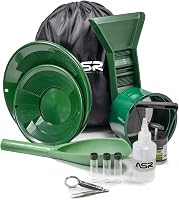
The ASR Outdoor Lightweight Backpack Gold Panning Kit includes a 30 holes/inch sifter, along with 10 inch and 12 inch dual riffle pans, a brass probe scoop, a black sand magnet tool, tweezers, a mini sluice box, and a drawstring backpack.
Its 12 inch mini sluice box is made from TPR rubber and has 3 built-in riffle patterns. The kit weighs 2 pounds, so it suits prospectors who want several basic tools together for a portable outing.
Use the classifier before the Dream Mat sluice, not after oversized rocks have already entered the channel. Keep the classified material close to the water so you can feed it in small portions.
How do you feed a Dream Mat sluice?
Feed a small handful at a time into the active water flow. Let each portion spread across the sluice before adding more, and pause if the mat becomes covered.
Place material near the upper part of the tray where water can distribute it. Avoid dumping a full shovel load into one spot because it can bury the trapping pattern and change the flow.
Watch for heavy black sand and other dense material settling in the mat. The visible pattern is a guide, not proof that every heavy particle has been recovered.
If gravel contains large amounts of magnetic black sand, remove some during later cleanup with a suitable magnet tool. Keep the recovered material because gold can remain mixed with it.
Can you replace or trim sluice matting?
You can use replacement matting when it fits the sluice and leaves no open path for water to bypass the trapping surface. Measure the tray before cutting, and keep the mat flat and secure.
The Sluice Box Rubber V Matting; Gold Sluice mat for fine Gold Recovery Set has a mini black rubber V-trap pattern and a 10x24 size. It is flexible, and its design can be trimmed with scissors to fit an application.
Use the mat's grooves as a reason to control flow and feed, not as a promise of a fixed recovery rate. Clean it after each run so packed material does not interfere with the next session.
The mat is one part of the system. Leveling, classification, water speed, and careful cleanup still control what you recover.
How do you clean out a Dream Mat sluice?
Stop feeding material, move the sluice to a safe cleanup area, and recover the concentrates into a pan or container. Keep the mat supported so trapped material does not spill onto the ground.
Turn off or divert the water according to your sluice setup. Rinse the mat gently over a pan, working from the upper end toward the lower end so the concentrates collect in one place.
Inspect the mat's grooves, corners, and lower end. Use clean water to release material that remains packed in the pattern, then transfer every rinse to the same container.
The Martin Prospecting Gold Mining Fine Gold Recovery Mini Sluice Box Recirculating with 110V Pump has a plastic body, a 110V submersible pump, and a valve for adjusting water flow. It measures 24 x 4 1/2 inches and weighs 2 pounds.
Its corded electric power source and NEMA 1-15 connector make it a choice for a suitable 110V recirculating setup. Keep electrical equipment away from standing water except as directed for the intended arrangement.
After rinsing the mat, pan the concentrates slowly. Use several gentle wash steps instead of rushing the final separation, and keep every tailing until you are satisfied with the cleanup.
How do you pan the concentrates?
Pan the concentrates in small amounts and remove light material gradually. Heavy black sand and other dense material may remain with the gold, so avoid aggressive swirling that can carry fine particles away.
Start with enough water to move the light material without washing the entire pan. Work around the edges, pause often, and inspect the remaining material in good light.
A magnifying tool can help you inspect small particles. The ASR kit includes magnifying tweezers, plus a black sand magnet tool and cleaning and storage equipment.
Do not discard tailings until you have checked them. If the material is difficult to separate, save it in a labeled container and return to it with a clean pan and fresh water.
What mistakes reduce Dream Mat recovery?
The most common problems are poor leveling, too much feed, unsuitable flow, and careless cleanup. Each one can hide or move heavy material before you have a chance to inspect it.
Avoid these habits:
- Feeding unclassified rocks into a small sluice.
- Adding material faster than the water can clear it.
- Letting clay enter without breaking it apart.
- Changing slope and water flow at the same time.
- Cleaning the mat over bare ground.
- Throwing away concentrates or tailings before panning them.
A long, narrow setup may handle material differently from a compact tray. If you are comparing layouts, read about a long tom sluice box and consider how its length changes your water and feed routine.
For travel, a best folding sluice box guide can help you compare portable designs. Portability does not remove the need to level the sluice at the site.
What should you use with a Dream Mat sluice?
Use a classifier before the sluice, a pan for concentrates, and a secure container for recovered material. A replacement mat can help when the original surface is worn, damaged, or unsuitable for the tray.
A best gold classifier for 5 gallon bucket guide can help you choose a screen size for your feed routine. Match the classifier to the material you plan to process rather than choosing by bucket size alone.
For broader comparisons, see the guide to best gold sluice boxes. If you are considering a different traditional trapping surface, learn what miners moss is before fitting it into a sluice.
What is the best way to use a Dream Mat sluice?
Choose a stable location, level the sluice, set a steady flow, classify the material, and feed slowly. Clean the trapping surface into a pan, then work through the concentrates and keep the tailings until you have checked them.
The ASR Outdoor kit suits a portable field setup with a classifier, pans, mini sluice box, and cleanup tools. The Sluice Fox matting suits a sluice that needs flexible, trimmable V-pattern matting, while the Martin Prospecting unit suits a 110V recirculating arrangement with an adjustable valve.
The best choice depends on your setup, water source, feed size, and cleanup plan. If you control those four parts, you give the sluice a better chance to retain fine material and make the final panning step manageable.
Frequently asked questions
How fast should water flow through a Dream Mat sluice?
Use a steady flow that carries lighter material across the mat while heavier material settles into the trapping pattern. The correct speed depends on the sluice and water conditions, so begin gently, watch the material move, and adjust until the riffles clear without washing everything through.
Do you classify material before using a Dream Mat sluice?
Yes, classification removes larger rocks before they enter the sluice. Screen material to a consistent size that suits your setup, then feed small amounts into the active water flow.
Smaller, even-sized feed is easier to watch and helps prevent the mat from packing with oversize material.
How often should you clean out a Dream Mat sluice?
Clean the mat when the trapping areas become crowded, when the water flow changes, or when you finish the run. A short cleanout during a long session can prevent concentrates from blocking the mat.
Always pan the recovered material instead of discarding it.
Can you use replacement matting in a sluice?
Yes, replacement matting can suit a sluice when its size and pattern match the tray. Sluice Fox rubber V matting is flexible and can be cut with scissors to fit an application.
Measure the space first and secure the material so water cannot bypass it.