What Is a Gold Panning Classifier?
A gold panning classifier is a screen that separates larger rocks from smaller gravel, sand, and gold-bearing material before panning. Screening makes each pan easier to work and helps you focus on material that can pass through the recovery process.
On this page (10 sections)
- What Is a Gold Panning Classifier?
- How does a gold panning classifier work?
- Why does screening gravel improve gold recovery?
- What does classifier mesh size mean?
- How do you use a gold panning classifier?
- Which classifier should a beginner choose?
- What is a classifier for a 5-gallon bucket?
- Can a classifier be used with a sluice box?
- What should you do with the material after screening?
- Is a classifier worth adding to your gold panning kit?
What Is a Gold Panning Classifier?
A gold panning classifier is a mesh screen that removes oversized rocks before you pan. The smaller gravel, sand, and possible gold-bearing material pass through the openings, giving you a more even load to wash.
A classifier does not find gold by itself. It prepares creek gravel, dry material, or other pay dirt for a pan, sluice box, or another recovery tool.
How does a gold panning classifier work?
A classifier works by sorting material by particle size. You place gravel in the screen, shake it by hand, or wash it with water, and pieces smaller than the mesh openings fall through.
Large rocks stay in the classifier. You can inspect them, remove them, or set them aside without carrying them through every panning step.
This matters because a pan works best when it contains material that can move and settle. Large stones can block smaller particles, reduce room for swirling, and make it harder to see what remains.
The same principle applies to a gold panning equipment setup that includes pans, buckets, sluices, recovery tools, and storage containers.
Why does screening gravel improve gold recovery?
Screening improves the panning process by removing material that takes up space without helping the next step. It lets you process a more consistent mix of gravel, sand, and possible gold.
A screen can help in several ways:
- It reduces the amount of large rock in each pan.
- It makes the material easier to wash and swirl.
- It helps you process more small material in an organized way.
- It makes results easier to compare between batches.
- It can reduce hand fatigue during a long session.
Screening does not guarantee better recovery. Gold can be trapped in clay, attached to larger material, or lost through careless handling, so inspect oversize rocks when the location or material gives you a reason to do so.
What does classifier mesh size mean?
Mesh size describes the size of the openings that material must pass through. A smaller opening holds back more particles, while a larger opening lets more gravel drop through.
A 1/8 in classifier is useful when you want to remove larger pieces while keeping relatively small material for panning. A 3/8 in classifier works faster with coarse gravel but allows larger pieces to pass into the pan.
There is no single best size for every site. Choose based on the gravel, the gold size you are trying to recover, and whether you want speed or finer screening.
The guide to what is best metal classifier for gold compares the main choices by use.
Should you use more than one classifier?
Using two mesh sizes can help when the material ranges from large cobbles to fine sand. Start with a larger opening to remove coarse rocks, then run the remaining material through a smaller screen.
This staged approach can reduce clogging and make the final panning load more uniform. It also gives you a way to match the screen to each part of the material instead of forcing one mesh size to handle everything.
How do you use a gold panning classifier?
Place the classifier over a bucket or tub, add a manageable amount of gravel, and shake or wash it until smaller material passes through. Work in batches instead of filling the screen so high that material spills over the sides.
A basic process is:
- Put the classifier over a stable bucket or container.
- Add gravel without overloading the screen.
- Shake the screen or wash the material with water.
- Break apart clay by hand when safe and practical.
- Inspect the retained rocks if they may hold gold.
- Pan the material that passed through the mesh.
Keep the screen stable while washing. If material sits in a thick layer, water may flow around it instead of through it, leaving some smaller particles above the mesh.
For creek work, use the process described in how to pan for gold in a creek, including careful handling of water and loose material.
Which classifier should a beginner choose?
A beginner should choose a classifier that matches the way they plan to process material. A kit can make sense if you also need pans and collection tools, while a standalone screen is better if you already own the rest of your setup.
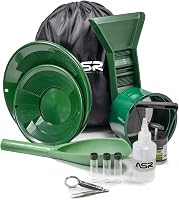
The ASR Outdoor 7pc Beginner Gold Panning Kit includes a 1/8 in classifier screen, 2 dual riffle pans, and collection tools. Its 14 in and 10 in pans fit inside the classifier, and the classifier is designed to stack on a standard 5-gallon bucket.
Choose this type of kit when you want a ready starting point for screening and panning. Its 1/8 in mesh suits readers who want to remove larger overburden before working through the pans or a sluice.
If you already own pans and only need a coarse screen, a standalone classifier may use less space and keep your setup simpler.
What is a classifier for a 5-gallon bucket?
A 5-gallon bucket classifier sits over the bucket opening so screened material can collect below it. This setup gives you a stable container for the material that passes through and can make transport easier.
Measure the bucket opening before buying. A classifier can be described as bucket-compatible while still requiring a particular opening size or setup.
The Stansport Gold Panning Classifier has a 3/8 in mesh opening, a plastic body, and dimensions of 13.25 in by 13.25 in by 3.5 in. It fits into a 5-gallon bucket and allows small gravel, sand, and smaller gold pieces to pass through.
Its 3/8 in mesh is a practical match for coarse material and faster first-stage screening. Choose a finer screen afterward if your process calls for smaller feed.
See best gold classifier for 5 gallon bucket for more bucket-focused options.
Can a classifier be used with a sluice box?
Yes, screening can prepare a more even feed for a sluice box. Smaller, more consistent material can move through the box with less large debris taking up space or interrupting the flow.
The DigNew 18pcs Mini Sluice Box Gold Panning includes a 12 in mini sluice, 2 gold pans, 2 classifier screens, a separating magnet, 3 snuffer bottles, 3 storage vials, 3 pipettes, a paydirt scoop, magnifier tweezers, and a drawstring backpack.
Its aircraft-grade aluminum construction keeps the mini sluice light to carry, while the included classifier screens support the preparation step before sluicing or panning. The kit is hand powered, so your work still depends on steady screening and controlled water use.
If you are deciding whether a sluice fits your plans, read how does a gold dredge work and compare it with best gold sluice box.
What should you do with the material after screening?
Pan the material that passes through the classifier, then inspect the concentrates carefully. Use controlled water and steady movements so heavier material can settle while lighter material leaves the pan.
A classifier only improves the preparation stage. Recovery still depends on how well you break up clay, manage water, remove lighter material, and check the final concentrates.
Keep recovered material separate from different locations or batches. Small vials, snuffer bottles, or other containers can help prevent one sample from becoming mixed with another.
If your setup uses a sluice, learn what is miners moss before choosing how to handle material captured in the recovery mat.
Is a classifier worth adding to your gold panning kit?
A classifier is worth adding when your gravel contains large rocks, mixed sizes, or enough material to make panning slow. It is less necessary for a small amount of already fine material.
Choose a 1/8 in screen when finer screening matters. Choose a 3/8 in screen for faster coarse screening, or use both sizes in stages when the material changes from large gravel to fine sand.
Pick a kit if you also need pans and collection tools. Pick a standalone classifier if your pans and other equipment are already covered.
A gold panning classifier will not replace careful panning, but it can make each pan more manageable. Screen first, keep batches organized, and choose the mesh size that fits the gravel you actually plan to process.
Frequently asked questions
What is a gold panning classifier used for?
A gold panning classifier screens out larger rocks, roots, and other oversize material before you pan. The smaller material passes through the mesh and is easier to wash, inspect, and move through a pan or sluice.
This can reduce clutter and help you process more gravel with less effort.
What mesh size is best for gold panning?
The best mesh size depends on the material and the gold you hope to recover. A 1/8 in screen removes more oversize while keeping finer material, while a 3/8 in screen works faster when the gravel is coarse.
Some prospectors use more than one screen size in stages.
Can a gold classifier fit a 5-gallon bucket?
Some gold classifiers are made to fit a standard 5-gallon bucket, but dimensions and design vary. A bucket-compatible screen can hold material above the bucket while smaller gravel drops through.
Check the classifier size and bucket opening before you rely on that setup.
Do you need a classifier to pan for gold?
No, you can pan without a classifier, especially with small amounts of already fine material. A classifier becomes more useful when gravel contains many large rocks or when you want to process several shovelfuls.
Screening first can make panning more consistent and less tiring.