Can You Pan for Gold Anywhere?
You can't pan for gold anywhere. You need lawful access, permission when required, and a location where recreational gold panning is allowed.
On this page (12 sections)
- Where can you legally pan for gold?
- Can you pan for gold on private property?
- Do mining claims change where you can pan?
- Can you pan for gold in national parks?
- What should you check before a gold-panning trip?
- What tools are suitable for legal hand panning?
- Which gold pan suits a beginner?
- Can a hand pump help while panning?
- How do you avoid trespassing while prospecting?
- What environmental rules affect gold panning?
- Can you keep gold that you find?
- So, can you gold pan anywhere?
You can't pan for gold anywhere. You need lawful access, permission when required, and a location where recreational panning is allowed.
A stream can look open and remote while still crossing private property, an active claim, protected land, or water subject to special rules.
The safest trip starts with land research, not equipment. Confirm who manages the ground, whether someone holds a claim, which methods are allowed, and whether you may remove the material you recover.
Where can you legally pan for gold?
You can pan where the land manager or owner allows recreational prospecting and local rules permit removing small amounts of material. For the broader picture, see whether people still pan for gold.
Possible locations include some public lands, designated recreational mining areas, private property with permission, and certain waterways outside protected zones.
Rules differ by state and land agency. Check the official map and regulations for the exact stream, access road, and parcel rather than relying on a general statement that an area is public.
Some public land allows hand tools but restricts digging, sluices, dredges, motorized equipment, or disturbance of stream banks. Seasonal closures may also protect wildlife, reduce fire risk, or address unsafe conditions.
Can you pan for gold on private property?
You can pan on private property only when the owner gives you permission. Ask before crossing the land, parking, entering the water, digging, or keeping gold.
Written permission helps prevent confusion. Include the area covered, dates, permitted tools, whether guests may come, and who keeps any gold found.
A property owner may not control every right connected to the land. Mineral rights, water access, conservation restrictions, and an existing mining claim can affect what you may do.
Don't treat an unmarked streambank as public access. A public road or river does not automatically give you permission to cross private land or prospect from a private bank.
Do mining claims change where you can pan?
Yes. An active mining claim can limit recreational prospecting, even when the surrounding ground is public.
A claim holder may have rights to explore and develop minerals within the claimed area.
Check current claim information through the relevant land agency before planning a trip. Claim maps can be complex, and a boundary may not be obvious on the ground.
Don't remove material from a claim unless the claimant or land manager clearly allows it. Avoid equipment, trenches, piles, markers, and private roads connected with someone else's operation.
Can you pan for gold in national parks?
Gold panning is often prohibited in national parks because removing rocks, minerals, and other natural materials is restricted. The same caution applies to monuments, wildlife refuges, protected shorelines, and historic sites.
A park may allow visitors to look for gold without collecting it, but that is different from taking concentrates or nuggets home. Check the park's official rules before carrying prospecting equipment to a stream.
State parks and recreation areas also vary. Some allow recreational collecting in limited zones, while others prohibit all removal of natural materials.
What should you check before a gold-panning trip?
Check land ownership, mining claims, access permission, local prospecting rules, water restrictions, and seasonal closures. Save the official information on your phone in case the area has weak service.
Use these questions:
- Who manages the land and stream?
- Is the ground private, claimed, leased, or protected?
- Is hand panning allowed?
- Can you dig or move stream gravel?
- Are sluices, classifiers, pumps, or shovels restricted?
- Can you keep gold and other material?
- Are there seasonal access or wildlife closures?
- Where can you park and cross the property?
Your equipment should match the rules. Read our guide to gold panning equipment before carrying tools into a location with limits.
What tools are suitable for legal hand panning?
A basic legal setup usually starts with a pan and hand tools allowed by the local rules. A classifier can remove larger rocks before you process the finer material, but it may not be allowed everywhere.
The SE Gold Prospecting-Sifting-Panning is a 13.25 in stackable classifier with a 1/12 in stainless steel mesh, suited to screening gravel, rocks, soil, and debris before panning. Its stackable design can help with storage and transport.
A classifier doesn't give you permission to dig or disturb a stream. Use it only where the land manager allows that type of material processing.
For pan technique, see what to look for when gold panning and what is a gold panning classifier.
Which gold pan suits a beginner?
A beginner usually benefits from a lightweight pan with riffles that help retain heavy material during washing. The right pan still depends on the permitted location and the amount of material you can process by hand.
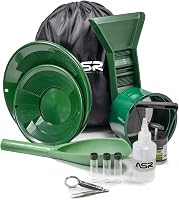
The SE 14 Inch Gold Panning Pan is a green plastic pan with dual riffles, including deep 1/4 in riffles and micro riffles. Its 14 in circular design gives you room to process material while remaining light enough to carry to a creek.
The green color can make gold flakes easier to spot in bright light. Hand wash the pan after use, and keep it free of mud before inspecting concentrates.
Learn the basic process in how to pan for gold in a creek. If a location allows a sluice, compare that method with how to use a Dream Mat sluice.
Can a hand pump help while panning?
A hand pump can help remove collected water from a small boat, kayak, canoe, or another place where water gathers. It isn't a gold-recovery tool, and using any pump in a creek may be restricted.
The SeaSense Hand Bilge Pump is a manual, self-priming pump with a removable 24 in x 36 in hose. Its plastic construction, ergonomic grip, and compact-area reach suit water removal when your approved setup needs a manual pump.
Don't use a pump to disturb a streambed or move water unless the site rules clearly allow it. A tool that is legal for boating may still be inappropriate for prospecting in a protected or restricted waterway.
How do you avoid trespassing while prospecting?
Avoid trespassing by confirming the access route, not just the destination. A public stream may be surrounded by private land, and a trailhead may cross a private road before reaching the water.
Stay on marked routes and use designated parking. Don't cross fences, gates, posted land, or claim boundaries without permission.
If access information is unclear, choose another location. A less productive legal site is better than a promising spot that creates a conflict with an owner, claimant, or land manager.
For trip planning, start with how to prospect for gold. A book can also help you understand local geology and access terms, so compare the best gold prospecting books.
What environmental rules affect gold panning?
Environmental rules may limit digging, bank cutting, sediment movement, vegetation removal, and water diversion. Even simple hand panning can create problems if you leave a hole, damage a bank, or cloud the water.
Work from durable surfaces when permitted. Keep material out of flowing water when washing, fill small holes, replace moved rocks, and pack out trash.
Use a best gold crevice tool only where crevice work is allowed. A narrow tool can reach cracks in exposed bedrock, but it doesn't override rules against collecting or disturbing the site.
Never enter a closed area because the water looks accessible. Wildlife protection, fire danger, restoration work, and public safety can temporarily change access.
Can you keep gold that you find?
You can keep gold only when the land manager, owner, claim holder, and local rules allow collection. Permission to enter does not always mean permission to remove minerals.
Ask specifically about flakes, nuggets, concentrates, rocks, and other material. Some sites allow viewing or casual panning but prohibit taking anything away.
Record the date, location, and permission details for private trips. Follow any reporting, daily limit, or transport rules that apply.
So, can you gold pan anywhere?
No. Choose a site where access, mineral rights, water rules, collection rules, and hand-tool limits all line up.
Public land can be a good starting point, but public does not mean unrestricted.
Pick the SE 14 Inch Gold Panning Pan for a simple hand-panning setup, add the SE classifier when screening is allowed, and use the SeaSense pump only for approved water-removal work. Check the rules again before every trip because access and seasonal conditions can change.
Frequently asked questions
Can you pan for gold on any public land?
No. Public ownership doesn't automatically allow gold panning.
Check the land manager's rules, mining claims, seasonal limits, water protections, and collection rules before entering.
National parks commonly prohibit removing natural materials, while some Bureau of Land Management and national forest areas may allow limited recreational prospecting.
Do you need permission to pan for gold?
You need permission when the ground is private, claimed, leased, or managed under rules that require authorization. Written permission is the safest choice on private property.
Ask who controls the land and stream, what methods are allowed, and whether you may keep material you recover.
Can you pan for gold in a river?
Only where access and prospecting rules allow it. A river may cross private land, a mining claim, a protected area, or a stream with restrictions on digging and sediment disturbance.
Check the landowner, land manager, and local water rules before entering the water.
Is gold panning allowed in national parks?
Gold panning is often prohibited in national parks because removing rocks, minerals, plants, and other natural materials is restricted. Rules vary by site, so check the park's official regulations before carrying a pan to a stream.
Do not assume a public recreation area permits collecting.