Multi Frequency vs Single Frequency Metal Detectors: Which Is Better? (November 2026)
Choose multi frequency for flexibility across targets and ground conditions; choose single frequency for a simpler, focused setup. The right fit depends on where you detect, what you hope to find and how much control you want.
On this page (9 sections)
- Multi frequency vs single metal detectors: what's the difference?
- Which frequency system fits your kind of search?
- When is a single-frequency detector the better choice?
- What do the Vanquish 340 and Equinox 900 offer?
- How does the TK4 compare with these multi-frequency detectors?
- What trade-offs should you weigh before choosing?
- How can you compare detector frequencies without overthinking them?
- How should you set up and care for a detector?
- Which should you choose: multi frequency or single frequency?
Choose multi frequency for flexibility across targets and ground conditions; choose single frequency for a simpler, focused setup. Your next metal detector should match the places you search, what you hope to find and how much control you want over its settings.
Multi-frequency detectors can use more than one frequency at once or, on some models, let you select a single frequency. Single-frequency detectors work around one operating frequency, though the frequency and controls vary by model.
The products here illustrate different levels of choice. The Vanquish 340 uses 5 frequencies at once, while the Equinox 900 adds an option for 6 single frequencies; the TK4 offers 3 detection modes, but its operating frequency isn't specified here.

Multi frequency vs single metal detectors: what's the difference?
A multi-frequency detector works with several frequencies, while a single-frequency detector focuses on one at a time. The key distinction is how the detector processes signals, not a promise that one type always finds more.
A detector sends an electromagnetic signal into the ground and responds to changes caused by metal targets. Frequency describes a part of that signal, and different frequencies can affect how a detector responds to targets and ground.
With simultaneous multi-frequency operation, the detector uses several frequencies together. The Vanquish 340 uses 5 frequencies at once, and the Equinox 900 can do the same through Multi-IQ.
A selectable-frequency model gives you another choice: use several frequencies together or select one frequency for a particular search. The Equinox 900 offers an option for 6 single frequencies as well as simultaneous operation.
A single-frequency detector may make sense when your search routine is consistent and the model's controls suit your needs. The TK4 has all-metal, tone and discrimination modes, but the details don't state its operating frequency, so don't assume it is single-frequency based on those modes.
For a broader look at detector designs, see how to choose a type of metal detector. Frequency is one factor in that decision, alongside the detecting technology and the ground where you'll search.
Does multi frequency mean a detector uses every frequency?
No: the exact options depend on the model. The Vanquish 340 uses 5 frequencies simultaneously, while the Equinox 900 offers that approach plus a choice of 6 single frequencies.
A detector described as multi-frequency might offer simultaneous operation, selectable frequencies, or both. Read the model's controls and modes carefully rather than assuming the label describes every possible setting.
Which frequency system fits your kind of search?
Choose by your regular search locations and target goals, then compare the exact detector's modes and controls. The best fit for a park isn't automatically the best fit for a beach or a field.
If you search several kinds of ground, a multi-frequency model can reduce the need to choose one operating frequency for every outing. The Vanquish 340 pairs simultaneous operation with Park, Field and Beach modes.
The Equinox 900 adds a Gold mode and an option for 6 single frequencies. That range may appeal if you want to learn more settings over time, though extra options are useful only if you expect to use them.
For one familiar location and a consistent target, a simpler detector can be easier to operate. The TK4 provides 3 detection modes and adjustable sensitivity, so a beginner can focus on learning signals and making careful sweeps.
Don't choose by target name alone. Coins, jewelry and relics vary in size and shape, and no frequency system guarantees that a particular target will be found.
Your intended finds and search sites matter, too. Our guide to what you can find with a metal detector covers common targets, while what a metal detector is used for explains the basic uses.
Is multi frequency useful in changing ground?
It can be useful if your routes take you across different ground conditions, but the detector's other settings still matter. Multi-frequency operation doesn't remove the need to choose a suitable mode, manage sensitivity and learn how the detector responds.
For a routine that moves between parks, fields and beaches, the Vanquish 340's three named search modes offer a way to match settings to the location. The Equinox 900 provides those three types of location mode plus Gold.
Check whether the detector's waterproofing matches the part of the search area you plan to enter. The Vanquish 340 has a waterproof coil, while the Equinox 900 is described as submersible to 16 ft; these are different levels of water use.
When is a single-frequency detector the better choice?
A single-frequency detector can be a practical choice when you want a straightforward setup and mostly search similar ground. You don't need a multi-frequency label just to begin learning the hobby.
Simple controls can leave more attention for sweep speed, overlapping passes and careful target recovery. The TK4's all-metal, tone and discrimination modes let you choose how it responds, and its adjustable sensitivity gives you another setting to learn.
Before buying, confirm the model's operating frequency if that detail matters to your decision. The TK4's listed details don't specify it, so its modes alone can't tell you whether it operates at one frequency.
How should beginners compare controls?
Favor controls you can understand and use consistently over a longer feature list. A detector's practical value depends on whether its settings make sense for your search and whether you'll take time to learn them.
The Vanquish 340 emphasizes automatic settings and a turn-on-and-go approach, so you don't need to choose frequencies or ground balance. The Equinox 900 offers more options, including selectable single frequencies, which may take more practice to use well.
For a first detector, write down where you plan to search and what you need to carry. Compare the detector's modes, operating approach and water limits against that list rather than treating a higher number of settings as an automatic advantage.
What do the Vanquish 340 and Equinox 900 offer?
The Vanquish 340 centers on automatic 5-frequency operation, while the Equinox 900 gives you simultaneous multi-frequency plus selectable single frequencies. Both are collapsible MINELAB detectors, but their controls and water use differ.
The Vanquish 340 weighs 2.6 lb and collapses to 30 in. It has 3 search modes, automatic noise canceling and 3 volume settings, with a waterproof coil.
The Equinox 900 weighs 2.8 lb and packs down to 24 in. It has 4 modes, an option for 6 single frequencies, two waterproof coils, wireless headphones included and submersion capability to 16 ft.
That added flexibility comes with more options to understand and use. If you don't expect to select a single frequency or use the Gold mode, the Vanquish 340's simpler operation may be a better match.
For more options in this category, compare our guide to the best multi frequency metal detectors. Check that each model's water limits and controls fit your plans before you choose.
How does the TK4 compare with these multi-frequency detectors?
The TK4 is the simpler mode-based choice here, while the two MINELAB models state their multi-frequency operation. Its product details don't specify an operating frequency, so compare its features without labeling its frequency system.
The TK4 includes an 8 in waterproof coil and 3 detection modes: all-metal, tone and discrimination. It is battery powered and has adjustable sensitivity, making those modes the clearest points to compare with the MINELAB detectors.
A waterproof coil does not mean the whole detector can be submerged. Check the exact water-use instructions before searching in or near water.
If you're deciding between very different detector technologies, review VLF metal detectors vs pulse induction. Frequency system and detector technology are related comparison questions, but they describe different parts of how a detector works.
What trade-offs should you weigh before choosing?
Multi-frequency offers more operating flexibility, while a focused single-frequency setup can keep choices simpler. We compared the listed features against the needs of someone choosing a detector for regular searches.
Our score weighs specs, features and buyer feedback against what you're shopping for.
Think about the effort you want to spend learning settings. Automatic operation can help you get started quickly, while selectable frequencies give you another way to tailor a search once you understand the controls.
Also account for portability and water use. The Vanquish 340 is lighter than the Equinox 900 and collapses to a longer length; the Equinox 900 offers deeper submersion and two coil sizes in its title.
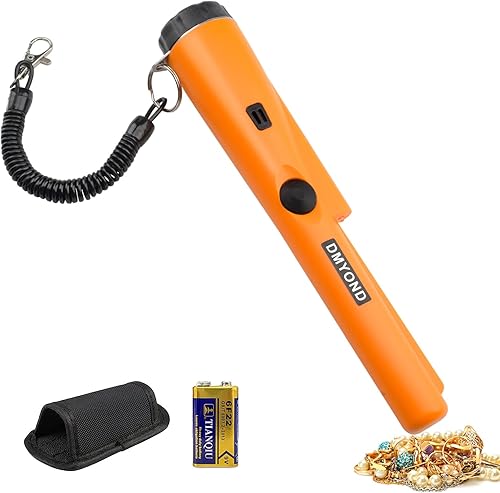
A handheld pinpointer solves a different step. After a coil locates an area, the Dmyond pinpointer's LED and sound alerts help narrow the target; its probe tip is partially waterproof, but the switches and horn aren't waterproof.
How can you compare detector frequencies without overthinking them?
Use a frequency chart as a starting point, then check the exact detector's settings and modes. Frequency figures alone don't account for every part of target response, soil handling or ease of use.
Our metal detector frequency chart can help you understand common frequency choices. Use it to frame questions about your likely targets, then compare full models rather than selecting from a chart alone.
Make a short checklist before you buy:
- Where will you search most often?
- Will you move between parks, fields, beaches or other ground?
- Do you want automatic operation, selectable frequencies or both?
- What water limits does the detector allow?
- How much weight and folded length are comfortable to carry?
A clear answer to those questions can narrow your options faster than chasing the highest frequency count. A detector you can carry, set up and learn is more useful for your routine than one whose extra controls stay unused.
How should you set up and care for a detector?
Follow the detector's manual, learn one mode at a time and keep the coil moving at a steady, overlapping pace. Good habits make it easier to understand signals without mistaking every alert for a valuable find.
Before a search, check the assembly, controls and battery condition. Choose a mode that fits your location, start with manageable settings and practice on known metal objects where searching is allowed.
Sweep the coil close to and parallel with the ground. Move at a steady pace and overlap each pass so you don't leave narrow strips unchecked.
When you hear a signal, sweep over it from another direction before digging. A repeatable response gives you a clearer point to investigate, but it doesn't identify an object with certainty.
Use a pinpointer to narrow the target area after you recover a signal. Keep any digging tool appropriate for the site, and refill holes where required.
After the search, clean the detector as its manual allows and dry parts that got wet. Don't immerse a coil or control unit unless the exact model is designed for that use.
Which should you choose: multi frequency or single frequency?
Choose multi frequency if you want flexibility across several kinds of ground, and choose a simpler detector if you prefer fewer settings for a consistent search. Among these examples, the Vanquish 340 suits automatic simultaneous operation, while the Equinox 900 suits buyers who also want selectable single frequencies.
The TK4 suits a beginner who values 3 detection modes and an 8 in waterproof coil, but confirm its operating frequency if that is essential to your choice. For another model comparison, start with multi-frequency detector options and check each detector against your search locations.
Frequently asked questions
Is a multi-frequency metal detector better than a single-frequency one?
A multi-frequency detector can suit you better when you search across different targets or ground conditions, while a single-frequency model can suit a focused routine. Neither label guarantees better finds.
Compare the exact detector's controls, modes, coil and intended use, then choose for the places you can search.
Can a multi-frequency detector use one frequency at a time?
Some models offer both approaches. The Equinox 900 combines simultaneous multi-frequency operation with an option for 6 single frequencies, while the Vanquish 340 uses 5 frequencies at once.
Check the controls on the exact model, since multi-frequency detectors don't all offer the same choices.
Does operating frequency determine detection depth?
Frequency alone doesn't tell you how deep a detector will find a target. Target size, soil, coil, settings and the detector's design also affect a search.
Use frequency as one part of a model comparison, and avoid treating a frequency chart as a promise of depth.
Is the Bounty Hunter TK4 a multi-frequency detector?
The TK4 product details here describe 3 detection modes and an 8 in waterproof coil, but don't specify its operating frequency. That isn't enough to classify it as multi-frequency or confirm a particular single frequency.
Check exact model documentation if frequency is central to your choice.
What should I buy after choosing a detector?
Start with a pinpointer if you want help narrowing a target after your search coil finds an area. A pinpointer is a close-range locating tool, not a replacement for scanning ground with a detector.
You can also review the rules and conditions for the locations where you plan to search.


