How to Choose a Metal Detector
Choose a metal detector by matching its search modes, waterproofing, target ID and control style to where you hunt and what you want to find. Beginners can start with simple controls, while wet ground, iron trash and small targets may justify more advanced features.
On this page (12 sections)
- What should you decide before choosing a metal detector?
- How do metal detector modes affect your choice?
- How should you choose a search coil?
- How much waterproofing do you need?
- Is target ID or audio more useful?
- How do you choose a detector for iron-heavy ground?
- Which detector suits a beginner?
- Which detector suits an experienced hobbyist?
- Do you need a pinpointer?
- What should you compare before buying?
- How should you set up a new metal detector?
- What is the best way to choose a metal detector?
Choose a metal detector by matching its features to your search location, target type and experience level. Start with a simple detector for parks, yards and dry ground, then look for stronger waterproofing, iron separation, target ID or detailed audio if your hunting conditions require them.
The best choice for one person may be a poor fit for another. A detector for coins in a park does not need the same setup as one used around wet sand, shallow water, iron debris or small gold targets.
This guide explains how to compare detector technology, search coils, controls, waterproofing, audio and useful accessories. We also checked 3 products that cover general beginner use, more detailed all-terrain detecting and close-up target pinpointing.
What should you decide before choosing a metal detector?
Decide where you will hunt and what you want to find before comparing models. Your usual ground and target type determine which features matter most.
Write down your main search locations:
- Parks, lawns and backyards
- Dry beaches and sandy ground
- Wet sand and shallow water
- Forest trails and rocky soil
- Areas with heavy iron or metal trash
- Goldfields or ground with small targets
Then list the targets you care about. Coins and jewelry may call for different choices than relics, iron objects or small gold pieces.
If you want a broad overview, What Can You Find With a Metal Detector? explains how target type affects the search.
Also consider how often you expect to hunt. A detector used for short weekend searches can have a different control and comfort priority than equipment used for long sessions.
How do metal detector modes affect your choice?
Detection modes change how the detector responds to metal targets. All-metal modes give broad responses, while discrimination modes help reduce attention on selected types of unwanted metal.
An all-metal mode is useful when you want to hear responses from many kinds of metal. It can help when you are learning the ground or searching for targets without knowing their likely composition.
A discrimination mode filters some target responses according to the detector's settings. This can make a trash-filled site easier to work, but filtering also creates a trade-off.
A setting that rejects one unwanted target may reduce attention on a valuable item with a similar response.
Tone modes provide audio differences that can help you sort signals while sweeping. Audio feedback becomes more useful as you learn how the detector responds to targets in the places you search.
The Bounty Hunter TK4 Tracker IV offers all-metal, tone and discrimination modes. Its adjustable sensitivity lets you change the detector's response as you learn the site and deal with changing ground.
Its 8 in coil can suit parks, gardens, sandy terrain and shallow water searches where the coil is exposed to damp conditions. The detector is battery powered, weighs 1,270 g and has an LCD display.
The simple mode set gives you a clear place to start. If you expect to spend most of your time separating useful targets from iron debris, compare detectors with more detailed discrimination controls.
How should you choose a search coil?
Choose a search coil by balancing ground coverage, target separation and the places you can physically search. A larger coil may cover more ground per sweep, while a smaller coil can be easier to control around obstacles and closely spaced targets.
Coil size also affects how you work a site. A compact coil can help you move between rocks, roots, posts and other obstacles.
A larger search coil may suit open ground where covering more area matters.
Waterproofing is a separate question from coil size. A waterproof coil may be useful for damp soil or shallow water, but you must check whether the rest of the detector is suitable for immersion.
The TK4 has a waterproof 8 in search coil. That makes the coil suitable for shallow water, damp soil and sandy terrain, but always match your use to the detector's stated protection.
Search technique matters as much as the coil. Keep the coil close to and parallel with the ground, move at a steady speed and overlap each sweep.
Raising the coil at the end of each swing can reduce the area you cover.
How much waterproofing do you need?
Choose waterproofing based on the deepest water you plan to enter, not just whether the word waterproof appears in a title. Dry-ground users may need protection against damp soil, while beach and river users may need a fully submersible detector.
Think about these situations separately:
- Damp grass and wet soil
- Rain during a land hunt
- Dry or wet beach sand
- Shallow water at the edge of a lake
- Detector body entering the water
- Underwater searches below the surface
The Garrett AT Pro is waterproof to 10 ft and fully submersible to that depth. That suits buyers who want an all-terrain detector for wet environments and shallow water treasure hunting.
The Garrett Pro-Pointer AT is submersible to 20 ft. It is a handheld pinpointing tool rather than a replacement for a full-size search detector, but its waterproof design can help during recovery near beaches, rivers and underwater targets.
Do not assume that a waterproof coil makes an entire detector submersible. Check which parts are protected and how the manufacturer defines the depth limit before entering water.
For a closer look at pulse induction equipment, read about PI metal detector advantages and compare that approach with the detector technology suited to your usual ground.
Is target ID or audio more useful?
Target ID gives you a visual clue, while audio can provide a more continuous response as you sweep. The better choice depends on whether you prefer reading a display, listening for changes or using both.
A digital target ID can help you compare signals and make a more informed decision about recovery. It does not guarantee what is in the ground because soil, depth, orientation and nearby metal can affect the response.
Audio features can help you notice signal strength and changes across a target. Proportional audio gives more detail about the response instead of treating every signal as the same simple tone.
The Garrett AT Pro includes digital target ID, proportional audio, tone roll and Iron Audio. It also has 40 levels of iron discrimination, which can help experienced users make more precise choices around iron debris.
The detector includes MS-2 headphones. Headphones can make weak signals easier to hear and reduce surrounding noise, but your comfort and local rules still matter during a long search.
A display is helpful when you want a visual reference. Audio is helpful when you keep your eyes on the coil and ground.
Many buyers prefer a detector that gives both forms of feedback.
How do you choose a detector for iron-heavy ground?
Choose stronger discrimination and target separation when your search area contains many nails, bottle caps or other iron objects. Filtering can reduce wasted digging, but no setting removes the need to investigate uncertain signals.
Iron-heavy ground can produce many responses close together. A detector with fast recovery can help you hear separate targets instead of treating nearby objects as one response.
The Garrett AT Pro is designed around fast recovery, target separation and 40 levels of iron discrimination. Its Iron Audio feature can help you hear iron responses while deciding how to work a difficult site.
You may still want to search some areas in a more open mode. Rejected targets can overlap with useful objects, especially when items are deep, tilted or close together.
Use a slow, controlled sweep in trashy ground. Change your angle over a repeatable signal, then compare the response before deciding whether to dig.
Which detector suits a beginner?
A beginner should usually choose a detector with simple controls, useful basic modes and a coil that fits common search locations. The goal is to learn sweep speed, target responses and recovery technique without managing more settings than you need.
The Bounty Hunter TK4 Tracker IV is the simplest fit of the 3 products here. Its 3 modes, adjustable sensitivity, LCD display and 8 in waterproof coil cover common beginner needs.
The detector is made for adults and kids, and its portable battery-powered design can suit parks, gardens and adventure kits. Its 1,270 g weight is worth considering if a child will use it or if you plan long sessions.
Begin with all-metal mode in a low-trash area. Learn how the detector sounds over known objects before using discrimination to filter unwanted responses.
If you want a wider comparison of general-purpose choices, see our guide to best all around metal detectors.
Which detector suits an experienced hobbyist?
An experienced hobbyist may benefit from more detailed audio, target ID, recovery speed and iron discrimination. These features matter most when you already understand basic sweep technique and want more control over difficult ground.
The Garrett AT Pro is the strongest fit here for advanced control. It combines waterproofing to 10 ft with proportional audio, tone roll, Iron Audio, digital target ID and 40 levels of iron discrimination.
Its features can help when you search wet environments or sites where iron targets are mixed with other metal. The trade-off is a more involved control set that may take longer to learn than the TK4's 3 modes.
Brand choice can also affect your comparison. Use our guide to metal detector companies when you want to compare manufacturers, product ranges and the kinds of features they emphasize.
For a direct brand comparison, read Minelab vs Garrett metal detectors before narrowing your shortlist.
If you already understand basic detector controls, our best intermediate metal detector guide can help you compare the next level of equipment.
Do you need a pinpointer?
A pinpointer is useful when the main detector has already located a target and you need to find its exact position. It can help you search the loose soil in a recovery hole, check the removed plug and locate small objects more precisely.
A handheld pinpointer does not replace a full-size search detector. It works as a second tool during recovery, especially when the target is close to the surface or the hole contains several pieces of loose soil.
The Garrett Pro-Pointer AT has 3 sensitivity levels, fast retune and one-button operation. Fast retune can narrow the detection field or tune out mineralized ground, which may help you isolate a target.
It is orange, making it easier to see around water and soil. The unit includes a woven belt holster and a 9-volt battery.
Its built-in ruler uses inches and centimeters for judging target depth.
The battery has an average life of 60 minutes. Automatic power-off and a lost Pro-Pointer alarm help manage the unit during a search, but you should still turn it off when you finish.
Choose a pinpointer after choosing the main detector. It is most useful when your digging method needs more precision, not as a substitute for a search coil.
What should you compare before buying?
Compare the detector's ground fit, control style, waterproofing, weight and included equipment before making a final choice. A feature matters only when it supports the way you plan to hunt.
Use this checklist:
- Match the detector to your main targets, such as coins, relics, jewelry or small gold.
- Check whether the coil or detector body is waterproof enough for your search area.
- Compare all-metal, tone and discrimination modes.
- Look for target ID, audio detail and iron filtering if your site contains trash.
- Check weight and dimensions against the person who will carry it.
- Confirm the power source and plan for spare batteries if needed.
- Check what is included, such as headphones or a holster.
- Add a pinpointer if accurate recovery is a priority.
- Learn the detector's settings before increasing sensitivity.
- Follow local permission and access rules before searching.
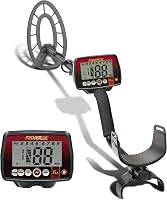
The Fisher F22 and F44 are another pair buyers may compare when choosing between related detector models. Our Fisher F22 vs F44 guide explains which differences matter for that decision.
How should you set up a new metal detector?
Start with the basic settings, learn the detector's response and increase complexity only when you understand the site. A careful setup gives you a better baseline than immediately using maximum sensitivity or heavy discrimination.
Adjust the shaft and coil position so you can sweep without lifting your shoulder or bending your wrist. Keep the coil close to the ground and move it smoothly from side to side.
Begin in an open area with limited metal trash. Test the detector over objects you understand, then compare the sound and display response from different directions.
Increase sensitivity only while the detector remains stable. If the detector becomes noisy, lower the setting and check for nearby metal, electrical interference or mineralized soil.
Use discrimination as a site tool, not a permanent replacement for listening. Search one area with a more open setting if you are worried that filtering may hide an unusual target.
After a wet hunt, follow the detector's care instructions. Rinse or clean only the parts approved for that use, dry the equipment and inspect the coil, cable and controls before storage.
What is the best way to choose a metal detector?
The best way to choose a metal detector is to start with your hunting conditions, then select only the features that solve those conditions. Pick the Bounty Hunter TK4 Tracker IV for a simple general-purpose start, the Garrett AT Pro for detailed all-terrain control, and the Garrett Pro-Pointer AT for precise target recovery.
If you mainly search parks, yards and dry ground, simple modes and comfortable handling may matter more than advanced discrimination. If you hunt wet environments or iron-heavy sites, waterproofing, target separation and audio detail deserve more attention.
Keep the main keyword in mind while comparing: the right answer to how to choose a metal detector is the model that fits your ground, targets and recovery method. Choose features you will use, learn them in a quiet area and adjust your setup as your hunting locations change.
Frequently asked questions
How do I choose a metal detector for a beginner?
Choose a detector with simple controls, an all-metal mode and a search coil suited to your usual ground. A beginner can learn more easily with clear target feedback and adjustable sensitivity.
The Bounty Hunter TK4 Tracker IV uses 3 detection modes and an 8 in waterproof coil for general searching.
What type of metal detector is best for beaches?
Choose a detector with waterproof protection that matches the part of the beach you plan to search. Wet sand, shallow water and underwater hunting place different demands on equipment.
A waterproof coil can help in damp ground, while fully submersible equipment suits searches where the detector will enter water.
Should I buy a metal detector with target ID?
Target ID can help you decide whether to dig, but it should guide your judgment rather than replace it. It is useful when you want to separate likely iron from other targets.
The Garrett AT Pro includes digital target ID and 40 levels of iron discrimination.
Do I need a pinpointer with a metal detector?
A pinpointer is useful when you have located a target but need to narrow its position in the soil or a recovery hole. It can reduce unnecessary digging and help with small targets.
The Garrett Pro-Pointer AT has fast retune, 3 sensitivity levels and a built-in inch and centimeter ruler.
How much should a good metal detector weigh?
A good weight depends on how long you search and how you hold the detector. Compare total weight, control layout and balance rather than choosing by weight alone.
The Bounty Hunter TK4 weighs 1,270 g, while the Garrett AT Pro weighs 1.37 kg.