Gold Cube Banjo Pan Review: Worth It? (November 2026)
The Gold Cube Banjo Pan suits prospectors who want one compact pan for wet, dry, and underwater gold recovery. Its removable vortex matting and drop bottom add cleanup options, while a standard riffled pan may be simpler for basic stream panning.
On this page (7 sections)
- What does the Gold Cube Banjo Pan do?
- Is the Gold Cube Banjo Pan right for your kind of panning?
- How does the Banjo Pan compare with a standard gold pan?
- What are the Banjo Pan’s trade-offs?
- How should you choose a pan size and color?
- How do you use the Banjo Pan and recover fine gold?
- Is the Gold Cube Banjo Pan worth choosing?
The Gold Cube Banjo Pan is a specialized choice for prospectors who want one pan for wet, dry, and underwater recovery. It adds removable vortex matting, a drop bottom, and a nesting design, while conventional riffled pans suit a simpler stream panning routine.
Its versatility is the main reason to consider it. If you only pan in a river or creek, compare its approach with a standard pan before choosing.
What does the Gold Cube Banjo Pan do?
The Banjo Pan is designed for wet, dry, and submerged gold recovery. Gold Cube says its design uses the degree of separation principle and includes removable vortex matting for cleanup in the pan itself.
Gold Cube Green Banjo Pan Vortex Matting Wet: Best for varied recovery conditions

- Wet, dry, and submersible use
- Removable vortex matting
- Drop bottom
- Nesting design
A specialized pan for prospectors who want to switch among wet, dry, and submerged recovery. Its removable matting and drop bottom give you a different cleanup approach from a basic riffled pan.
Pros
- Designed for wet and dry use
- Can be used underwater
- Removable vortex matting
- Drop bottom and nesting design
Cons
- More specialized than a basic pan
- Metal construction may not suit buyers seeking a lightweight plastic pan
Gold Cube says later changes increased the pan’s size and depth and added a drop bottom and nesting design. The green version is listed with dimensions of 19 x 17 x 13 in.
What the Banjo gold pan review shows about its design
The removable matting is a key difference from a basic riffled pan. You can take it out for cleanup, while the drop bottom gives you another feature to consider when handling the recovered material.
The pan’s stated versatility may appeal if you prospect in more than one setting. It is still worth choosing tools around where you will actually work, since a specialized design may add complexity if your routine is only ordinary stream panning.
Is the Gold Cube Banjo Pan right for your kind of panning?
The Banjo Pan makes the most sense when you want a single pan for changing recovery conditions. Its wet, dry, and submerged use covers a wider set of situations than a conventional water pan.
Consider it if you work in places where access to flowing water varies, or if you want to try dry recovery as well as panning in water. If you are wondering whether the hobby is still active, see whether people still pan for gold.
A sluice box setup guide explains another water-based recovery method.
Before you go, check site rules and make sure the method suits the material and conditions.
A standard plastic pan may be the more direct choice for beginners learning to classify material and wash away lighter sediment. Our gold panning equipment guide explains how pans fit alongside classifiers, snifters, and other tools.
How does the Banjo Pan compare with a standard gold pan?
A conventional pan uses shape and riffles to help separate material in water. The Banjo Pan’s removable vortex matting and stated dry and submerged use offer a different setup.
| Feature | Gold Cube Banjo Pan | SE 14 Inch Gold Pan | ASR Outdoor Beginner Kit |
|---|---|---|---|
| Main design | Vortex matting | Deep and micro riffles | Dual riffles |
| Material | Metal | Plastic | High-impact ABS plastic pan |
| Stated use | Wet, dry, and underwater | Water panning | Gold panning |
| Included extras | Removable matting, drop bottom | Pan | Collection vial, magnifying tweezer, snifter bottle |
| Pan size | 19 x 17 x 13 in dimensions | 14 in | 10, 12, or 14 in choice |
The SE pan offers a familiar riffled design, with deep riffles for larger sediment and micro riffles for finer material. Its green plastic construction is lightweight and floats in water.
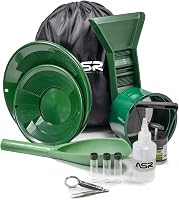
The ASR kit adds tools for collecting and inspecting recovered gold flakes. If you are comparing pan shapes and materials first, see our best gold pan options.
What are the Banjo Pan’s trade-offs?
The Banjo Pan’s broad use is useful when your prospecting conditions vary, but that same specialized design may be unnecessary for a basic panning routine. Think about how often you will use the dry or submerged options, not just whether they sound appealing.
Its listed dimensions are 19 x 17 x 13 in, so check the space in your pack before taking it on a long walk. The product information identifies metal as its material, while many conventional pans use plastic.
A separate plastic pan may be easier to compare by size and familiar riffle layout. Our best plastic gold pans guide covers those options.
How should you choose a pan size and color?
Choose a pan you can handle comfortably while keeping the material visible. A larger pan can hold more material, while a smaller one may be easier to manage during practice or on a walk.
The Banjo Pan’s stated dimensions are not a diameter, so compare its overall size with the space and handling you need. For conventional pans, the SE model is 14 in, and the ASR kit offers a choice of 10, 12, or 14 in.
Color also affects how easily you can spot small flakes against the pan. Green is used by both alternatives here, and our guide to gold pan color explains what to consider when choosing a background.
For a larger conventional pan, compare the options in our best large gold pans guide. If you are introducing children to panning, a pan that fits their hands matters more than extra features, so start with gold panning kits for kids.
How do you use the Banjo Pan and recover fine gold?
Use a steady, controlled motion and work small batches until you can keep the heavier material in the pan. Gold Cube describes the Banjo Pan for wet and dry use, but good recovery still depends on learning how the material behaves.
For water panning, classify larger rocks first if your site and tools allow it. Keep the pan level as you wash lighter material away, and slow down as the remaining concentrate gets smaller.
For fine gold, use patience and avoid tipping out concentrate too quickly. Our guides to how to pan gold properly and how to recover fine gold explain the technique in more detail.
Is the Gold Cube Banjo Pan worth choosing?
The Banjo Pan is a good fit if wet, dry, and underwater use are real needs for your prospecting plans. Its removable vortex matting, drop bottom, and nesting design set it apart from basic riffled pans.
Pick the Banjo Pan for varied recovery conditions, the SE pan for a lightweight conventional water pan, or the ASR kit if collection and inspection tools would help you get started.
Frequently asked questions
Can the Gold Cube Banjo Pan be used underwater?
Yes. Gold Cube describes the Banjo Pan as usable wet, dry, and underwater.
That versatility may help if your recovery conditions change, but check local rules and water conditions before working in a stream or other site.
What makes the Banjo Pan different from a regular gold pan?
The Banjo Pan has removable vortex matting and a drop bottom, and Gold Cube says it can be used wet, dry, or submerged. A conventional riffled pan such as the SE 14-inch model uses deep and micro riffles instead.
Is the Gold Cube Banjo Pan a good choice for beginners?
It can suit a beginner who wants to explore wet, dry, and underwater recovery in one pan. If you mainly plan to practice ordinary stream panning, a conventional pan or a kit with collection tools may be easier to understand and compare.
How should I choose between a Banjo Pan and a standard pan?
Choose the Banjo Pan if its wet, dry, and submerged use plus removable matting fit your plans. Choose a standard riffled pan for familiar stream panning, or a starter kit if you also want a vial and inspection tools.