7 Best Metal Detectors for Scuba Diving (November 2026)
The best metal detectors for scuba diving include the Nokta PulseDive Underwater Metal Detector for deep scuba diving, the OMMO Underwater Metal Detector for Adults for rechargeable diving searches, and the Garrett Pro-Pointer AT Waterproof Metal Detector for precise target recovery.
On this page (4 sections)
The best metal detector for scuba diving is the Nokta PulseDive because it is waterproof to 200 ft and works as both a scuba detector and pinpointer.
That mix suits divers who want one tool for scanning and recovery. You can search a wider area first, then switch to a tighter format when a signal gets stronger.
Choose the Minelab Excalibur II for a full-size detector with a larger coil. Its wider search pattern suits a traditional detecting style and longer sweeps.
Choose the OMMO for rechargeable shallow-water searches. Its handheld shape and long stated battery use suit snorkeling, beach work and shallower dives.
Scuba detecting is different from beach detecting. Depth rating, feedback, grip, search area and recovery speed all matter below the surface.
A detector that feels simple on dry land can handle very differently underwater. Water movement, gloves, lighting and limited time change how you use the controls.
Depth rating should be your first check. The full detector needs a rating that covers your planned dive, not just a coil that can get wet.
Target feedback is next. Sound, vibration and light can each help, and many divers prefer a mix they can notice with gear in place.
Search format also matters. A compact unit moves around rocks and tight spots more easily, while a full-size unit covers more ground per pass.
Recovery speed matters as much as search speed. A pinpointer format can narrow the exact spot before you dig or fan sand.
This guide compares products by stated features and fit for diving. Our score weighs specs, features and buyer feedback, but it is not a promise that one detector fits every site.
Read the depth and format notes before you decide. If you mainly search beaches and wet sand, a lighter land model may suit you better, while real dives should start with the deep-rated options.
Our picks at a glance
-
1
 Best for deep scuba diving
Nokta PulseDive Underwater Metal Detector
9.1/10 our score
See it on Amazon -
2
 Best for rechargeable diving searches
OMMO Underwater Metal Detector for Adults
8.5/10 our score
See it on Amazon -
3
 Best for precise target recovery
Garrett Pro-Pointer AT Waterproof Metal Detector
9.5/10 our score
See it on Amazon
- 4
 Check it
Minelab Excalibur II 1000 Metal Detector
Best for full-size underwater detecting - 5
 Check it
Gbnryg Professional Metal Detector for Adults.
Best for mixed land and water use - 6
 Check it
Nokta Simplex Lite Metal Detector with 9.5”
Best for shallow-water beginners - 7
 Check it
Bounty Hunter TK4 Tracker IV Metal Detector
Best for shallow water and beginners
The best metal detector for scuba diving by use
The Nokta PulseDive is the best deep-diving choice, while the Minelab Excalibur II gives you a larger full-size detector.
The OMMO and Garrett are better for shallower water or target recovery. The OMMO suits rechargeable handheld searches, and the Garrett suits precise recovery after a target area is found.
For beach and shallow-water use, the Nokta Simplex Lite and Bounty Hunter TK4 are lighter beginner fits. The Gbnryg suits mixed land and shallow-water searches when the control console stays dry.
Use this grouping as a starting point and then check depth, feedback and format for your own planned dives.
Nokta PulseDive Underwater Metal Detector: Best for deep scuba diving
- Waterproof to 200 ft
- 2-in-1 scuba detector and pinpointer
- 3 kHz pulse induction frequency
- LED flashlight
The PulseDive is the strongest fit for divers who want a compact underwater detector that can change into a pinpointer. Its 200 ft depth rating covers serious scuba use.
Pros
- Deep 200 ft waterproof rating
- 2-in-1 design
- LED flashlight and lost alarm
Cons
- Smaller search area than full-size detectors
- Battery powered
The Nokta PulseDive is the clearest match for scuba divers who need depth. Its IP68 design is waterproof to 200 ft, and its 3 kHz pulse induction frequency is built for underwater metal detection.
The 2-in-1 design lets you change between a scuba detector and a pinpointer. That matters when you move from scanning an area to locating a target in sand or around a small object.
The package includes a replaceable scuba coil, replaceable pointer coil, coil covers, a belt holster, security lanyard, rubber wristband, battery compartment cover for land use, USB charging cable and hard-shell carrying case.
An LED flashlight, audio, vibration alerts and a lost alarm add several ways to track the detector. The lost alarm activates after 5 minutes of inactivity.
Choose the PulseDive when depth and compact handling matter most. Its 5.5 in search coil covers less ground than the full-size Minelab coil, but the smaller format is easier to use around underwater targets.
OMMO Underwater Metal Detector for Adults: Best for rechargeable diving searches
- IP68 waterproof design
- Works to 65 ft
- Sound, vibration and combined alerts
- Up to 24 hours of use
The OMMO suits shallow scuba, snorkeling and beach searches where rechargeable power and vibration alerts matter. Its 65 ft depth rating is below the deepest picks here.
Pros
- Rechargeable battery
- Up to 24 hours of use
- Sound and vibration alerts
Cons
- Lower depth rating than the 200 ft picks
- Handheld format
The OMMO Underwater Metal Detector suits divers and snorkelers who want a rechargeable handheld detector. It works to 65 ft, so it fits shallow scuba and many shoreline searches rather than deep wreck dives.
Sound, vibration and combined alert modes give you options for different water conditions. LED feedback helps when sound is harder to notice or when you want a visual target signal.
The built-in rechargeable battery takes about 4 hours to charge and provides up to 24 hours of continuous use. That is much longer than the Garrett's stated 60-minute battery life.
Its 6 in search coil keeps the unit compact. The 16.6 in ABS body weighs 0.98 lb, which can make it easier to carry during a long beach or shallow-water search.
Choose the OMMO when rechargeable power and long use matter more than maximum depth. For deeper scuba work, its 65 ft rating leaves less room than the 200 ft Nokta and Minelab options.
Garrett Pro-Pointer AT Waterproof Metal Detector: Best for precise target recovery
- Submersible to 20 ft
- 3 sensitivity levels
- Fast retune
- Orange visibility
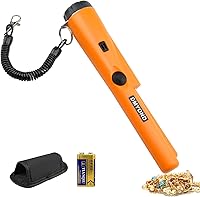
The Garrett Pro-Pointer AT is a recovery tool for locating a target after a larger detector identifies the area. Its orange body and one-button controls help during underwater recovery.
Pros
- Fast retune
- Three sensitivity levels
- Orange color for visibility
Cons
- 20 ft depth rating
- 60-minute battery life
The Garrett Pro-Pointer AT is best used after another detector identifies a target area. It is a handheld pinpointer, not a full-size scuba detector, and its waterproof rating reaches 20 ft.
Three sensitivity levels help you adjust the search for small targets. The fast retune button can narrow the detection field or tune out mineralized ground during recovery.
The orange body improves visibility in water. A molded ruler measures in inches and centimeters, and the attachment loop gives you a place to secure the tool.
One button controls power, retune, sensitivity and stealth mode. The included woven belt holster and 9-volt battery support carrying and setup before a search.
Choose the Garrett for shallow-water target recovery, especially when you want a bright color and simple controls. Its 60-minute battery life and 20 ft depth rating make it a poor fit for extended deep scuba dives.
Minelab Excalibur II 1000 Metal Detector: Best for full-size underwater detecting
- BBS multiple frequency technology
- 12-hour rechargeable battery
- RCB signal amplification
- 25.4 cm search coil
The Excalibur II is a full-size detector for divers who want a larger search coil and long battery operation. It also suits beach and wet-sand searches.
Pros
- Large search coil
- Up to 12 hours of battery life
- Multiple frequency technology
Cons
- 8 lb weight
- IP44 protection rating
The Minelab Excalibur II 1000 is the full-size choice for divers who want a larger 25.4 cm search coil and up to 12 hours of rechargeable battery operation. Its BBS technology covers frequencies from 1.5 kHz to 25.5 kHz.
RCB amplifies weak target signals inside the coil. The design also supports beach and wet-sand searches, so it can serve as an amphibious detector for people who search in several environments.
The fluorescent bodywork and skid plate improve visibility and protection during handling. Its side-mount shaft is intended for shallow and surf-wading use as an optional accessory.
At 8 lb, the Excalibur II is much heavier than the Nokta Simplex Lite and the handheld products here. That weight may be acceptable when search area matters more than compact carrying.
Choose it when you want a traditional full-size underwater machine with a larger coil and long battery operation. Compare the stated IP44 rating carefully with your planned use and depth before ordering.
Gbnryg Professional Metal Detector for Adults.: Best for mixed land and water use
- 12 in IP68 search coil
- 5 search modes
- 21 to 53 in telescopic stem
- Backlit LCD
The Gbnryg works best for land and shallow-water users who want a large coil and adjustable stem. The control console must stay out of the water.
Pros
- Large 12 in coil
- Five search modes
- Collapsible stem
Cons
- Control console is not waterproof
- Not suitable for full scuba submersion
The Gbnryg Professional Metal Detector suits mixed land and shallow-water use, not full scuba submersion.
Its 12 in IP68 search coil can enter water, but the control console is not waterproof. That split is the key limit to remember.
Five modes cover all-metal, discrimination, memory, jewelry and pinpoint searching. That gives more choice than a basic single-mode detector.
The 5-level sensitivity control and backlit LCD add adjustment beyond simpler beginner models. You can read the screen in low light and change sensitivity as ground shifts.
The telescopic stem adjusts from 21 to 53 in. A shorter stem suits kids or wading, while a longer stem suits taller adults on land.
The collapsible cam-lock design makes setup and transport easier. Quick setup also helps when you pack it between sites.
The package includes 2 batteries, a backpack, volume-adjustable over-ear headphones, a manganese-steel digger and a user manual. Those extras suit land searches that lead to shallow water.
The headphones help you hear signals on land. The digger and backpack complete the kit, but they do not change the water limit on the console.
Choose this model if your routine moves between soil, beaches and wet ground. It suits families and general hobby use where shallow water is only part of the search.
Do not take the control console underwater. Choose a full-depth detector for scuba diving and treat coil and full-unit ratings as separate.
Dry the coil and stem after wet use. Store the unit with the manual and accessories together to keep controls and connectors in good shape.
Nokta Simplex Lite Metal Detector with 9.5”: Best for shallow-water beginners
- 9.5 in waterproof DD coil
- Vibration for underwater detecting
- Beach and all-metal modes
- 2.6 lb weight
The Simplex Lite is a light choice for beaches, wet areas and shallow underwater searches. Its 16 ft water protection makes it unsuitable for deep scuba diving.
Pros
- Light 2.6 lb design
- 9.5 in coil
- Vibration for underwater use
Cons
- 16 ft water rating
- Not a deep-diving detector
The Nokta Simplex Lite is a light option for shallow underwater searches, beach work and general detecting.
Its 9.5 in waterproof DD coil and vibration feature support water use, but its IP65 rating is not intended for deep scuba diving. Keep that depth limit front of mind.
At 2.6 lb, it is easier to carry than the 8 lb Minelab Excalibur II. Lighter weight can reduce fatigue during long walks on sand and grass.
The 7 kHz operating frequency and 24.13 cm coil suit general detecting where low weight matters. The coil size also gives a practical balance between coverage and control.
The Simplex Lite has beach and all-metal search modes. Those modes can help you adapt between wet sand, dry ground and general searching without a long set of controls.
Its stated water protection reaches 16 ft, so keep it for shallow water and wet areas rather than deep dives. That limit makes it a shallow-water and land tool, not a scuba detector.
Vibration can help when audio is hard to hear in surf or wind. It can also help you notice a signal without relying on headphones on a noisy beach.
Choose it when you want a full-length detector that stays light. It can suit beginners who want a proper stem and coil without heavy carry.
If your planned dive is deeper than 16 ft, move up to a model with a depth rating that covers the entire dive. Do not stretch a shallow rating to fit deeper water.
Rinse the coil after saltwater use and let the detector dry fully before storage. Keep the control area clean and follow the maker care notes for connectors and battery care.
Bounty Hunter TK4 Tracker IV Metal Detector: Best for shallow water and beginners
- 8 in waterproof coil
- 3 detection modes
- Adjustable sensitivity
- Battery powered
The TK4 is a beginner-friendly detector for damp ground, beaches and shallow water. Its waterproof coil does not make the full detector suitable for scuba diving.
Pros
- Three detection modes
- Waterproof 8 in coil
- Adjustable sensitivity
Cons
- Not a scuba detector
- Coil is smaller than several land-focused picks
The Bounty Hunter TK4 Tracker IV is a beginner option for damp ground, beaches and shallow water. Its 8 in coil is waterproof, but the detector is not a deep-water scuba machine.
Three detection modes let you switch between all-metal, tone and discrimination. Adjustable sensitivity helps you change the search as ground and target conditions change.
The battery-powered detector weighs 1,270 g and measures 10 x 6.25 x 28.25 in. Its controls are suitable for adults and kids who are learning basic detecting.
The waterproof coil can handle shallow water, damp soil and sand. Use it for surface and land searches, then choose a dedicated underwater detector when the control unit must go below the surface.
Choose the TK4 for simple controls and general entry-level use. It is not the right choice for a scuba dive because its waterproof coil does not give the full detector a deep-water rating.
What should you check in a scuba metal detector?
The most important checks are full-unit depth rating, target feedback, search format and recovery handling. A waterproof coil alone does not show that a detector can be submerged.
How deep should the best metal detector for scuba diving go?
Choose a depth rating that exceeds your planned dive depth. The Nokta PulseDive and Minelab Excalibur II reach about 200 ft, the OMMO reaches 65 ft and the Garrett Pro-Pointer AT reaches 20 ft.
Check whether the rating applies to the complete detector. The Gbnryg has an IP68 coil, but its control console is not waterproof.
The Bounty Hunter has an 8 in waterproof coil, yet it is designed for shallow water and damp ground. A wet coil alone does not make a full scuba detector.
Read the exact wording in the specs and manual. Terms such as waterproof coil, water resistant and full unit submersion can mean very different things.
Match the rating to your real dive plan, not a best case day. Add room for handling, current, poor light and target recovery.
Feedback matters once you are underwater. The OMMO combines sound, vibration and LED feedback, while the PulseDive provides audio, LED and vibration alerts.
Learn the control layout before a dive so you can change settings without losing the target area. A visual or vibration alert can help when water noise or dive gear makes audio harder to notice.
Search format is the next check. The Minelab Excalibur II has a 25.4 cm coil, while the PulseDive uses a 5.5 in scuba coil.
A larger coil covers more ground per sweep, while a smaller coil is easier to control around rocks, sand holes and tight spaces. Think about the ground you will search.
Battery life and charging also deserve a check. A rechargeable unit suits repeat outings, while a disposable battery unit needs spares and a clear change routine.
Rinse salt water off, dry caps and seals, and store covers and connectors where they will not get lost. Use depth, feedback, format and care together as your shortlist test.
Which underwater alert is easiest to use?
Vibration, LED signals and audio each help in different conditions. The OMMO combines sound, vibration and LED feedback, while the PulseDive provides audio, LED and vibration alerts.
A visual or vibration alert can help when water noise or dive equipment makes audio harder to notice. Review the control layout before a dive so you can change settings without losing track of the target area.
Does a larger coil make underwater detecting better?
A larger coil can cover more ground per sweep, while a smaller coil can be easier to control around rocks, sand holes and tight spaces. The Minelab Excalibur II has a 25.4 cm coil, while the PulseDive uses a 5.5 in scuba coil.
Coil size is only one part of the choice. A large full-size detector can search broad areas efficiently, but a compact detector may be easier to carry and use during target recovery.
Should you use a pinpointer while scuba diving?
A pinpointer helps after the main detector has narrowed the target area. The PulseDive changes into a pinpointer, and the Garrett Pro-Pointer AT is designed specifically for precise recovery.
For a broader overview of possible detecting finds, see What Can You Find With a Metal Detector?. A target list can help you decide whether you need broad scanning, precise recovery or both.
How to prepare for metal detecting underwater
Prepare the detector, recovery tool and attachment method before entering the water. Confirm the depth rating for the complete unit and secure the detector with a lanyard when appropriate.
A short check on dry land can save time underwater. Test power, sound, vibration and light so you know what each alert feels like before you start.
Practice changing modes and using pinpoint functions on land. The PulseDive conversion system, the Garrett one-button control and the OMMO alert modes work best when you already know the controls.
That practice also shows how a target response changes as you move the coil. Slow sweeps on land can teach the rhythm you need under water.
Plan your search pattern before you go in. Wide sweeps suit open sand, while slower and tighter moves suit rocks, weed, debris and small holes.
Keep a stable stance and a calm sweep so you notice a change without rushing the coil. Check caps, covers and connectors, as a missing cap or loose cover can cause trouble that is hard to fix in the water.
Carry a recovery plan with the detector. A pinpointer, digger or scoop should be ready before you find a target, not after.
Use a lanyard or holster where it suits your gear. That can reduce the risk of dropping the detector in sand or silt where recovery would be slow.
Watch battery level as part of the plan. A short charge check before you leave can prevent a dead unit halfway through a dive or a long beach search.
Our guide to How to Use a Metal Detector in Water covers sweep control, target recovery and practical water-search habits.
If you are comparing formats, read Best Metal Detectors for Use in Water as well. That comparison can help you decide between a handheld unit and a full-length detector.
Rinse and dry equipment as the maker directs after use. Fresh water rinses are usually part of that routine after salt water.
Keep covers, connectors and battery compartments clean, and follow the instructions for charging or battery replacement. Dirt around a seal can stop it closing properly.
Dry each part fully before storage, especially seals and charging ports. Store the detector with its manual, caps and accessories in one place.
Check cords, holsters and lanyards for wear from time to time. Keep notes on mode, sensitivity and feedback so you set up faster next trip.
Which scuba metal detector should you choose?
Pick the Nokta PulseDive when you need a compact detector rated to 200 ft and want a built-in pinpointer format.
That mix suits divers who want to scan and recover with one tool. The 2-in-1 design can save space in a dive kit and cut extra gear.
Pick the Minelab Excalibur II when you prefer a full-size machine with a larger coil and up to 12 hours of battery life.
The larger coil suits wider search areas and a more traditional detecting style. Its weight is higher, so think about carry and handling before you choose it for travel.
Choose the OMMO for rechargeable shallow-water searches up to 65 ft. Its long stated battery use and sound plus vibration alerts suit repeat beach and snorkeling trips.
Use the Garrett Pro-Pointer AT for target recovery to 20 ft, not as your main deep-diving detector. Its bright color and simple controls suit precise work after a target area is found.
For beach and shallow-water beginners, the Nokta Simplex Lite and Bounty Hunter TK4 are easier fits. Both suit general detecting and wet ground without the depth needed for scuba work.
The Gbnryg is useful for land and shallow water, but its control console must remain above water. That makes it a mixed-use land detector rather than a dive detector.
Before choosing, compare your planned depth with the full detector rating. Do not rely on a coil rating alone when the control unit also needs to go under water.
Think about feedback and format as well as depth. Vibration and light help in noisy water, while audio helps in clear conditions, and a handheld unit fits tight spaces while a full-size detector covers broad ground more quickly.
Consider battery and care routines for your own habits. Rechargeable power suits regular use, while disposable batteries need spares and a clear swap plan.
Our waterproof metal detectors buying guide explains the difference between coil protection and full-unit submersion.
Best Waterproof Minelab Metal Detectors is useful if you prefer Minelab equipment. Read it with the depth and format notes here so you can match the model to your sites.
If you plan deep scuba work, start with the 200 ft options and check every other spec against your dive plan. If you plan beach and shallow work, a lighter model may give you more comfort for less effort.
| Product | Best for | Water depth | Search coil | Format | Our score |
|---|---|---|---|---|---|
| Nokta PulseDive Underwater Metal Detector | deep scuba diving | Up to 200 ft (60 m) | 5.5 in scuba coil | Scuba detector and pinpointer | 9.1 |
| OMMO Underwater Metal Detector for Adults | rechargeable diving searches | Up to 65 ft (20 m) | 6 in | 8.5 | |
| Garrett Pro-Pointer AT Waterproof Metal Detector | precise target recovery | Up to 20 ft | Handheld pinpointer | 9.5 | |
| Minelab Excalibur II 1000 Metal Detector | full-size underwater detecting | 25.4 cm | 8.3 | ||
| Gbnryg Professional Metal Detector for Adults. | mixed land and water use | 12 in | 9.6 | ||
| Nokta Simplex Lite Metal Detector with 9.5” | shallow-water beginners | 9.5 in | 8.2 | ||
| Bounty Hunter TK4 Tracker IV Metal Detector | shallow water and beginners | 8 in | 9.7 |
Nokta PulseDive Underwater Metal Detector: Best for deep scuba diving
- Waterproof to 200 ft
- 2-in-1 scuba detector and pinpointer
- 3 kHz pulse induction frequency
- LED flashlight
The PulseDive is the strongest fit for divers who want a compact underwater detector that can change into a pinpointer. Its 200 ft depth rating covers serious scuba use.
Pros
- Deep 200 ft waterproof rating
- 2-in-1 design
- LED flashlight and lost alarm
Cons
- Smaller search area than full-size detectors
- Battery powered
OMMO Underwater Metal Detector for Adults: Best for rechargeable diving searches
- IP68 waterproof design
- Works to 65 ft
- Sound, vibration and combined alerts
- Up to 24 hours of use
The OMMO suits shallow scuba, snorkeling and beach searches where rechargeable power and vibration alerts matter. Its 65 ft depth rating is below the deepest picks here.
Pros
- Rechargeable battery
- Up to 24 hours of use
- Sound and vibration alerts
Cons
- Lower depth rating than the 200 ft picks
- Handheld format
Garrett Pro-Pointer AT Waterproof Metal Detector: Best for precise target recovery
- Submersible to 20 ft
- 3 sensitivity levels
- Fast retune
- Orange visibility
The Garrett Pro-Pointer AT is a recovery tool for locating a target after a larger detector identifies the area. Its orange body and one-button controls help during underwater recovery.
Pros
- Fast retune
- Three sensitivity levels
- Orange color for visibility
Cons
- 20 ft depth rating
- 60-minute battery life
Minelab Excalibur II 1000 Metal Detector: Best for full-size underwater detecting
- BBS multiple frequency technology
- 12-hour rechargeable battery
- RCB signal amplification
- 25.4 cm search coil
The Excalibur II is a full-size detector for divers who want a larger search coil and long battery operation. It also suits beach and wet-sand searches.
Pros
- Large search coil
- Up to 12 hours of battery life
- Multiple frequency technology
Cons
- 8 lb weight
- IP44 protection rating
Gbnryg Professional Metal Detector for Adults.: Best for mixed land and water use
- 12 in IP68 search coil
- 5 search modes
- 21 to 53 in telescopic stem
- Backlit LCD
The Gbnryg works best for land and shallow-water users who want a large coil and adjustable stem. The control console must stay out of the water.
Pros
- Large 12 in coil
- Five search modes
- Collapsible stem
Cons
- Control console is not waterproof
- Not suitable for full scuba submersion
Nokta Simplex Lite Metal Detector with 9.5”: Best for shallow-water beginners
- 9.5 in waterproof DD coil
- Vibration for underwater detecting
- Beach and all-metal modes
- 2.6 lb weight
The Simplex Lite is a light choice for beaches, wet areas and shallow underwater searches. Its 16 ft water protection makes it unsuitable for deep scuba diving.
Pros
- Light 2.6 lb design
- 9.5 in coil
- Vibration for underwater use
Cons
- 16 ft water rating
- Not a deep-diving detector
Bounty Hunter TK4 Tracker IV Metal Detector: Best for shallow water and beginners
- 8 in waterproof coil
- 3 detection modes
- Adjustable sensitivity
- Battery powered
The TK4 is a beginner-friendly detector for damp ground, beaches and shallow water. Its waterproof coil does not make the full detector suitable for scuba diving.
Pros
- Three detection modes
- Waterproof 8 in coil
- Adjustable sensitivity
Cons
- Not a scuba detector
- Coil is smaller than several land-focused picks
Our top 3 picks at a glance
-
1
Best for deep scuba diving
Nokta PulseDive Underwater Metal Detector
9.1/10 our score
See it on Amazon -
2
Best for rechargeable diving searches
OMMO Underwater Metal Detector for Adults
8.5/10 our score
See it on Amazon -
3
Best for precise target recovery
Garrett Pro-Pointer AT Waterproof Metal Detector
9.5/10 our score
See it on Amazon
Frequently asked questions
What is the best metal detector for scuba diving?
The Nokta PulseDive is the best metal detector for scuba diving in this group because it is waterproof to 200 ft and changes between a scuba detector and pinpointer. The Minelab Excalibur II is another deep-water option for divers who prefer a full-size detector with a larger search coil.
How deep should a scuba metal detector go?
Choose a detector rated deeper than your planned dive depth, with room for real-world handling and conditions. The Nokta PulseDive and Minelab Excalibur II are the deepest options here at about 200 ft, while the OMMO reaches 65 ft and the Garrett reaches 20 ft.
Can a waterproof metal detector be used for scuba diving?
Only if the full detector is rated for the planned depth. A waterproof search coil is not enough when the control box must stay above water.
The Gbnryg, Bounty Hunter and similar shallow-water designs should not be treated as scuba detectors.
Do underwater metal detectors use sound?
Yes, underwater detectors may use sound, vibration, LED alerts or a combination. The OMMO offers sound, vibration and combined modes, while the Nokta PulseDive includes audio, LED and vibration alerts.
Choose feedback you can notice while wearing dive equipment.