9 Best Metal Detectors for Old Home Sites (November 2026)
The best metal detectors for old home sites include the Bounty Hunter TK4 Tracker IV Metal Detector for beginners at old homes, the MINELAB X-Terra PRO All-Terrain Professional Fully Waterproof for serious home-site searching, and the Garrett Pro-Pointer AT Waterproof Metal Detector (best pinpointer for recovering targets).
On this page (8 sections)
- Our top picks for hunting old home sites
- How the best metal detector for old home sites was compared
- What separation feature matters most at an old home?
- What coil size should you choose for a foundation?
- Do you need ground balance for home-site soil?
- Do you need a pinpointer for old home sites?
- How should you hunt an old home site to find coins and relics?
- Final verdict: which metal detector for old home sites should you buy?
The best metal detector for old home sites is the Bounty Hunter TK4 Tracker IV, because discrimination and tone modes help you ignore the nails and iron that fill old house lots. Our score weighs specs, features and buyer feedback against what you're shopping for.
Old home sites reward patience more than raw depth. You will find rusty nails, can lids, wire and broken tools in almost every sweep.
The winner is the detector that lets you reject that trash without also rejecting thin silver coins, buttons and small jewelry.
Depth figures on a label mean little in a foundation fill. Soil moisture, target size, coil height and mineral content change what you hear from one swing to the next.
A detector that gives a repeatable, two-way signal and lets you adjust sensitivity will find more than a detector that promises a large depth number.
Layout matters as much as electronics. The probable house footprint, the well, the cistern, the barn, the privy and the old road all concentrate different kinds of trash.
Mapping those zones before you hunt saves hours and tells you which coil and which mode to use in each zone.
For technique, read our metal detecting tips for old house places before you buy. Understanding swing speed and signal repeatability matters as much as the model you choose.
Our picks at a glance
-
1
 Best for beginners at old homes
Bounty Hunter TK4 Tracker IV Metal Detector
9.7/10 our score
See it on Amazon -
2
 Best for serious home-site searching
MINELAB X-Terra PRO All-Terrain Professional Fully Waterproof
9.6/10 our score
See it on Amazon -
3
 Best pinpointer for recovering targets
Garrett Pro-Pointer AT Waterproof Metal Detector
9.5/10 our score
See it on Amazon
- 4
 Check it
SUNPOW Metal Detector Pinpointer for Adults &
Best budget pinpointer - 5
 Check it
ikiu 2026 Latest Higher Accuracy Professional Metal
Best for notch filtering - 6
 Check it
GoGonova Metal Detector for Adults & Kids
Best for family home-site hunts - 7
 Check it
ULHUND Metal Detector for Adults
Best for deep search claims - 8
 Check it
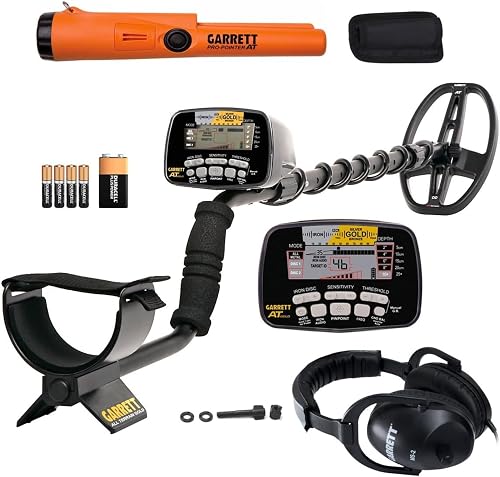
Garrett A.T. Gold Metal Detector with Pinpointer
Best for small relics and jewelry - 9
 Check it
SUNPOW Metal Detector for Adults & Kids
Best lightweight family detector
Our top picks for hunting old home sites
These nine picks cover full detectors and the pinpointers that help you recover targets. Beginners should start with the Bounty Hunter TK4.
Experienced hunters will want the finer discrimination on the MINELAB X-Terra PRO.
A home site is not one hunting condition. The yard near the kitchen door holds dropped coins in a small area, while the barn floor holds nails spread over a wide area.
That spread of conditions is why this list mixes 8 inch coils, larger coils, a small coil and two pinpointers.
Bounty Hunter TK4 Tracker IV Metal Detector: Best for beginners at old homes
- 8-inch waterproof coil
- 3 detection modes
- Discrimination mode
- Analog controls
- Battery powered
Simple analog controls and discrimination make it easy to learn iron rejection at a former home site.
Pros
- Three modes including discrimination
- Waterproof 8-inch coil
- Lightweight and portable
Cons
- Analog controls offer less fine adjustment
- No pinpoint mode described
The Bounty Hunter TK4 suits beginners who want a simple detector for a backyard, a vacant lot or a known foundation. It has 3 detection modes, including all-metal, tone and discrimination.
Discrimination is the key at a home site, because it helps you filter trash while you look for silver coins, jewelry and relics.
Its 8-inch waterproof coil handles damp soil and shallow water at the edge of a site. The coil is rated IP54 and is listed at 20.32 centimeters, which is 8 inches.
Analog controls keep setup simple, and you can adjust sensitivity without learning a menu system. At 1,270 grams, it is light enough for a few hours of sweeping.
The trade-off is control. Analog discrimination cannot match the fine segments on higher-end models.
It also has no dedicated pinpoint mode, so recovery takes a little more practice. For an inexpensive start, though, see the best inexpensive metal detector for relics and compare how much control you really need.
MINELAB X-Terra PRO All-Terrain Professional Fully Waterproof: Best for serious home-site searching
- IP68 waterproof to 16 ft
- Park, Field and Beach modes
- 30 discrimination segments
- 12-inch coil
- Pinpoint mode
Thirty discrimination segments and a larger coil give experienced hunters more control over trash at old homes.
Pros
- 30 discrimination segments
- Fully waterproof design
- Pinpoint mode for smaller holes
Cons
- More settings to learn
- Higher price tier than basic picks
The MINELAB X-Terra PRO suits hunters who plan to return to the same home site many times. It offers 30 discrimination segments, so you can reject specific trash ranges instead of broad bands.
That precision matters where nails, foil and iron sit within inches of coins.
MINELAB says it is fully IP68 waterproof to 16 ft, with Park, Field and Beach search modes. The 12-inch coil covers more ground per sweep than an 8-inch coil.
Pinpoint mode helps you center a target before you dig, which protects roots and keeps holes small.
It weighs 2.9 lb in one bullet and 2.8 pounds in the spec table, and packs to 25 inches, so transport is easy. The 7.69 KHz operating frequency and Pro-Switch technology are aimed at deeper targets in varied ground.
The trade-off is learning curve. More modes and segments take time to set up well.
For relic-focused hunts, our best metal detector to buy for relics roundup shows how other models compare for that job.
Garrett Pro-Pointer AT Waterproof Metal Detector: Best pinpointer for recovering targets
- Waterproof to 20 feet
- 3 sensitivity levels
- Fast Retune feature
- One-button control
- Built-in ruler
A waterproof pinpointer that narrows the search area so you dig smaller holes at home sites.
Pros
- Fully waterproof to 20 feet
- Fast Retune narrows detection field
- Simple one-button operation
Cons
- Pinpointer only, not a full detector
- Needs a main detector for scanning
The Garrett Pro-Pointer AT is not a full detector, and that is exactly its strength here. It is a waterproof pinpointer that narrows your search after the main detector beeps.
At a trashy home site, that step can cut digging time in half.
It has 3 sensitivity levels for small targets like nuggets and tiny relics. The Fast Retune feature instantly narrows the detection field and helps tune out mineralized ground.
Garrett says it is submersible to 20 feet, with a bright orange casing for visibility.
One-button control handles power, retune, sensitivity and stealth mode. A molded ruler in inches and centimeters helps you judge depth before you break ground.
It weighs 8 ounces and runs on a 9-volt battery, with proportional audio and vibration. The trade-off is clear: you still need a main detector for scanning.
Pair it with any full detector above for the fastest recoveries.
SUNPOW Metal Detector Pinpointer for Adults &: Best budget pinpointer
- 360-degree detection
- 3.5-inch detection depth
- IP68 waterproof
- Sound and vibration alerts
- Single-button operation
A simple waterproof pinpointer for (Returned from B0CYNP5JQL) quick target recovery after your main detector signals.
Pros
- 360-degree side scan
- Sound and vibration alerts
- Compact and portable
Cons
- Pinpointer only, not a full detector
- Limited depth in large targets
The SUNPOW pinpointer suits budget buyers who want the same recovery benefit for less. It offers 360-degree detection with sound and vibration alerts.
You can run it along the sides of a hole and find the target without a precise tip angle.
SUNPOW says the tip and scale section are IP68 waterproof, and detection depth is 3.5 inches. Single-button operation keeps it simple in gloves or mud.
At 8.8 ounces, it rides on a belt loop or spring clip all day.
The kit lists a 9V battery, retractable hanging wire, belt loop and manual, which covers the basics for a first season. The trade-off is depth and build margin versus the Garrett.
It is a pinpointer only, so it cannot replace a scanning detector. For a home site with wet soil near a well or cistern, its waterproofing is the practical win.
To understand what kinds of finds to expect, see What Can You Find With a Metal Detector?.
ikiu 2026 Latest Higher Accuracy Professional Metal: Best for notch filtering
- 4 modes including Notch
- Up to 10 inches deep
- 5 sensitivity levels
- IP68 waterproof coil
- Large LCD display
Notch mode and 5 sensitivity levels help you tune out repeat iron signals around old foundations.
Pros
- Notch and Memory modes
- 5 sensitivity levels
- Waterproof coil for damp ground
Cons
- Control box is not waterproof
- More modes take practice
The ikiu detector suits buyers who want notch filtering on a budget. Its Notch mode lets you skip a specific target range, such as the iron band that dominates old house lots.
Memory mode then refocuses on the targets you want.
It detects metals up to 10 inches deep, according to ikiu, with 5 sensitivity levels to reduce false alarms. The large LCD has a backlight for low light, and the stem adjusts from 36.6 to 47 inches.
At 2.26 pounds, it is easy to swing for a full afternoon.
The IP68 waterproof coil handles beach and rainy conditions, but the controller is not waterproof. That limits creek and shoreline work.
The DSP chip and push-button assembly are aimed at stability and low battery loss. The trade-off versus the MINELAB is fewer discrimination segments and a less proven control system, for a lower price tier.
GoGonova Metal Detector for Adults & Kids: Best for family home-site hunts
- All Metal and Disc modes
- 8-inch coil
- IP68 waterproof coil
- LCD with backlight
- Adjustable stem
Disc mode and an adjustable stem make it a practical shared detector for adults and older kids.
Pros
- Discrimination mode
- Backlit LCD for low light
- Kit includes carry bag and shovel
Cons
- Control box is not waterproof
- Heavier than some picks
The GoGonova PD70 suits families sharing one detector at a home site. It has All Metal and Disc modes, so you can start by finding everything, then switch to discarding iron and foil.
The adjustable stem from 39.3 to 51.3 inches fits kids ages 8 to 12 and adults.
The 8-inch coil detects underground metal 8 inches deep, according to GoGonova, and the spec table lists a 13 inch search coil size. The IP68 waterproof coil works in shallow water, while the control box stays dry.
A backlit LCD helps in dim light, and the armrest reduces fatigue.
The kit includes a carry bag, shovel, earphones and batteries, which saves a separate purchase. The trade-off is weight at 3.8 pounds and a basic two-mode system.
For serious relic hunting, read metal detecting civil war relics to see what deeper sites demand.
ULHUND Metal Detector for Adults: Best for deep search claims
- 11-inch IP68 DD coil
- Up to 12.8 inches deep
- 4 modes including DISC and Notch
- Foldable design
- Backlit LCD
An 11-inch DD coil and DISC mode target stable signals in mineralized soil around old homes.
Pros
- 11-inch DD coil covers more ground
- DISC and Notch modes
- Foldable for transport
Cons
- Control box is not waterproof
- Depth depends on conditions
The ULHUND suits hunters who want a larger DD coil for open ground around a home site. Its 11-inch IP68 waterproof DD coil covers more area per sweep than an 8-inch coil.
ULHUND says a DD coil improves anti-interference performance and reduces random beeps.
It claims detection up to 12.8 inches deep under suitable conditions, with 4 modes including DISC, Notch and Pinpoint. The stem adjusts from 22 to 60 inches and weighs only 2.4 pounds.
The foldable control box packs into the included backpack.
The kit includes headphones, a foldable shovel, carry bag and 2 high-capacity 9V batteries, with battery life listed at 20 hours. The trade-off is that the control box is not waterproof, and depth claims always depend on target size and soil.
DISC and Notch help with iron, but fine discrimination segments are not described. It is strongest for open yards, not tight foundation rubble.
Garrett A.T. Gold Metal Detector with Pinpointer: Best for small relics and jewelry
- 18 kHz operation
- Iron Audio feature
- Ground Balance Window
- Pro-Pointer AT included
- True All Metal mode
High-frequency operation and Iron Audio help identify small targets and iron at old home sites.
Pros
- Iron Audio identifies iron
- Includes waterproof pinpointer
- Ground balance for varied soil
Cons
- Smaller 5-inch coil covers less ground
- Specialized for small targets
The Garrett A.T. Gold suits hunters chasing small targets at old homes, like tiny buttons, jewelry and gold.
It operates at 18 kHz, which is tuned for small gold nuggets, jewelry, coins and relics. That frequency favors small targets over large or deep ones.
Its Iron Audio feature audibly identifies iron targets, so you can skip digging iron without watching a screen. A Ground Balance Window with manual and automatic ground balance helps in varying soil.
True All Metal mode gives the greatest depth and sensitivity for all metal types.
A Pro-Pointer AT is included, waterproof to 20 feet, which pairs well for recovery. The trade-off is the 5-inch coil, which covers much less ground than 8 to 12-inch coils.
Use it for a worked-out site or a small yard, not for scanning acres.
SUNPOW Metal Detector for Adults & Kids: Best lightweight family detector
- 4 modes including Notch
- 8-inch IP68 waterproof coil
- Big backlit LCD
- 1.4 pounds
- Adjustable stem
Notch mode to filter iron trash and a light frame suit short family hunts around a house lot.
Pros
- Notch filters iron trash
- Very lightweight at 1.4 pounds
- Big backlit LCD
Cons
- Basic depth for deep relics
- Best for casual use
The SUNPOW MD13 suits families who want the lightest full detector here. At 1.4 pounds, it is the easiest to swing for kids and for long sessions.
Its 4 modes include All Metal, Notch, Pinpoint and Memory.
Notch mode filters out iron trash, which is the main problem at old home sites. Pinpoint mode helps you center a target before digging.
The big backlit LCD shows target ID and depth in low light.
The 8-inch IP68 waterproof coil handles shallow rivers and wet sand under supervision. The kit includes a shovel, headphones and batteries.
The trade-off is basic depth and control compared with the MINELAB or Garrett. For casual family hunts, that trade-off is often worth it.
For the basics first, see What Is a Metal Detector Used For? The Basics.
How the best metal detector for old home sites was compared
We compared discrimination controls, coil size, ground balance, pinpointing and weight. Old home sites are trashy, so iron rejection matters more than maximum depth.
We checked specs for each model, including modes, coil size and water rating. We also weighed how a detector fits a real hunt: swing weight, setup time and recovery speed with a pinpointer.
Coil size changes the job, not just the depth. A larger coil hears a coin deeper, but it also hears two nearby nails as one blurred signal.
A smaller coil hears less total, but what it hears is more separate. That trade-off decides most of our placements.
Our score weighs specs, features and buyer feedback against what you're shopping for. Pinpointers scored well because recovery speed is a major part of home-site hunting, even though they cannot scan alone.
Water rating also shaped the scores. A detector with a waterproof coil only is fine for damp yards, but it cannot be used in a creek or a flooded root cellar.
A fully waterproof detector or a waterproof pinpointer earns points where wells, cisterns and low ground stay wet.
Weight shaped the scores in a different way. A heavy detector may have better controls, but a tired arm sweeps higher and misses shallow coins.
Light models like the SUNPOW MD13 at 1.4 pounds earned credit for all-day use, even with simpler electronics.
| Product | Best for | Coil Size | Modes | Power Source | Our score |
|---|---|---|---|---|---|
| Bounty Hunter TK4 Tracker IV Metal Detector | beginners at old homes | 8 inches | 3 detection modes | Battery Powered | 9.7 |
| MINELAB X-Terra PRO All-Terrain Professional Fully Waterproof | serious home-site searching | 12 inches | 9.6 | ||
| Garrett Pro-Pointer AT Waterproof Metal Detector | pinpointer for recovering targets | 9.5 | |||
| SUNPOW Metal Detector Pinpointer for Adults & | budget pinpointer | 9.4 | |||
| ikiu 2026 Latest Higher Accuracy Professional Metal | notch filtering | 9.3 | |||
| GoGonova Metal Detector for Adults & Kids | family home-site hunts | 8 inches | 9.2 | ||
| ULHUND Metal Detector for Adults | deep search claims | 11 inches | 8.5 | ||
| Garrett A.T. Gold Metal Detector with Pinpointer | small relics and jewelry | 5 inches | 8.2 | ||
| SUNPOW Metal Detector for Adults & Kids | lightweight family detector | 8 inches | 4 modes | 8.0 |
What separation feature matters most at an old home?
Discrimination, notch and iron audio all help, but they work differently. Discrimination rejects a range of targets.
Notch skips one range while keeping others. Iron audio lets you hear iron distinct from coins.
Discrimination for general trash
Discrimination is the easiest starting point. Set it to reject iron and foil, then dig repeatable higher signals.
The Bounty Hunter TK4 and GoGonova use this approach.
Discrimination works best when trash covers a wide range. At a general farmhouse lot, nails, tin and wire all fall in the low end, so a broad rejection saves many digs.
Notch for repeat iron
Notch suits a site where one iron type dominates, like nails from a burned house. The ikiu, ULHUND and SUNPOW MD13 all offer notch.
Test your settings on a known coin before you trust them.
Notch is risky if you set it too wide. A notch meant for nails can also cut a worn dime or a small button.
Start narrow, test a coin of the type you want, and widen only after you learn the site.
Iron audio for screen-free hunting
Iron Audio on the Garrett A.T. Gold lets you listen for iron while you sweep.
That helps when you cannot look at a display. Pair it with a pinpointer for the full benefit.
Iron audio also helps in bright sun, where an LCD can wash out. You keep your eyes on footing and coil height, and your ears tell you when a signal is likely iron.
What coil size should you choose for a foundation?
An 8-inch coil is the best all-around choice for old home sites. It separates targets in trash and still covers ground at a reasonable pace.
When a larger coil helps
An 11 or 12-inch coil covers open yards and fields faster. The ULHUND and MINELAB use larger coils for that reason.
They struggle more in tight iron clusters.
Larger coils also help when you hunt a farmyard rather than a house footprint. The open ground between barn and well often holds dropped items at a lower density, so coverage matters more than separation.
When a smaller coil helps
A 5-inch coil, like on the Garrett A.T. Gold, separates targets in very tight spaces.
Use it for small yards, under shrubs or around a foundation edge. It is slow for large areas.
Small coils help most after a larger coil has done the first pass. You can then work the trashy spots that the larger coil could not separate, and pick the small signals that were masked by nearby iron.
Do you need ground balance for home-site soil?
Ground balance matters when soil is mineralized or when you hunt near burned areas. Old homes often have ash, brick and iron that confuse a detector.
Manual versus automatic balance
Automatic balance is faster to learn. Manual balance gives finer control once you know your soil.
The Garrett A.T. Gold offers both with a Ground Balance Window.
Ground balance is not a set-and-forget control. The soil can change from topsoil to subsoil to fill within a few feet, especially around a foundation.
Rebalance when chatter rises or when you move to a new zone.
How to test in your soil
Sweep over a clean patch and listen for chatter. Adjust balance and sensitivity until signals smooth out.
Then test a coin at depth before you start a grid.
A simple test keeps you honest. Lay a coin at a known depth, sweep from both directions, and listen for a repeatable signal.
If the signal vanishes after a setting change, that setting costs you depth in that soil.
Do you need a pinpointer for old home sites?
Yes, a pinpointer is the best speed upgrade for trashy sites. It turns a broad beep into a small hole.
Full detector versus pinpointer
A full detector scans. A pinpointer recovers.
The Garrett Pro-Pointer AT and SUNPOW pinpointer both do the second job. Neither replaces the first.
Pinpoint mode on a full detector helps, but it still works through the coil. A handheld pinpointer works at the edge of the hole and tells you which side holds the target.
Waterproofing for wells and creeks
Many home sites sit near wells, cisterns or creeks. A waterproof pinpointer lets you check wet holes.
The Garrett is rated to 20 feet, and the SUNPOW is IP68.
Waterproofing also matters for mud. A pinpointer you can rinse off after a rainy hunt will last longer and will not fail when the hole fills with water.
How should you hunt an old home site to find coins and relics?
Start with a grid, not random sweeping. Work in overlapping lanes about one coil width apart.
Mark finds and trash so you can see patterns.
Start with all-metal to learn the site
An all-metal pass shows you the density of iron and the best areas for coins. Expect many digs.
This pass tells you where the house, barn and well sat.
All-metal also shows you where modern trash has spread. A modern dump area can waste hours, and an early pass helps you avoid it with later, more selective passes.
Switch to discrimination for coins
Once you know the trash areas, use discrimination or notch to focus on coin and jewelry signals. Dig repeatable signals and check them from two directions.
Two-direction checks reduce false signals from iron edges. A signal that repeats from both sides is more likely a coin or a compact relic than a flat piece of tin or a nail.
Use a pinpointer before you dig
Pinpoint mode on your detector, then a handheld pinpointer in the hole, keeps holes small. That protects the site and speeds your next sweep.
Small holes matter for permission and for relic sites. They also let you hunt a yard that you must leave looking undisturbed, which is often the condition for returning.
Final verdict: which metal detector for old home sites should you buy?
Pick the Bounty Hunter TK4 if you want the simplest start. Its discrimination mode handles iron trash well for a first detector.
Pick the MINELAB X-Terra PRO if you will hunt the same site often. Thirty discrimination segments and a 12-inch coil reward the extra learning time.
Pick a pinpointer if recovery is your bottleneck. The Garrett Pro-Pointer AT or SUNPOW pinpointer will save more time than a coil upgrade.
Pick the SUNPOW MD13 or GoGonova if kids will share it. Light weight and an adjustable stem matter more than depth for family hunts.
If you hunt a small, trashy foundation and want separation over coverage, add the Garrett A.T. Gold with its small coil and Iron Audio to your plan.
If you hunt open ground and want coverage, the ULHUND with its 11 inch DD coil is the wider option.
Start with the TK4, add a pinpointer, and learn your site's trash pattern. That combo finds more coins at an old home than any single expensive detector alone.
Our top 3 picks at a glance
-
1
Best for beginners at old homes
Bounty Hunter TK4 Tracker IV Metal Detector
9.7/10 our score
See it on Amazon -
2
Best for serious home-site searching
MINELAB X-Terra PRO All-Terrain Professional Fully Waterproof
9.6/10 our score
See it on Amazon -
3
Best pinpointer for recovering targets
Garrett Pro-Pointer AT Waterproof Metal Detector
9.5/10 our score
See it on Amazon
Frequently asked questions
What is the best metal detector for old home sites?
The Bounty Hunter TK4 Tracker IV is our top pick for most buyers. Its discrimination mode helps you separate iron trash from valuable targets.
The MINELAB X-Terra PRO suits hunters who want finer control and a larger coil.
How do you separate iron from coins at an old home?
Use discrimination, notch or iron audio to reject iron signals. Sweep slowly and check repeatable signals from two directions.
A pinpointer then helps you recover the target with a smaller hole.
Do I need a pinpointer for home-site hunting?
A pinpointer is not required, but it speeds recovery and reduces hole size. Old home sites have dense nails and debris.
A waterproof pinpointer helps you find the exact spot before you dig.
What coil size works best around a foundation?
An 8-inch coil balances coverage and separation. Larger coils cover more ground but struggle near iron clusters.
Smaller coils separate targets better in tight, trashy areas around foundations.


