9 Best Metal Detectors for Relics (November 2026)
The best metal detectors for relics include the Bounty Hunter TK4 Tracker IV Metal Detector for beginners starting relic hunting, the MINELAB X-Terra PRO All-Terrain Professional Fully Waterproof for iron separation and control, and the SAKOBS Metal Detector for Adults for deep search on a budget.
On this page (8 sections)
- Our top picks for the best metal detector to buy for relics
- How the best metal detector to buy for relics was compared
- What matters most for relic hunting: iron separation or depth?
- Can you clean and identify relics right after you dig?
- Which detector fits old home sites and forests?
- How much should you spend on the best metal detector to buy for relics?
- What settings should you use for relic hunting?
- Verdict: which relic detector should you buy?
The best metal detector to buy for relics for most beginners is the Bounty Hunter TK4 Tracker IV, because its discrimination mode, tone mode and 8 inch waterproof coil cover coins, gold and relics in parks, yards and forests. If you hunt trashy iron ground often, step up to a model with finer discrimination like the MINELAB X-Terra PRO.
Relic hunting is different from coin shooting in a clean park. Old home sites, camps and trails hold nails, wire, cans and iron hardware mixed with the brass, copper and silver you want.
The right detector helps you hear that mix clearly, reject some trash without losing good targets, and pinpoint fast so you can dig small holes.
Our score weighs specs, features and buyer feedback against what relic hunters need: iron separation, depth, coil coverage, controls and recovery tools. We compared the specs, we checked the modes and coil sizes, and we looked at how each pick fits old fields, woods, parks and wet ground.
Start with relic metal detecting if you are new to the hobby. If your target is metal detecting civil war relics, focus on iron audio, ground balance questions and sites where iron is thick.
For a lower cost path, see the best inexpensive metal detector for relics.
For background on what detectors find in general, read What Can You Find With a Metal Detector?. For basic uses and limits, see [What Is a Metal Detector Used For?
The Basics](/what-is-a-metal-detector-used-for/).
Our picks at a glance
-
1
 Best for beginners starting relic hunting
Bounty Hunter TK4 Tracker IV Metal Detector
9.7/10 our score
See it on Amazon -
2
 Best for iron separation and control
MINELAB X-Terra PRO All-Terrain Professional Fully Waterproof
9.6/10 our score
See it on Amazon -
3
- 4
 Check it
SUNPOW Metal Detector Pinpointer for Adults &
Best pinpointer for precise recovery - 5
 Check it
ikiu 2026 Latest Higher Accuracy Professional Metal
Best for adjustable sensitivity - 6
 Check it
Garrett ACE 400 Metal Detector
Best for hearing iron before you dig - 7
 Check it
SUNPOW Professional Metal Detector for Adults
Best for tall hunters and low light - 8
 Check it
RIPTIC Metal Detector for Adults with Pin
Best full kit for relic hunting - 9
 Check it
Garrett Ace 250 Metal Detector with Submersible
Best for dedicated relic mode
Our top picks for the best metal detector to buy for relics
These nine picks cover simple starters, iron-heavy ground, deep search, pinpointing and full kits. Each one suits a different relic site and budget, so match the detector to your ground before you compare extra features.
Bounty Hunter TK4 Tracker IV Metal Detector: Best for beginners starting relic hunting
- 8 inch waterproof coil
- 3 detection modes: all-metal, tone and discrimination
- Adjustable sensitivity
- All-terrain use for beach, backyard and forest
- Battery powered and lightweight
Simple analog controls and discrimination modes help new relic hunters filter trash while searching parks, yards and forest edges.
Pros
- Simple controls for new users
- Waterproof 8 inch coil
- Discrimination mode for relics and coins
Cons
- Smaller coil covers less ground than 11 or 12 inch coils
- Fewer target segments than the MINELAB pick
The Bounty Hunter TK4 Tracker IV suits adults and kids who want a simple relic and coin detector for parks, gardens, beaches and forest edges. Its 3 detection modes include all-metal, tone and discrimination, so you can start in all-metal to learn the site, then switch to discrimination to filter some trash.
The 8 inch waterproof coil handles shallow water, damp soil and sandy ground. That size covers less ground than an 11 or 12 inch coil, but it separates targets better in tight, trashy spots and fits around roots and rocks.
Analog controls and adjustable sensitivity keep setup simple. Bounty Hunter says the design is rugged for rocky, muddy or wet ground, and the unit is battery powered for portable hunts.
Trade-off: you get fewer target segments than the MINELAB X-Terra PRO, so iron separation takes more listening skill. For a first relic detector, that simple path is a strength, not a flaw.
MINELAB X-Terra PRO All-Terrain Professional Fully Waterproof: Best for iron separation and control
- IP68 waterproof to 16 ft
- 30 discrimination segments
- Park, Field and Beach search modes
- 12 inch search coil
- 2.9 lb weight
Thirty discrimination segments and selectable frequencies give experienced hunters finer control over iron and trash signals.
Pros
- 30 discrimination segments
- Fully waterproof build
- Large 12 inch coil
Cons
- More settings to learn
- Higher learning curve for first-time users
The MINELAB X-Terra PRO suits hunters who want finer control over iron and trash at old sites. Its 30 discrimination segments let you shape what you hear with more precision than simple on and off discrimination.
MINELAB says the detector is fully IP68 waterproof to 16 ft. That rating suits wet sand, shallow crossings and rainy hunts, though you should still follow the maker guidance for care in water.
Park, Field and Beach search modes match settings to terrain. A 12 inch coil covers open relic fields faster and helps with depth, while pinpoint mode helps you dig smaller holes.
Trade-off: more settings mean a longer learning curve. Beginners may spend more time in menus before they trust the signals.
Experienced relic hunters will value that control in iron ground.
The 2.9 lb weight and three piece shafts pack down for travel. A short practice session in your yard helps you learn target sounds before you hunt a busy site.
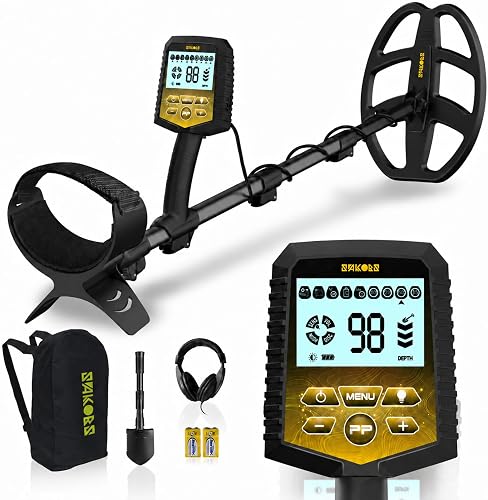
SAKOBS Metal Detector for Adults: Best for deep search on a budget
- 11 inch IP68 DD coil
- Detection to 12.8 inches under suitable conditions
- 4 search modes including Disc and Pinpointer
- Backlit LCD target ID
- Includes headphones, digging shovel and backpack
A foldable design, deep search claim and included digging gear suit adults who want a ready-to-hunt kit for relic fields.
Pros
- 11 inch DD coil
- Backlit LCD display
- Kit includes headphones and shovel
Cons
- Depth depends on soil and target size
- Foldable build needs care on rough ground
SAKOBS suits adults who want a foldable, lightweight detector for beach trips, parks, campgrounds and backyard relic hunting. It weighs 2.7 lb and adjusts from 26 to 47 inches, so it packs for travel and fits different heights.
The 11 inch IP68 DD coil suits wet sand, shallow water and riverbanks. SAKOBS says detection reaches 12.8 inches under suitable conditions for coins, jewelry and relics.
Four search modes include All Metal, Disc, Jewelry and Pinpointer. A backlit LCD target ID display and DISC filtering help sort signals, while the included headphones, digging shovel and backpack make it a ready kit.
Trade-off: headline depth depends on soil, target size and settings. A foldable stem also needs care on rough ground.
For the price class, the included gear is practical.
Check hinges and locks before each hunt. Wiping the coil and control housing after wet sand use helps keep seals and connections working well.
SUNPOW Metal Detector Pinpointer for Adults &: Best pinpointer for precise recovery
- 360 degree side-scan detection
- 3.5 inch detection depth
- IP68 waterproof tip
- Sound and vibration alerts
- Belt loop and spring clip included
A handheld pinpointer narrows the dig spot after a main detector finds a relic signal, which saves soil and time at old sites.
Pros
- 360 degree side scan
- Waterproof tip
- Sound and vibration alerts
Cons
- Not a main search detector
- Short 3.5 inch detection range
The SUNPOW pinpointer suits any relic hunter who wants faster, cleaner recovery. It is not a main search detector, and that is the point.
360 degree side-scan detection helps you narrow a signal to a small spot inside the hole.
SUNPOW says detection reaches 3.5 inches. That short range is normal for a handheld probe.
You sweep the hole and the probe beeps when it nears metal, which saves digging wide at old home sites.
Sound and vibration alerts help in noisy woods or when you hunt without headphones. The waterproof tip and scale section suit damp soil, and the belt loop and spring clip keep it at your hip.
Trade-off: you still need a main detector to find targets. Pair this with a relic detector and you will dig less soil, especially in roots and iron filled ground.
Rinse the tip after muddy hunts and let it dry before storage. A quick battery check before you leave keeps the probe ready at the hole.
ikiu 2026 Latest Higher Accuracy Professional Metal: Best for adjustable sensitivity
- Detection to 10 inches
- 5 sensitivity levels
- 4 modes: All Metal, Notch, Memory and PinPoint
- IP68 waterproof search coil
- 2.26 lb weight
Adjustable sensitivity and notch filtering help you tune out noisy soil at relic sites while keeping small brass and copper targets in play.
Pros
- 5 sensitivity levels
- Notch mode for filtering
- Lightweight at 2.26 lb
Cons
- Controller is not waterproof
- Depth claim depends on target and soil
The ikiu detector suits hunters who want adjustable sensitivity for noisy relic ground. It has 5 sensitivity levels from 1 to 5, which helps you lower false signals in mineral soil or crowded parks.
Four modes include All Metal, Notch, Memory and PinPoint. Notch filtering helps you reject a narrow band of trash while keeping other signals.
Memory mode can save a pattern for repeat hunts at the same site.
The IP68 waterproof search coil suits beach, river and rainy ground. Note that the controller is not waterproof, so keep the display dry.
At 2.26 lb with a 36.6 to 47 inch adjustable stem, it is light for long walks in old forests. Trade-off: depth claims to 10 inches depend on target and soil, and sensitivity still needs tuning at each new site.
Test each sensitivity level on a known target in your soil. Lower settings often give a steadier signal in wet or mineral ground.
Garrett ACE 400 Metal Detector: Best for hearing iron before you dig
- 0 to 99 digital target ID
- Iron audio feature
- Electronic pinpointing
- Adjustable frequency
- Searchcoil cover included
Iron audio and a numeric target ID help you hear trash like bottle caps and washers before you spend time digging.
Pros
- Iron audio feature
- 0 to 99 target ID
- Adjustable frequency
Cons
- IP54 rating limits water use
- Fewer modes than some kits here
The Garrett ACE 400 suits relic hunters who want to hear iron trash before digging. Its iron audio feature helps flag bottle caps, washers and other unwanted iron while you swing.
A 0 to 99 digital target ID scale helps you compare conductivity across targets. That number is a guide, not a label.
Bent iron, coins and brass can overlap, so dig questionable signals at old sites.
Electronic pinpointing in non-motion all-metal mode helps you center a target for a smaller hole. Adjustable frequency helps reduce interference from power lines or other detectors in crowded areas.
A searchcoil cover is included to protect the coil from scratches and rocks. Trade-off: the IP54 rating limits water use compared with IP68 models, so check the rating before wet hunts.
Keep the coil cover clean and check it for cracks after rocky ground. A slow, even swing helps the target ID stay consistent from pass to pass.
SUNPOW Professional Metal Detector for Adults: Best for tall hunters and low light
- 12 inch IP68 waterproof coil
- 5 detection modes
- 2x backlit LCD screens
- Adjustable 19 to 59 inches
- Detection depth to 10 inches
A long adjustable stem and large backlit displays suit tall users and evening hunts at parks and old home sites.
Pros
- 12 inch waterproof coil
- Adjusts to 59 inches
- Large backlit LCDs
Cons
- Control box is not waterproof
- Depth depends on target size
SUNPOW suits tall hunters and anyone who hunts in low light. The stem adjusts from 19 to 59 inches at all connection points, which helps you keep a comfortable swing without bending over relic fields.
A 12 inch IP68 waterproof coil suits sandy beaches, dense forests and wet ground. SUNPOW says the control box is not waterproof, so keep the electronics dry even when the coil goes in shallow water.
Two backlit LCD screens help you read target information in dim light. Five detection modes let you tune the hunt for coins, jewelry and relics.
SUNPOW says detection reaches 10 inches, with smaller pieces like coins and gold nuggets found at 4 inches and beyond. Trade-off: depth varies with target size and soil, and the long stem still needs a steady swing to separate trash.
Set the stem so the coil skims the ground without dragging. Lock each joint firmly before you start so length changes do not shift your swing.
RIPTIC Metal Detector for Adults with Pin: Best full kit for relic hunting
- 5 modes: All-Metal, Disc, Memory, Jewelry and Pinpoint
- 10 inch IP68 coil
- Max detection depth 10 inches
- Includes headphones, digger, pinpointer and backpack
- Adjustable 19 to 50 inches
A complete package with pinpointer, headphones and digger suits buyers who want everything in one box for field and riverbank relic hunting.
Pros
- Pinpointer included
- 5 search modes
- Headphones and digger included
Cons
- Heavier package at 6.4 lb
- 10 inch coil covers less ground
RIPTIC suits buyers who want a full kit in one box. It includes premium headphones, a dagger-like digger, a pinpointer with holster, a backpack and three batteries.
That bundle suits first hunts at fields, woodlands and riverbanks.
Five modes include All-Metal, Disc, Memory, Jewelry and Pinpoint. Disc and Memory help you filter trash at relic sites, while Pinpoint helps you center targets before digging.
The 10 inch IP68 coil suits wet ground, and RIPTIC says max depth is 10 inches. The stem adjusts from 19 to 50 inches for teens and adults.
Trade-off: the package weight is 6.4 lb, so it carries more than a bare detector. The 10 inch coil also covers less ground than 11 or 12 inch coils.
If you want separate gear later, a main detector alone may fit better.
Sort the kit before a hunt so the digger and pinpointer sit where you can reach them fast. Headphones help you hear faint relic signals in noisy woods.
Garrett Ace 250 Metal Detector with Submersible: Best for dedicated relic mode
- 5 search modes including Relics
- Electronic pinpointing
- Accept and reject discrimination
- Coin depth indicator
- Large LCD display
A dedicated Relics mode and accept and reject discrimination make this a simple choice for hunters focused on old iron and brass.
Pros
- Dedicated Relics mode
- Coin depth indicator
- Simple push-button controls
Cons
- Smaller feature set than newer picks
- IP54 rating limits water use
The Garrett Ace 250 suits hunters who want a dedicated relic mode at a simple price. Its 5 search modes include All Metal, Jewelry, Custom, Relics and Coins, so you can set a pattern for old iron and brass without deep menus.
Accept and reject discrimination lets you customize which targets you hear. A coin depth indicator gives a continuous depth reading to help you judge how deep a target sits.
Electronic pinpointing helps you locate targets precisely for faster recovery. A large LCD, push-button controls, battery life indicator and adjustable arm cuff support long hunts.
Trade-off: the feature set is simpler than newer models here, and the IP54 rating limits water use. For a focused relic hunter who wants plain controls, that simplicity can be a plus.
Use the battery indicator before long park hunts. The arm cuff adjustment can reduce fatigue during slow, careful swings in trashy soil.
How the best metal detector to buy for relics was compared
We compared coil size, waterproof rating, discrimination, modes, weight and included gear across all nine picks. Relic sites punish detectors that cannot separate iron, so we weighted iron audio, notch filtering, target ID and pinpointing heavily.
We also checked depth claims in context. A 12.8 inch claim, a 10 inch claim and a 4 inch claim for small targets describe different test setups.
We treated those as maker figures for suitable conditions, not promises for every button and coin in mineral soil.
For site ideas, see the best metal detector for old home sites. For woods, read metal detecting old forest.
For parks, see metal detecting in city parks.
For old parks, our guide to expert tips for metal detecting old parks covers trash patterns and dig discipline. For house places, see metal detecting tips for old house places.
What matters most for relic hunting: iron separation or depth?
Iron separation matters most at trashy relic sites, because nails and wire hide good targets. Depth helps in open fields, but a detector that hears iron clearly will find more relics in old yards.
How iron audio helps you dig less trash
Iron audio gives iron a different sound or a clear flag before you dig. That helps at home sites where nails cluster around fences, barns and paths.
You still dig some iron, because relic hardware can look like trash.
How discrimination can help and hurt
Discrimination filters out a range of targets. Light settings help in modern trash.
Heavy settings can reject bent nails, iron tools and mixed relic signals. Start light, learn the site, then adjust.
When depth is worth paying for
Depth matters in plowed fields, camp areas and ground that has gained soil over time. Larger coils help depth and coverage.
Small targets still need a clean signal, so test your detector on known coins and buttons in your soil.
Can you clean and identify relics right after you dig?
Yes, basic cleaning in the field helps you identify finds without harming them. Rinse loose soil with water, use a soft brush, and avoid harsh chemicals on fragile iron and brass.
What to carry in your finds pouch
Carry a small water bottle, a soft brush, a pouch and a few bags. Separate fragile iron from brass and copper so they do not rub.
A quick photo with scale helps later research.
Label each bag with the site and depth right after you dig. That note helps you match a find to a house place or trail later.
Keep damp finds away from dry ones in your pouch. Moisture and loose soil can stain brass and speed rust on iron during the trip home.
When to use a loupe for detail
A loupe helps you read maker marks, buttons and small inscriptions. Our guide to the best jewelers loupe to buy explains magnification and eye relief for close work.
What not to do at the dig site
Do not scrub rust hard, heat metal, or use acids on relics. Iron can be stable or fragile, and you cannot tell at a glance.
Bag it dry and clean it later with care.
Which detector fits old home sites and forests?
Old home sites and forests need a weatherproof coil, good trash separation and a coil that fits tight space. An 8 to 11 inch coil suits roots and brush, while a 12 inch coil suits open ground.
Home sites with nails and wire
Expect dense iron near foundations, wells, fences and driveways. Use iron audio or light discrimination, slow swings and pinpointing.
Dig small holes and check the spoil pile with a pinpointer.
Forests and trails with roots
Roots hide targets and snag coils. A smaller coil helps you work between trees.
Waterproof coils help near creeks and damp ground. Keep sensitivity moderate to reduce false signals from wet leaves and soil.
Parks with modern trash
Parks hold foil, pull tabs and modern coins mixed with old relics. Notch filtering and target ID help you sort signals.
Slow down in areas near old trees, paths and picnic spots where relics often cluster.
How much should you spend on the best metal detector to buy for relics?
Spend for iron separation, coil coverage and recovery tools before you spend on headline depth. A mid-range detector with good discrimination often beats a deep claim with poor controls.
Budget picks for learning the hobby
Budget picks suit first seasons at parks and yards. Learn swing speed, ground conditions and target sounds.
Add a pinpointer early, because it improves every detector in this list.
Mid-range picks for serious relic hunting
Mid-range picks add more discrimination segments, better target ID and waterproof builds. That helps at trashy camps and home sites where iron is thick.
It also helps if you hunt wet ground often.
When a full kit makes sense
A full kit makes sense if you want headphones, a digger and a pinpointer in one box. Check what is included before you buy, so you do not pay twice for gear you already own.
Price the pieces you still need as a separate list. A bare detector plus a good pinpointer can cost less than a bundle with gear you will not use.
Think about how you hunt most weeks. If you mostly use a park near home, a light detector and a small pouch may serve you better than a heavy kit.
What settings should you use for relic hunting?
Start in all metal or light discrimination, moderate sensitivity and a slow swing. Learn the site first, then filter trash as you understand what is in the ground.
Target ID and notch settings
Target ID numbers help you compare targets, but they do not name metals. Notch out modern trash in small bands.
Leave room for brass, copper and silver, which can read near trash values.
Sensitivity in mineral soil
High sensitivity finds deeper targets but also finds noise in mineral soil. Lower sensitivity when signals chatter.
A steady signal at lower sensitivity beats a loud, false signal at high sensitivity.
Pinpointing and digging small holes
Pinpoint mode centers the target so you can dig a small plug. Check the hole and the soil pile with a pinpointer.
Fill holes cleanly, especially in parks and old home sites where permission matters.
Move the coil in short passes and listen for the strongest response. The center of that response is your best spot for a first dig.
Cut a neat plug and keep the soil in one pile. Sifting that pile with a pinpointer often finds the target faster than digging deeper right away.
Verdict: which relic detector should you buy?
Buy the Bounty Hunter TK4 Tracker IV if you want the simplest start, the MINELAB X-Terra PRO if you hunt iron ground often, and a pinpointer if you want smaller holes. Match the coil and controls to your sites, not to a depth headline.
If you hunt Civil War ground, pick iron audio and light discrimination first. If you hunt open relic fields, pick a larger coil and good coverage.
If you hunt wet ground, pick an IP68 coil and keep the control box dry.
Start with relic metal detecting for swing and dig basics. Then compare the best inexpensive metal detector for relics if budget is your limit.
For Civil War focus, read metal detecting civil war relics before your next hunt.
Our top 3 picks at a glance
-
1
Best for beginners starting relic hunting
Bounty Hunter TK4 Tracker IV Metal Detector
9.7/10 our score
See it on Amazon -
2
Best for iron separation and control
MINELAB X-Terra PRO All-Terrain Professional Fully Waterproof
9.6/10 our score
See it on Amazon -
3
Frequently asked questions
What makes a good relic metal detector?
A good relic detector separates iron trash from brass, copper and silver targets. Look for discrimination, iron audio or notch filtering, a coil that covers ground fast, and pinpointing.
Depth helps, but clean iron separation matters more at trashy old sites.
Do I need a pinpointer for relic hunting?
A pinpointer is not required, but it makes recovery faster and holes smaller. Most hunters use it after the main detector signals a target.
It is especially useful in roots, rocks and iron filled soil where digging wide wastes time.
Can discrimination hide good relic targets?
Yes. Aggressive discrimination can reject bent nails, iron hardware and mixed targets that relic hunters want.
Start in all metal or a light discrimination pattern at a new site.
Learn the ground first, then turn up filtering as you understand the trash mix.
What coil size should I buy for relics?
An 8 to 12 inch coil suits most relic hunting. Smaller coils separate targets in trash and fit tight spaces.
Larger coils cover open fields faster and reach deeper.
For mixed woods and old yards, 10 to 12 inches is a practical middle ground.
How deep can relic detectors find targets?
Depth depends on target size, shape, soil minerals and settings. Makers quote figures for large test targets under ideal conditions.
Small buttons and coins sit shallower.
A clean signal and good iron separation often matter more than a headline depth number.


