Fisher F22 vs F44: Which Should You Choose? (November 2026)
Choose the Fisher F22 for simple, lightweight detecting, or the Fisher F44 for a larger coil and more adjustable controls. The right choice depends on how much control and search coverage you want.
On this page (9 sections)
- Fisher F22 vs F44: what is the main difference?
- Which Fisher detector is easier to carry?
- How do the F22 and F44 coils compare?
- Which model gives you better target information?
- What are the differences between the 2 F44 versions?
- Which detector is better for beginners?
- Which one is better for coins, jewelry and artifacts?
- How should you choose between the 3 products?
- Fisher F22 vs F44: final decision
Choose the Fisher F22 for simple setup, or choose the Fisher F44 for a larger search coil and more adjustable controls.
This Fisher F22 vs F44 comparison comes down to how you hunt and how much control you want to adjust during a search. The F22 is the lighter option at about 2 pounds, and it is also the simpler detector to pick up and use.
Both F44 versions use an 11-inch coil, compared with a 9-inch coil on the F22, so each sweep covers a wider area. The F44 models also offer 5 programs, while the F22 focuses on a more direct set of controls.
The F22 has a 9-inch search coil, a 0-99 numeric Target-ID and a 4-tone Audio-ID system for reading targets as you sweep. It also includes discrimination, sensitivity, notch and pinpoint controls, so you can adjust detection without working through a larger menu of options.
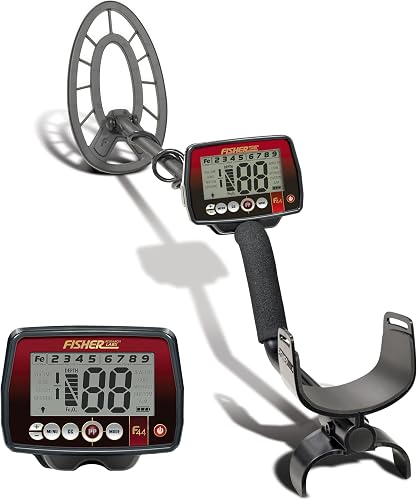
The standard F44 adds a large LCD display, target depth indicators, adjustable discrimination and audio feedback. The F44-11DD adds Ground Grab balancing, a backlight and adjustable Fe-Tone iron audio, along with a 9-segment visual Target-ID and 4-tone audio.
That extra control can suit detectorists who like to fine-tune settings for soil, iron and sound. It can also feel like more to learn if you want a detector that is ready to use with fewer changes.
All three are weatherproof designs for outdoor use, which matters if you hunt in rain or damp ground. The F22 is described for land and shallow water, and the F44-11DD coil is also described for shallow water and land.
The standard F44 suits parks, beaches and fields, with battery power for hunting away from an outlet. A beginner or family user may value the F22 for its weight and simple turn-on-and-go approach.
A detectorist who wants more adjustment may find the F44 models a better fit despite the extra learning. Your usual ground matters too, since open fields suit a larger coil and tighter spaces can suit a smaller one.
Start by thinking about how long you carry the detector and how often you will change settings. If weight and ease matter most, the F22 has the clearer fit.
If coverage and control matter most, the F44 versions deserve closer attention.

 Best for a large display
Fisher F44 Metal Detector with Weatherproof Design
Fisher F22 vs F44: what is the main difference?
The Fisher F22 is the simpler and lighter detector, while the Fisher F44 gives you a larger coil and more control options.
The F22 weighs about 2 pounds, compared with 3.6 pounds for the standard F44 and 2.5 pounds for the F44-11DD.
That weight gap is the first difference many hunters will notice during a long session.
A lighter detector can be easier to carry over distance, especially when you also carry digging tools and other gear.
The standard F44 at 3.6 pounds may feel more tiring after several hours of sweeping and digging.
The F44-11DD at 2.5 pounds sits between the two, so it keeps weight down while adding more controls.
The F22 uses a 9-inch coil.
Both F44 versions use an 11-inch coil, giving them a wider search area for each sweep.
A larger coil can cover open ground more efficiently and reduce the number of passes you need.
A smaller coil can feel easier to place around obstacles, gaps and crowded areas.
The standard F44 has a large LCD display and 5 programs.
That display is meant to make target information easy to read while you search.
The F44-11DD also has a 4-tone audio system, a 9-segment visual Target-ID, a backlight, adjustable Fe-Tone iron audio and computerized Ground Grab balancing.
Those added features give you more ways to respond to changing ground and iron targets.
If you want the shortest learning curve, the F22 has the clearer fit.
If you want more ways to adjust detection, one of the F44 models is the better match.
Which Fisher detector is easier to carry?
The F22 is the best choice for lighter handling. Its approximate 2-pound weight and padded hand grip and arm cup make it suitable for longer walks, family use and beginners who do not want a heavier detector.
The standard F44 weighs 3.6 pounds. That extra weight may matter during a long hunt, especially if you carry digging tools, water and finds at the same time.
The F44-11DD weighs 2.5 pounds. It is closer to the F22 in weight, but its 11-inch coil and added controls give it a different balance between coverage and simplicity.
A larger coil can cover more ground per sweep, but a smaller coil can feel easier to place around narrow gaps, brush and crowded areas. Your usual hunting locations should guide this choice.
For a closer look at the lighter option, read our Fisher F22 metal detector review. It focuses on the F22's controls, weatherproof design and all-purpose use.
How do the F22 and F44 coils compare?
The F44 models have the larger search coil, while the F22 has the more compact 9-inch coil. The F22's coil is weatherproof, and the product data describes its search coil as submersible.
The standard F44 uses an 11-inch search coil. The F44-11DD uses an 11-inch DD elliptical waterproof search coil, which is also described for shallow-water and land detecting.
A larger coil can make sense when you want to cover open ground efficiently. The F22's 9-inch coil may be easier to control when you are working around obstacles or learning a steady sweep.
Coil size does not decide every detecting result. Sweep speed, target conditions, ground mineralization and the settings you choose also affect the signals you hear and see.
Use smooth, even passes and overlap each sweep slightly. Keep the coil close to the ground without striking rocks, roots or hard surfaces.
Which model gives you better target information?
The F22 gives you a clear 0-99 numeric Target-ID and 4-tone Audio-ID system, while the F44 options emphasize a large LCD and adjustable detection features. The F22 also separates targets through categories and discrimination settings.
The standard F44 has a large LCD display, target depth indicators, adjustable discrimination and audio feedback. Those controls help you decide how much unwanted metal you want to hear while searching.
The F44-11DD adds a 9-segment visual Target-ID and 4-tone audio. Its adjustable Fe-Tone iron audio lets you change how iron targets are represented in the audio response.
Target ID is a guide, not proof of what is underground. Soil, depth, target position and nearby metal can affect the signal, so use the display and audio together.
The F22 suits you if you want numeric information with straightforward controls. The F44-11DD suits you if you want more audio and visual adjustment during a hunt.
What are the differences between the 2 F44 versions?
The standard F44 is the simpler F44 choice, while the F44-11DD adds more specialized control and display features. Both use an 11-inch coil, have 5 programs, are weatherproof and run on batteries.
The standard F44 has a large LCD display, sensitive detection features, adjustable discrimination, target depth indicators and audio feedback. Its battery life is listed as 30 hours.
The F44-11DD has a 4-tone audio system, a 9-segment visual Target-ID, a backlight, adjustable sensitivity and volume, adjustable Fe-Tone iron audio and computerized Ground Grab balancing.
Ground Grab is useful when soil mineralization changes across a site. The detector can adjust to the ground, which may help keep readings more stable as you move between different areas.
The backlight is useful when you hunt in low light or need to read the display after sunset. If you mostly detect in daylight and want a large screen, the standard F44 may provide the controls you need with less emphasis on extra adjustments.
Our Fisher F44 metal detector review covers the F44 design and features in more detail.
Which detector is better for beginners?
The F22 is the easier beginner choice because it combines a lighter body with simple controls and an easy-to-read target system. Its discrimination, sensitivity, notch and pinpoint controls give you useful adjustments without requiring the larger F44 feature set.
The standard F44 is also described for beginners and experienced treasure hunters. Its large LCD and 5 programs make it approachable, but its heavier weight may matter during long sessions.
The F44-11DD can suit a beginner who wants to learn more advanced controls from the start. Ground Grab, Fe-Tone and the backlight add useful options, but they also create more settings to understand.
Start with one mode and moderate sensitivity. Learn how the detector responds to clean ground before changing several settings at once.
If you are learning Fisher controls, our guide on how to use a Fisher F2 metal detector explains basic habits that also apply to many entry-level detecting sessions.
Which one is better for coins, jewelry and artifacts?
All 3 detectors suit general searches for coins, jewelry and artifacts on land, with the F44 models favoring wider coverage and the F22 favoring lighter handling. The F22 is specifically described as an all-purpose detector for jewelry, coins and artifacts on land and shallow water.
The standard F44 is designed for metal detection and includes features for identifying targets and ignoring unwanted metals. Its 11-inch coil can be useful when you cover open parks, fields or beaches.
The F44-11DD is suited to users who want more feedback while sorting possible targets. Its 4-tone audio, visual Target-ID and adjustable iron audio provide several ways to judge a signal.
The F22 can also work well for a lost-item search when its lighter body and pinpoint control matter. Our guide to using a Fisher F22 for finding a lost gold bracelet covers a focused search approach.
No detector can confirm a valuable find before recovery. Dig responsibly, follow local rules and use a careful plug-cutting method where digging is allowed.
How should you choose between the 3 products?
Pick the F22 if low weight and simple controls matter most. Pick the standard F44 for its large LCD and 30-hour battery life, or choose the F44-11DD for adjustable audio, a backlight and Ground Grab balancing.
The F22 is a strong fit for new detectorists, family use and hunts where carrying comfort matters. Its weatherproof design supports outdoor use, and its 0-99 Target-ID gives you more detail than a simple tone-only detector.
The standard F44 suits open-ground searches and users who want a larger display. Its battery-powered design keeps setup simple, while its weatherproof construction fits outdoor detecting in varied conditions.
The F44-11DD is the most feature-focused option here. It fits users willing to spend more time learning settings in exchange for more control over ground balance, iron audio, volume and sensitivity.
For a broader comparison of Fisher options, see our guide to the best Fisher metal detectors.
Fisher F22 vs F44: final decision
Choose the Fisher F22 for lighter carrying, simpler controls and a 9-inch coil. Choose the Fisher F44 for an 11-inch coil, a large LCD and 5 programs, then choose the F44-11DD if adjustable audio, Ground Grab and a backlight are priorities.
The F22 is the practical choice when comfort and an easy start matter more than extra settings. At about 2 pounds, it is the lightest of the three, with a padded hand grip and arm cup for carrying comfort.
Its 9-inch coil suits general searches for jewelry, coins and artifacts on land and shallow water. The 0-99 Target-ID and 4-tone Audio-ID system give useful feedback without requiring a large display.
Discrimination, sensitivity, notch and pinpoint controls cover the main adjustments most beginners will use. That makes the F22 a sensible fit for family use, short hunts and detectorists who want to get going quickly.
The standard F44 is the middle option for users who want a larger coil and display without the added F44-11DD controls. Its 11-inch coil covers more ground per sweep, which can help in open parks, fields and beaches.
The large LCD display makes target information easier to read, and 5 programs give more choice in how you search. Its battery-powered design supports hunting away from an outlet, with battery life listed at 30 hours.
At 3.6 pounds, it asks more of your arm and shoulder during long sessions. That trade-off is worth considering if you usually hunt for several hours at a time.
The F44-11DD is the better match for detectorists who want to fine-tune audio and ground response. Its 11-inch DD coil suits land and shallow water, while Ground Grab balancing adapts to ground mineralization.
Adjustable Fe-Tone iron audio, sensitivity and volume let you shape the response to iron and local conditions. The backlight helps when you need to read the display in low light.
With 5 modes of operation, it offers flexibility, but it also asks you to learn more settings. Whichever model you choose, practice with one setting at a time and let your usual hunting ground guide the final decision.
Test each detector on familiar ground before a longer hunt, and note which controls you use most. If you rarely change settings, simpler controls may serve you better.
If you enjoy adjusting audio, sensitivity and ground response, the extra control may be worth the learning time.