Coin Microscope vs Magnifier: Which Should You Choose? (November 2026)
Choose a digital coin microscope for close detail, photos and comfortable screen viewing, and choose a handheld magnifier for quick checks and portability. This coin scope or magnifier comparison shows when each tool fits your coins, eyes and work space.
On this page (11 sections)
- Coin scope or magnifier: the quick verdict
- The two sides side by side: microscope and magnifier
- Magnification: how close is close enough?
- Light: where a microscope pulls ahead
- Screen viewing and comfort: loupe or monitor?
- Photos and records: when a camera matters
- Weighing and authenticity: the scope-plus-scale option
- Portability and desk space: magnifier or microscope?
- Who should buy which: coin scope or magnifier?
- Setup, care and honest trade-offs
- Verdict: coin scope or magnifier?
Choose a digital coin microscope for close detail, photos and comfortable screen viewing, and choose a handheld magnifier for quick checks and portability.
This coin scope or magnifier comparison shows when each tool fits your coins, eyes and work space.
A coin scope or magnifier choice comes down to how closely you need to inspect, how long you will look and whether you need photos.
A handheld magnifier is simple and fast. A digital microscope adds a screen, adjustable light, camera and PC view.
We compared the specs and features of the 3 digital microscopes below. We also looked at how a traditional coin magnifier fits the same task for readers who prefer a lighter tool.

 Best for larger screen detail
TOMLOV DM9 7" Digital Coin Microscope 1200X
Coin scope or magnifier: the quick verdict
Pick a digital microscope if you inspect tiny marks for long periods, and pick a magnifier if you need quick, portable checks.
A screen reduces leaning and squinting during close work.
The Elikliv Microscope scores highest here for compact digital inspection. It has 1000x magnification, a 4.3-inch screen and 8 adjustable LED lights.
Its built-in rechargeable battery offers up to 3 hours of continuous use.
The TOMLOV DM9 gives you a larger 7-inch screen and 1200X magnification. It adds a 12MP camera, 1080P video and 16GB storage included.
The Elikliv Coin Microscope with Weighing Scale adds a different job. Its built-in scale reads to 0.1g resolution and weighs up to 300g in g/oz/ct.
Our score reflects fit for coin inspection, not a lab test of image quality.
The two sides side by side: microscope and magnifier
A digital microscope wins for magnification, light control, photos and shared viewing. A magnifier wins for size and speed.
| Point | Digital coin microscope | Handheld magnifier or loupe |
|---|---|---|
| Viewing | Screen view at high magnification | Direct view through a lens |
| Light | Built-in adjustable LED lights | Room light or external light |
| Photos | Camera and video on these models | Phone or camera, if you add one |
| Portability | Stand models stay on a desk | Fits a pocket or tray |
| Shared view | PC view on Windows or Mac | Other people cannot see the same view easily |
| Extra jobs | Weighing scale on one model here | Inspection only |
A magnifier has no screen to watch and no camera to set up. You pick it up, hold it to your eye and check a date or mint mark.
That speed matters when you sort a tray of coins and only need a quick look.
A microscope asks for a stand, a coin position and focus. In return, it gives a steady image you can study with your head upright.
Our best magnifier for coin grading guide explains the other side of this choice.
Magnification: how close is close enough?
Choose magnification for the mark you need to read, not for the largest number.
Dates, mint marks and receding hairlines need far less magnification than die cracks or tiny surface pits.
The TOMLOV DM9 reaches 1200X and the 2 Elikliv models reach 1000x. Those figures describe the system at a given screen and distance.
Actual magnification changes with screen size and the distance between the camera and the object.
Elikliv says this microscope has an optical magnification of about 20x. On a 4.3-inch screen it gives an enhanced view, and on a 27-inch or larger display it can exceed 100x.
A loupe works differently. Its power is fixed by the lens, so a lower power shows more of the coin and a higher power shows a smaller field.
Our guide on what is the best jewelers loupe magnification helps you match loupe power to grading tasks.
For coin work, start with the smallest magnification that reads the detail clearly. Too much magnification makes a coin harder to hold steady and harder to read as a whole.
Focus is the other half of magnification. The Elikliv Microscope has a height-adjustable stand for camera-to-object distance.
The TOMLOV DM9 uses height and focus adjustment on an 8.5-inch metal stand. Both let you trade field of view for detail.
Light: where a microscope pulls ahead
Built-in adjustable light is the strongest practical edge for a digital microscope.
Coins hide detail under flat room light, and glare can erase the exact mark you need.
The Elikliv Microscope has 8 adjustable LED lights. Elikliv says they provide optimal illumination in low-light conditions and improve image quality.
The TOMLOV DM9 has 8 built-in LED lights plus 2 flexible gooseneck lights. You can adjust brightness and aim the side lights from different angles to cut shadows and glare.
The Elikliv Coin Microscope with Weighing Scale uses 10 LED lights, split as 8 lens lights and 2 side lights. The maker says the side lights give even illumination from all angles for proof coins and jewelry.
A handheld magnifier usually relies on the light in the room. You can add a desk lamp and tilt the coin, but you cannot dim or aim light around a lens as precisely.
Screen viewing and comfort: loupe or monitor?
A screen microscope suits long sessions because you sit upright and use both eyes.
A loupe suits short checks because you can lift it and move on in seconds.
The TOMLOV DM9 uses a 7-inch LCD screen. That larger view helps during extended observation and shared viewing.
The Elikliv models use 4.3-inch screens. Elikliv says a large screen enhances ergonomics and eliminates eye and neck strain for the first model.
The weighing model uses a 4.3-inch IPS screen with a 178-degree wide viewing angle.
A loupe keeps one eye closed and the other close to the lens. Short checks are fine, but grading a full set can tire your eye and neck.
Our best jewelers loupe for coins guide covers loupe styles if you prefer that direct view.
A screen also shares the view. The Elikliv Microscope connects to Windows or a MacBook for a larger scale view.
The TOMLOV DM9 connects to a Windows or Mac computer for a larger real-time view. A coin club or a class can watch the same detail at once.
Photos and records: when a camera matters
Choose a camera microscope if you document coins, sell online or compare a coin with a reference image.
A magnifier alone gives you no record unless you add a phone.
The TOMLOV DM9 has a 12MP camera and 1080P video. It includes a 16GB Micro SD card, so you can save photos and inspection records without buying storage.
The Elikliv Microscope supports photos and videos, but the memory card is not included in the package. The Elikliv Coin Microscope with Weighing Scale also needs a Micro SD card you supply.
Live viewing works without a card, but saving does not.
Photos help you record a mint mark or error, compare 2 coins side by side, and make listing photos for selling coins online.
Video helps when light angle matters. A short clip can show how a mark catches light as the coin moves.
Our best digital microscope for coin collecting roundup covers camera models in more depth.
Weighing and authenticity: the scope-plus-scale option
A microscope with a built-in scale adds a check that no magnifier can match.
Weight helps you spot a coin that looks right but weighs wrong.
The Elikliv Coin Microscope with Weighing Scale has 0.1g resolution and weighs up to 300g in g/oz/ct. Elikliv says the scale suits error coin grading, authenticity checks and documenting wear over time.
You can verify weight while you inspect, without moving the coin to a second tool.
Elikliv says the scale gives a stable reading in 0.1s on a sturdy metal base plate. Fast settling matters when you sort several coins in a row.
Weight checks pair well with visual checks. A coin can show the right date and mint mark yet fail on weight.
The same idea applies beyond coins. The maker lists jewelry and gold as uses, with weight in grams, ounces or carats.
Our guide on the difference between gold plated and 14k gold shows why weight and surface inspection belong together.
A magnifier cannot weigh at all. If weight checks are part of your buying or selling, the weighing microscope is the only one of these 3 that fits the job.
Portability and desk space: magnifier or microscope?
A magnifier fits a pocket and a tray. A stand microscope fits a desk and a routine.
Choose by where you inspect coins most often.
The Elikliv Microscope weighs 1.1 pounds and measures 8.58 x 6.97 x 3.35 inches. It has a height-adjustable stand and a built-in rechargeable battery for up to 3 hours of use.
The TOMLOV DM9 uses a metal base and an 8.5-inch metal stand. Its structure is steadier for detailed work, and the base is heat-resistant for light soldering tasks.
The Elikliv Coin Microscope with Weighing Scale measures 8.5 x 3.3 x 6.9 inches and weighs 16 ounces. Its handheld design lets you remove it from the stand for outdoor use.
A loupe wins on travel. It slips into a case and works at a coin show without a stand, a cable or a battery.
Who should buy which: coin scope or magnifier?
Buy the tool that matches your main task, your eyes and the place where you work.
Choose the Elikliv Microscope if you want compact digital inspection for coins, jewelry, stamps and circuit board work. Its 4.3-inch screen, 8 adjustable LED lights and Windows PC view suit a desk routine.
Choose the TOMLOV DM9 if you want a larger screen and a full photo-and-video record. Its 7-inch screen, 1200X magnification and 16GB storage included suit error coin study and collection records.
Choose the Elikliv Coin Microscope with Weighing Scale if you inspect and weigh in one step. Its 0.1g scale to 300g, 8+2 lights and PC live view suit authenticity checks and gold buyers.
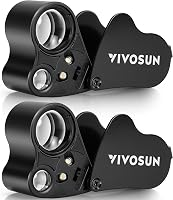
Choose a handheld magnifier if you sort coins quickly, travel to shows or want the simplest tool. Our best magnifier for coin collecting guide lists loupe-style picks for that routine.
A loupe also pairs well with a microscope, since you can do a fast loupe check first and a screen close-up second.
Setup, care and honest trade-offs
Keep either tool clean, dry and steady, and store lenses away from dust.
For a digital microscope, set the stand on a flat surface and set the coin flat before you focus. Adjust height for the field of view you want, then adjust focus.
Change light brightness after focus, since glare can hide a sharp image.
Wipe the lens with a soft, dry cloth made for optics. Keep fingers off the lens and the screen.
For a magnifier or loupe, keep the lens in a case when you travel. Wipe it gently and avoid pocketing it loose with coins.
The honest trade-offs are clear. A microscope costs more desk space and needs setup, a charge and sometimes a memory card.
A magnifier gives no photo, no shared view and no weight check. The TOMLOV DM9 includes storage, while both Elikliv models need a card you supply.
Our guide to a coin microscope with weight scale covers the weighing models in more depth.
Verdict: coin scope or magnifier?
Pick a digital coin microscope for detail, light control and records, and pick a magnifier for speed and portability.
If you grade often, document finds or tire of leaning over a loupe, the TOMLOV DM9 or the Elikliv Microscope will serve you better. The TOMLOV wins on screen size and included storage, while the Elikliv Microscope wins on compact size.
If you buy, sell or verify metal, the Elikliv Coin Microscope with Weighing Scale earns its place. It is the only one here that inspects and weighs in a single setup.
If you need a quick look at a date, a mint mark or a tray of coins, a magnifier still does that job with less fuss. Many collectors end up with both, and use each where it fits best.
Frequently asked questions
Is a coin scope or magnifier better for grading?
A coin scope or magnifier depends on the detail you need. A digital microscope with a screen and adjustable light helps you study mint marks, dates and surface marks at high magnification.
A handheld magnifier is faster for quick grading checks and for viewing a coin under light from different angles.
Can a digital coin microscope show a whole coin?
Some digital microscopes are set up for close-up detail rather than a full coin. The Elikliv Microscope can view an entire coin at lower magnification by flipping the camera 180 degrees and raising it higher.
The Elikliv Coin Microscope with Weighing Scale is optimized for close-up detail such as mint marks and errors.
Do I need a memory card with a digital coin microscope?
It depends on the model. The TOMLOV DM9 includes a 16GB Micro SD card.
The Elikliv Microscope and the Elikliv Coin Microscope with Weighing Scale need a memory card you supply if you want to save photos or videos.
Live viewing works without a card.
Which is easier on the eyes for long sessions?
A screen microscope lets you sit upright and view details without leaning over a loupe. The TOMLOV DM9 has a 7-inch screen, while the Elikliv models use 4.3-inch screens.
A handheld magnifier such as a loupe can be comfortable for short checks, but long sessions often favor a screen.