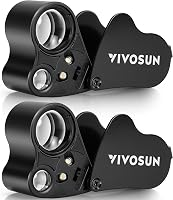
What Magnification Should You Choose for a Jewelers Loupe?
For most finds work, 10x is the best jewelers loupe magnification. It shows hallmarks, mint marks and small flaws without making ordinary hand movement too hard to control. Use 5x for whole coins and larger pieces, and reserve 15x or 20x for a short check on a specific tiny detail.
On this page (12 sections)
- What is the best jewelers loupe magnification for everyday finds?
- How does jewelers loupe magnification change what you see?
- What magnification is a jewelers loupe for hallmarks?
- Which loupe power works best for coins and tokens?
- What is the best magnification for a jeweler's loupe if your hands shake?
- How do you pick a loupe holder, stand or hands-free setup?
- What magnification should you choose for a digital microscope?
- How do you use a loupe for hallmarks, dates and mint marks?
- What lens size, eye fit and light should you check before you buy?
- How should you care for a loupe and keep finds safe during checks?
- What is the best jewelers loupe magnification for your budget and skill level?
- The best jewelers loupe magnification: our final rule
10x is the best jewelers loupe magnification for most beginners and coin collectors. It gives enough power for dates, mint marks, hallmarks and scratches while keeping the view usable.
What is the best jewelers loupe magnification for your first purchase? Choose 10x if you clean, grade or check finds often.
Choose 5x if you mainly want a steady view of a whole coin, ring or artifact.
Higher power is not always better. A 20x loupe can make a tiny mark clear, but it also makes hand movement and focus harder.
We compared common power levels against the tasks metal detector users do most: reading details, checking condition and sorting finds.
What is the best jewelers loupe magnification for everyday finds?
A 5x loupe shows a wider area, so it suits a whole coin, a ring band, or two finds side by side. It also feels calmer if your hands move a little.
A 10x loupe narrows the view and shows smaller letters, worn edges and fine scratches more clearly. Many buyers use it for hallmarks, coin dates and mint marks.
A 15x or 20x loupe narrows the view again, so use it for a short check on one spot rather than a long scan. A holder, a table edge or a steady elbow makes high power easier to use.
If you want a wider first look, a coin magnifier may suit you better than a true jewelers loupe. That guide is worth reading if you plan to inspect full coins rather than tiny marks.
Our rule is simple: start at 5x or 10x, then add power only when you know where to look.
Start at 5x or 10x for everyday finds, and add higher power only for a known detail.
How does jewelers loupe magnification change what you see?
Magnification changes image size, not lens quality. A higher number makes detail look bigger, but also makes focus and movement more noticeable.
Think of 5x as a search view for a whole coin face, ring band, or small artifact. It helps you spot wear, damage, or an odd shape and decide where to look next.
Think of 10x as an inspection view for dates, mint marks, legends, and scratch lines. Most people use this range for sorting finds after a hunt.
Think of 20x as a detail view for a worn letter, tiny hallmark, or small pit. The view is tight, so keep the loupe close and move the piece slowly.
Depth of field shrinks as power rises, so at 20x only a narrow band stays sharp and you must refocus across the surface. Light matters at every power, and bright angled light shows edges better than a dim overhead lamp.
Pick 10x for routine inspection, drop to 5x for a wide scan, and step up to 20x only for a short detail check.
What view size do you get at 5x, 10x and 20x?
At 5x, you see the most area and the steadiest image. At 10x, you see about half that width in each direction, with more detail in the center.
At 20x, you see a small patch, with the sharpest part in the middle.
That trade-off explains why one loupe rarely does every job. A scanner view finds the spot, an inspection view reads it, and a detail view settles a hard call.
What magnification is a jewelers loupe for hallmarks?
A hallmark may sit on a curved band, clasp, jump ring, or the back of a tag.
Start at 5x to find the mark, then move to 10x to read it.
Use 15x or 20x only if the letters are worn, tiny, or partly filled with soil.
Clean the area first with warm water, a soft brush, and mild soap if needed. Dirt in the cut of a letter can make even a strong loupe look weak.
Move the piece, not the loupe, during the check. Keep the loupe close to your eye, bring the find to focal distance, and rest your elbows on the table to cut shake.
A jewelers loupe holder can help if you want both hands free to turn the find.
If a mark may be gold, silver, or platinum, read about the difference between gold plated and 14k gold before you judge a find. Magnification shows the mark, but it does not prove metal content by itself.
Use 10x for hallmarks, with 5x to find the mark and 20x for a worn one.
Which loupe power works best for coins and tokens?
Coins reward a staged look. Scan the whole face at 5x to spot wear, damage, or an odd shape.
Move to 10x to read the date, mint mark, legends, and rim. Move to 20x only for a small feature that still looks unclear.
Raking light helps on coins. Place a lamp low and to one side, then tilt the coin until letters and scratches catch light.
Do not clean a coin hard just to make it read better. A soft rinse and a gentle brush remove soil without rubbing away detail.
Color and tone also matter. A loupe can show surface marks, but it cannot settle authenticity on its own.
Compare the coin with known examples and check weight and diameter before you reach a firm call. For coin-focused picks, our best jewelers loupe for coins guide maps power and lens size to coin tasks.
Scan at 5x, read at 10x, and use 20x for one hard detail.
When should you move from a loupe to a microscope?
Move to a microscope when you need to record a detail, measure it, or look for longer than a few minutes. A screen view lets you share what you see and save a photo for later.
A digital view also reduces eye strain during long grading sessions. You can sit back, adjust height and light, and look at the same spot from a normal reading distance.
The best digital microscope for coin collecting roundup covers screen size, light and stand options. Use a loupe for quick field and table checks, then use a microscope for records and hard calls.
What is the best magnification for a jeweler's loupe if your hands shake?
A jewelers loupe works best close to your eye. That position leaves little room for your hand to wander, but a shaky hand still moves the find in and out of focus.
Start at 5x, find the detail, then rest your elbows before you move to 10x.
Try a loupe holder if you want both hands free. A holder keeps the loupe at a set distance while you turn the piece with your fingers.
It also frees you to use tweezers, a brush or a coin flip during the check.
Work at a table with a lamp in reach. Sit or stand where your elbows can rest, and keep the piece over a dark mat or tray.
A dark background makes light-colored metal easier to see and gives your hands a stable frame.
The YOCTOSUN Magnifying Glass with Light uses 5 interchangeable lenses from 1.0X to 3.5X. It wears as glasses or a headband, and it has two brightness levels with a rechargeable built-in lithium battery.
That design suits sewing, crafts and coin checks where you need both hands free. It does not replace a 10x jewelers loupe for tiny hallmarks, but it can work for larger pieces and longer sessions.
Choose 5x or 10x plus support if shake is your main issue.
How do you pick a loupe holder, stand or hands-free setup?
A simple holder fixes the loupe in place. You bring the coin or ring to it, then tilt and turn the piece.
That setup works well at a bench and leaves your fingers free for tweezers or a brush.
A stand with height adjustment gives you more room. You can raise or lower the view, change angle and work under the lens.
That helps for coins that need light from the side and for finds you want to photograph.
A head magnifier frees your hands but changes the feel. You look down through a lens on a frame, which suits crafts and repair work.
It can suit long sessions, but a jewelers loupe gives a tighter, more direct view for small marks.
The Elikliv Microscope has a 4.3 inch screen, 720P HD imaging and 8 adjustable LED lights. Elikliv says the actual magnification changes with screen size and camera distance, so treat the headline number as a maximum rather than a fixed loupe power.
Its height-adjustable stand lets you change camera-to-object distance. That helps you move from a detail view to a wider view of a coin by raising the camera.
It connects to Windows or MacBook for a larger view, and it has a built-in rechargeable battery of up to 3 hours.
Memory card is not included, so you need your own card to save photos or videos. That is a fair trade-off if you want screen viewing and records without a large bench microscope.
Use a holder for loupe work and a stand for longer screen checks.
What magnification should you choose for a digital microscope?
A loupe number describes how much larger the image looks through the lens. A digital microscope number can change when you connect it to a larger monitor or move the camera.
That is why a 1000x digital view can feel very different from a 20x loupe.
Judge a digital microscope by clear detail, light control, stand stability and ease of focus. A stable stand and good side light matter more than a huge headline number.
You also want a view that shows a date or mint mark without pixel breakup.
The TOMLOV DM9 7" Digital Coin Microscope 1200X has a 12MP camera, 1080P video and 8 built-in LED lights plus two flexible gooseneck lights. Its metal base and 8.5 inch metal stand give a steady platform for coins, jewelry and small electronics work.
It includes a 16GB memory card, a USB cable, a light barrier, a wired remote control and a user manual. It connects to Windows or Mac for a larger real-time view, which helps when you share a find or record a collection.
The larger 7 inch screen suits longer look sessions better than a small built-in display. Raise or lower the stand to change the viewing range, and use the gooseneck lights to cut shadows on curved metal.
Pick a digital microscope by stand, light and clear screen detail, not by the largest number.
How do you use a loupe for hallmarks, dates and mint marks?
First, clean the find gently and dry it. Hold it under a bright lamp and turn it slowly at 5x.
Second, move to 10x and bring the piece to the loupe. Keep the loupe close to your eye and move the find until the mark snaps into focus, turning it a few degrees at a time.
Third, use 20x only if a letter, date digit, or mint mark still looks unclear. Rest your elbows, work over a dark tray, and take a short look.
If the image keeps dancing, go back to 10x and change the light angle.
For coin dates, read the full date before you judge wear, because a worn first digit can change the date by a decade. For mint marks, check the usual spot for that series.
For hallmarks, note the shape, letters, and placement. A best jewelers loupe with scale can help when you need to record the size of a mark or flaw.
Find at 5x, read at 10x, confirm at 20x.
What lens size, eye fit and light should you check before you buy?
A wider lens helps when you scan a coin face or a ring band. A smaller lens still works, but you will move the piece more to cover the same area.
For finds work, many buyers like a mid-range lens for a useful view without a bulky barrel.
Check how the loupe sits at your eye. A comfortable eye cup or a smooth barrel helps you hold position.
If you wear glasses, decide now whether you will inspect with or without them, because that choice changes focal distance.
Look at lens quality in practical terms. A clear edge, low distortion, and clean glass matter more than a claim on a box.
Multi-coated lenses can cut glare, which helps on bright silver and gold.
Light access is a separate choice. A loupe with built-in light helps in a dark room, but a strong desk lamp gives you more control over angle and shadows.
Our best jewelers loupe to buy roundup compares lens size, power, and light options side by side.
Choose lens size and eye fit for your most common task, then set magnification.
How should you care for a loupe and keep finds safe during checks?
Wipe the lens with a clean microfiber cloth using light strokes. Do not use paper towels, shirt fronts, or household cleaners on the glass.
Store the loupe in a case or pouch so the lens does not rub against coins, tools, or keys. Keep it dry, and check the barrel and eye cup for cracks after a drop.
Handle coins by the edge. Oils from your fingers can dull tone over time, and hard rubbing can mark a soft surface.
Use a clean cotton glove for high-value pieces, or hold the coin in a flip while you inspect it.
Clean finds gently before you inspect them. Warm water, mild soap, and a soft brush remove soil from most dug metal.
If you use a coin microscope with weight scale, add weight and diameter to your notes after the loupe check.
Wipe the lens with microfiber, handle finds by the edge, and store the loupe alone.
What is the best jewelers loupe magnification for your budget and skill level?
Buy 5x first if you mainly scan whole coins, rings and larger artifacts. It gives a wider, calmer view and suits shaky hands or long sorting sessions.
You can add a 10x later for detail work.
Buy a digital microscope if you record finds, share details online or inspect for long periods. Screen viewing, adjustable light and a stand can beat a loupe for comfort, even though a loupe is faster to grab and carry.
Buy a head magnifier if you need both hands free for crafts, repair or cleaning. Lower powers like 1.0X to 3.5X suit larger work, while a true jewelers loupe suits tiny marks.
Our score for each product above weighs specs, features and buyer feedback against what you are shopping for. That is why the three picks here cover different jobs instead of repeating the same loupe.
Pick 10x for all-round finds work, 5x for wide scans, and a microscope for records.
The best jewelers loupe magnification: our final rule
Start by cleaning the find and scanning it at 5x. Move to 10x to read dates, mint marks and hallmarks.
Use 20x or a digital microscope only for one hard detail or a record you want to save.
Support your hands at a table, angle the light and move the piece slowly. Those habits matter as much as the number on the barrel.
For your next step, compare our best jewelers loupe to buy picks and choose the lens size and power that fit your bench. If you record finds often, add a digital microscope for screen viewing and photos.
The best jewelers loupe magnification for most finds is 10x, with 5x for wide scans and 20x for short detail checks.
Frequently asked questions
What is the best jewelers loupe magnification for coins?
Most collectors start with 10x for coin dates, mint marks and surface checks. A 5x loupe shows more of the coin at once and feels steadier in hand.
Use 10x after the first look, then move to a higher power only for one small area.
What magnification is a jewelers loupe for hallmarks?
A 10x loupe reads most hallmarks on rings, chains and bracelets while you hold the piece steady. A 5x loupe can work for large, clear marks.
If the mark is worn or very small, 15x or 20x gives a clearer edge for a short look.
Can a jewelers loupe magnification be too high?
Yes, higher power shrinks the view and depth of field, so slight movement matters more. That is why 20x suits a fixed check more than a long search across a coin.
Start lower, find the area, then raise power for the detail.
Is a digital microscope better than a jewelers loupe?
A digital microscope gives a larger screen view, adjustable light and a record of what you saw. A loupe is smaller, faster to pick up and easier to carry to a table or field site.
Many collectors use both, with the loupe for the first check and the microscope for close records.