Minelab Manticore vs XP Deus II: Which Should You Choose? (November 2026)
Choose the Manticore for its 2D target ID map and compact fold; choose the Deus II for its wireless setup and greater stated waterproof depth. Your sites, preferred audio and plans for underwater detecting should guide the choice.
On this page (7 sections)
- Minelab Manticore vs XP Deus II: which fits your search?
- Which detector gives you more frequency choices?
- Which target feedback suits you better?
- Which detector works better for underwater use?
- Which one is easier to carry and store?
- How should you start with either premium detector?
- Which metal detector should you choose?
Choose the Manticore for its 2D target ID map and compact fold; choose the Deus II for wireless operation and greater stated waterproof depth. In this Minelab Manticore vs XP Deus 2 comparison, your terrain, preferred feedback and underwater plans matter more than the premium price tier.
Both detectors are built for varied search settings, including beaches. The Manticore lists 10 search modes and waterproofing up to 16 ft, while the Deus II is stated as waterproof to 20 m / 66 ft.
The Manticore comes with an 11 in Double-D coil. The Deus II configuration includes an 11 in FMF coil, remote control and WS6 wireless headphones.
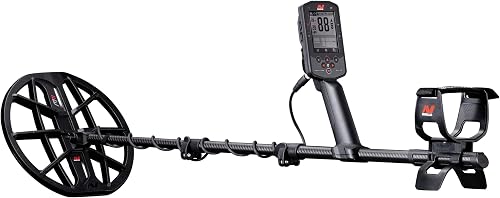 Best for visual target ID
MINELAB MANTICORE High-Power Multi-IQ+ Waterproof Metal Detector
 Best for wireless flexibility
XP METAL DETECTORS Deus II Metal Detector
Minelab Manticore vs XP Deus II: which fits your search?
Pick the Manticore if a visual 2D target ID map and a fold-down length of 24.8 inches fit your priorities. Pick the Deus II if you want its wireless configuration, multiple frequency choices or greater stated waterproof depth.
A detector can offer useful modes and feedback yet still feel wrong for the places you search. Think about how often you change sites, whether you hunt in water and how you prefer to judge a signal.
If you're weighing other premium options too, start with our guide to the best high end metal detectors. It can help you decide what features deserve the most weight before you compare specific models.
How does the Manticore compare with the Deus II at a glance?
The Manticore emphasizes its target ID map, 10 search modes and folding design. The Deus II emphasizes wireless operation, multiple frequency options and a deeper stated waterproof rating.
| What matters | Minelab Manticore | XP Deus II |
|---|---|---|
| Multi-frequency approach | Multi-IQ+ | Fast Multi-Frequency, plus 49 single frequencies |
| Target feedback | 2D target ID map, rich audio options | Rich audio options and 4-band equalizer |
| Search choices | 10 modes | 12 factory multi-frequency programs |
| Stated waterproof depth | Up to 16 ft | 20 m / 66 ft |
| Coil in this configuration | 11 in Double-D | 11 in FMF |
| Listed weight | 2,340 g | 2.8 lb |
| Folded or extended length detail | Folds from 56.7 in to 24.8 in | Extended length 130 cm |
The figures describe different parts of each detector, so don't treat them as a controlled performance test. Use them to shortlist, then check the model's instructions and setup for your intended sites.
Which detector gives you more frequency choices?
The Deus II states a wider set of explicit frequency choices: 12 multi-frequency factory programs and 49 single frequencies from 4 to 45 kHz. The Manticore lists Multi-IQ+ simultaneous multi-frequency technology, but the details here don't give a matching count of selectable frequencies.
That difference may matter if you like to adjust your setup for different targets or conditions. More choices can also mean more settings to learn, so consider whether you want to spend time comparing programs or prefer a simpler starting routine.
The Manticore's product details say Multi-IQ+ has 50% more power than traditional models and describe it as the highest-powered simultaneous multi-frequency machine on the market. Those are Minelab's performance claims, not a head-to-head measurement against the Deus II.
What does Multi-IQ+ mean for a Manticore buyer?
Multi-IQ+ is the Manticore's simultaneous multi-frequency technology. In everyday terms, it is the central detection approach rather than a list of 49 manually selectable single frequencies.
Its 10 search modes give you named starting points for different terrain. The listed modes include All-Terrain for inland detecting, Beach for sand, surf and seawater zones, and Goldfield for gold nuggets.
Use a mode that matches your site, then take time to learn how its audio and display respond. Our guide to best settings for Minelab Manticore can help you build a deliberate setup rather than changing several controls after every signal.
What do the Deus II's frequency options offer?
The Deus II provides 12 factory programs using fast simultaneous multi-frequency operation, as well as 49 single frequencies from 4 to 45 kHz. That gives you distinct paths for getting started and for choosing a single frequency.
Start by learning one factory program before switching often. When you do change a setting or program, note what changed and where you were searching, so you can compare signals more clearly over time.
If you already use XP detectors, our guide to XP Deus 1 programs covers choosing and saving programs on the earlier model. The Deus II is a different model, so use its own manual for exact steps and controls.
Which target feedback suits you better?
The Manticore is the clearer fit if you want a 2D target ID map alongside audio. The Deus II is a better fit if its rich sound library and 4-band equalizer match how you prefer to interpret signals.
The Manticore's 2D map gives you a visual view of target ID, and its enhanced discrimination is designed to help separate desired targets from trash. It also offers customizable audio controls, handgrip vibration, a display backlight and a keypad backlight.
The Deus II emphasizes sound: it has a non-exhaustive sound library and a 4-band equalizer for adjusting audio. Its wireless configuration includes WS6 headphones, so it suits buyers who value the controls and audio setup that come with this package.
Neither style guarantees that you can identify every target before digging. Ground conditions, nearby metal and your settings all affect what a signal tells you.
How should you compare audio before choosing?
Think about whether you learn better from a visual map, sound, or both. If you hunt in low light, the Manticore's flashlight and backlit controls may be useful; if you want to shape sound, the Deus II's equalizer gives you an explicit audio adjustment feature.
Check which parts of a detector you can access while wearing gloves and carrying your usual digging tools. A control layout that feels clear in a quiet room may take practice in a noisy or windy spot.
Keep your first sessions consistent. Use one mode or program, listen to a range of signals and change one control at a time so you can understand the effect.
Which detector works better for underwater use?
The Deus II has the greater stated waterproof depth at 20 m / 66 ft; the Manticore is waterproof up to 16 ft. Choose by the water depth and conditions you actually expect, and follow the relevant model's manual.
The Manticore lists IP68 and describes Beach mode for sand, surf and seawater zones. The Deus II is also described as IP68, with an underwater remote-control design and bone-conduction headphones available as an optional accessory.
A depth rating alone doesn't tell you how a complete setup will feel in moving water or how to configure it. Read the instructions for the exact detector and accessories before entering the water.
For beach searches that stay on dry sand or shallow wet areas, either detector's stated beach use may be relevant. For diving or deeper underwater searches, the Deus II's greater stated depth gives it the clearer match on the information here.
What should you check before taking a detector into water?
Confirm the depth limit and the instructions for the specific detector and any accessory you plan to use. Inspect the equipment as directed before and after a water session, and don't assume that every included or optional part has the same water rating.
The Deus II package here includes a remote control and WS6 wireless headphones; bone-conduction headphones are described as optional. Verify the intended underwater audio setup in XP's instructions before relying on it.
The Manticore's stated limit is up to 16 ft. That can suit many beach and shallow-water plans, but it is not the same depth rating as the Deus II.
Which one is easier to carry and store?
The Manticore folds down to 24.8 inches, while the Deus II is listed at 2.8 pounds. Those details help with different questions: packed length for the Manticore, and listed weight for the Deus II.
The Manticore's stated length changes from 56.7 inches to 24.8 inches when folded. That can be useful when your storage space or vehicle has limited room, though you should still measure the whole detector and your carrying case.
The Deus II's stated extended length is 130 cm, and its weight is 2.8 pounds. The Manticore's listed weight is 2,340 g.
Since the weights use different units, convert them before treating the difference as meaningful.
For a long search, overall comfort can depend on how you hold and move a detector, not just its listed weight. Consider your usual session length and whether you can carry the detector and digging tools comfortably.
Does a lighter or shorter detector make a better choice?
A shorter folded detector can be easier to fit in a car or cupboard, while lower carried weight may matter more during a long walk. These products provide different measurements, so compare the full setup you're considering rather than assuming one spec settles the question.
The Manticore's description calls it ultra-lightweight and compact, but its listed weight is 2,340 g. Use the weight figure and fold-down length to judge your own needs.
The Deus II package includes a remote and headphones, so think about how you'll store and carry those parts too. Good organization helps keep a wireless setup ready without misplacing an accessory.
How should you start with either premium detector?
Begin with the detector's manual, a familiar search area and one mode or program. See how to ground balance a Minelab Manticore for a model-specific setup step.
A steady setup gives you a better chance to learn how the detector responds than frequent, unexplained changes.
Assemble the detector as its maker directs and adjust it for a comfortable stance. Check your controls, audio and display before you start, then set a simple goal such as learning common signals in one area.
Keep notes on the mode or program, ground conditions and signals that led you to dig. Change one setting at a time when you need to adjust, and return to your baseline if the new setup makes signals harder to read.
Both products are battery powered. Follow the correct charging and storage instructions for the model, and check the manual for care after exposure to dirt, sand or water.
If your choice is the Manticore, the Manticore vs Equinox 800 comparison can help you decide whether its features justify moving up from another Minelab option. For a comparison with another higher-end Minelab detector, see Manticore vs CTX 3030.
Which metal detector should you choose?
Choose the Manticore for its 2D target ID map, 10 search modes and shorter folded length. Choose the Deus II for its wireless package, explicit frequency choices and greater stated waterproof depth.
The Manticore is the more direct fit if you want visual target information, integrated lighting features and a detector that folds to 24.8 inches. Its stated waterproof limit is up to 16 ft.
The Deus II is the stronger match if you want included WS6 wireless headphones and remote control, plus 12 multi-frequency programs and 49 single-frequency options. Its stated waterproof depth is 20 m / 66 ft.
Before deciding, match the detector to your regular sites, not an occasional outing. Pick the model whose controls and audio you can learn, and whose stated water rating fits your plans.
Frequently asked questions
Is the Minelab Manticore or XP Deus II better underwater?
The XP Deus II has the greater stated waterproof depth at 20 m / 66 ft, compared with up to 16 ft for the Manticore. Choose based on the depth you actually plan to search, and follow the exact model's instructions for underwater use.
Which detector has more frequency choices?
The Deus II offers 12 factory multi-frequency programs and 49 single frequencies from 4 to 45 kHz. The Manticore uses Multi-IQ+ simultaneous multi-frequency technology; its supplied product information doesn't state a matching number of selectable frequencies.
Which is easier to carry?
The Manticore folds from 56.7 inches to 24.8 inches, which can help when packing or storing it. The Deus II's listed weight is 2.8 pounds, while the Manticore's is 2,340 grams, so compare the exact setup and how you plan to carry it.
Can both detectors search saltwater beaches?
Both are described for beach or seawater use. The Manticore has a Beach mode for sand, surf and seawater zones, while the Deus II is described for wet sand and underwater treasure hunting; follow each model's instructions for the conditions and depth.
Do the detectors use wireless headphones?
The Deus II configuration here includes WS6 wireless headphones and a remote control. The Manticore's features include customizable audio, handgrip vibration and lighting, but the product details here don't specify included wireless headphones.


