Garrett vs Minelab Pinpointers: Which Should You Choose? (November 2026)
Choose the Minelab PRO-FIND 35 for underwater searching and adjustable sensitivity; choose the Garrett Pro-Pointer II for rain, wet ground and simple target recovery. Their water limits and alert features are the main differences.
On this page (6 sections)
Choose the Minelab PRO-FIND 35 for underwater searching and adjustable sensitivity; choose the Garrett Pro-Pointer II for rain, wet ground and simple target recovery. In this Garrett vs Minelab pinpointer comparison, water use and target alerts make the biggest difference.
The Minelab PRO-FIND 35 is fully waterproof up to 10 ft (3 m) underwater. The Garrett Pro-Pointer II is water-resistant, with a tip that may be submerged, and adds a fast retune function for mineralized ground, wet sand or saltwater.
Both are handheld tools for narrowing down a target after your main detector finds it. If you’re new to the tool, start with [What Is a Pinpointer?
What You Should Know](/what-is-a-pinpointer/).
 Best for underwater searching
Minelab PRO-FIND 35 Waterproof Pinpointer Metal Detector
Garrett vs Minelab pinpointer: which one should you choose?
Choose Minelab for full submersion and more target information; choose Garrett for tip-only water use and fast retuning. The PRO-FIND 35 also has 5 sensitivity levels, while the Pro-Pointer II keeps its controls focused on recovery.
The Minelab gives audio and vibration responses that intensify as its probe approaches a target. Ferrous Tone ID adds 2 distinct responses to help separate ferrous junk from nonferrous finds.
The Garrett offers a 360° detection field, a built-in LED flashlight and a fast retune function. Retuning can help tune out mineralized ground, wet sand or saltwater, but its water-resistant design isn't a substitute for a fully waterproof pinpointer.
Which pinpointer is better for water?
The PRO-FIND 35 is the clearer choice if you expect to search underwater. It's rated for use up to 10 ft (3 m), so follow that depth limit and the maker's directions.
The Pro-Pointer II is described as water-resistant, with a tip that can be submerged and operation in rain or under running water. Keep the rest of the unit out of the water.
Don't assume the same water rules apply to every pinpointer from either brand. Check the exact model's instructions before taking it into water.
Which one gives you more target information?
The Minelab offers the more detailed set of target responses. Its Ferrous Tone ID uses 2 responses to help distinguish ferrous junk from nonferrous targets, and audio and vibration intensify near a target.
The Garrett focuses on locating the target, with a 360° detection field and LED flashlight. Choose it if retuning and a direct recovery tool matter more to you than tone identification or sensitivity levels.
How do the Garrett and Minelab features compare?
The Minelab offers more adjustment and target feedback; the Garrett adds retuning for challenging ground. Think about what slows you down during recovery before choosing extra controls.
| Feature | Minelab PRO-FIND 35 | Garrett Pro-Pointer II |
|---|---|---|
| Water use | Fully waterproof up to 10 ft (3 m) | Water-resistant; tip may be submerged |
| Sensitivity | 5 levels | No adjustable levels specified |
| Target alerts | Intensifying audio and vibration | LED flashlight |
| Target identification | 2 Ferrous Tone ID responses | No target ID feature specified |
| Ground handling | DIF technology reduces interference with an operating detector | Fast retune for mineralized ground, wet sand or saltwater |
| Detection field | Not specified here | 360° |
The PRO-FIND 35's Detector Interference Free (DIF) technology is designed to reduce interference with an operating metal detector. That may matter if interference between your devices is a concern.
The Pro-Pointer II's retune function is a more specific tool for handling certain ground conditions. It can tune out mineralized ground, wet sand or saltwater, according to Garrett's product information.
What comes with each pinpointer?
Both models include a holster, and the Garrett Pro-Pointer II includes a 9V battery. The PRO-FIND 35 includes a holster and lanyard, while its battery isn't specified here.
The Garrett's woven belt holster keeps it close while you dig. Its built-in LED flashlight can help when you’re recovering targets in low light.
Minelab includes a holster and lanyard with the PRO-FIND 35. Its audio and vibration alerts give you more than one way to notice a target response.
Setup details can vary by model, so read the manual before your first search. For recovery steps with Garrett, see how to use a Garrett Pro-Pointer.
Which pinpointer suits your search style?
Pick the model that matches where you search and how much feedback you want at the target. A pinpointer helps narrow the location after the larger detector signals, but the two models suit different conditions.
Choose the Minelab if water depth, sensitivity adjustment and ferrous target alerts matter to you. Its fully waterproof design and 5 sensitivity levels are the clearest reasons to choose it over the Pro-Pointer II.
Choose the Garrett if you mainly search on land, in rain or on wet ground, and value quick retuning. Its 360° field and flashlight cover common recovery needs without the PRO-FIND 35's target ID and sensitivity settings.
If you’re comparing other brands, Nokta AccuPoint vs Garrett Carrot covers a separate set of options. For gold searches, see our guide to the best gold pinpointer.
Are there other pinpointers worth considering?
Yes. The Dmyond and DR.ÖTEK models add different alert styles and water-use options to this comparison.
Their listed limits and features are distinct from the Garrett and Minelab models, so match them to your actual search conditions.
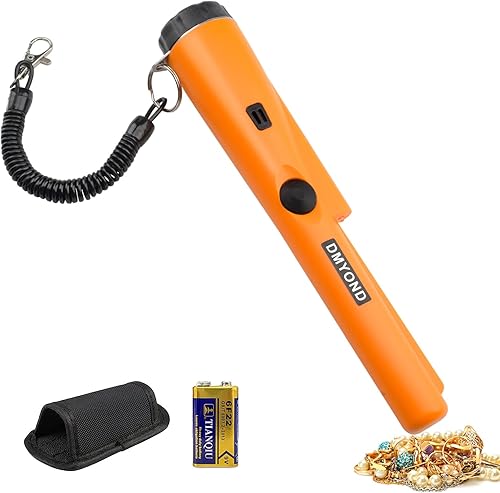
Dmyond's partial waterproofing applies to the needle probe, not the switches or horn. Keep those parts dry, and don't use the unit submerged.
DR.ÖTEK's IP68 rating and fully waterproof design make it a separate option for searches involving water. Check the instructions for operating limits before submerging it.
Which pinpointer should you choose?
Choose Minelab for underwater searching and adjustable target feedback; choose Garrett for rain, wet ground and fast retuning. For a Garrett vs Minelab pinpointer decision, let your search environment decide first, then consider which alerts and controls you'll use.
If neither fits, choose Dmyond for one-button alerts with a probe tip that can enter water, or DR.ÖTEK for an LCD and fully waterproof design. Follow each model's water-use instructions before you search.
Frequently asked questions
Is the Minelab PRO-FIND 35 better than the Garrett Pro-Pointer II?
The Minelab PRO-FIND 35 suits underwater use and adjustable sensitivity. It also offers ferrous target alerts.
The Garrett Pro-Pointer II suits rain, wet ground and quick retuning in mineralized ground, wet sand or saltwater.
Choose by your recovery conditions and the features you will use.
Can you fully submerge the Garrett Pro-Pointer II?
No. The Pro-Pointer II is water-resistant, and its tip may be submerged.
The unit is not described as fully waterproof.
For searches that require submersion, the PRO-FIND 35 is waterproof up to 10 ft, while the DR.ÖTEK pinpointer is described as fully waterproof.
What does Ferrous Tone ID do on the Minelab PRO-FIND 35?
Ferrous Tone ID gives 2 different responses to help distinguish ferrous junk from nonferrous targets. It can add useful information during recovery, especially if your main detector doesn't discriminate those targets.
Do both pinpointers help locate a target in a plug?
Yes. A pinpointer narrows the search area after your main detector signals, helping you locate a target in the soil you remove or the hole.
Learn what a pinpointer does before choosing one, and use your detector and pinpointer according to their instructions.