6 Best Metal Detectors for Walls (November 2026)
The best metal detectors for walls include the Povlen Stud Finder Wall Scanner Detector with for full wall scanning, the JAXWQ Stud Finder for clear LCD guidance, and the DR.ÖTEK Metal Detector Pinpointer for pinpointing exposed targets.
On this page (5 sections)
The best metal detector for walls is the Povlen Stud Finder Wall Scanner Detector with. It combines wood, metal, pipe and live AC wire detection, with 5 scanning modes and metal detection up to 2.36 in.
That mix suits most finished walls. A home project rarely has only one hidden target, so one tool that checks framing, metal and wiring reduces the need for several separate finders.
Choose a scanner by wall material and target. Drywall may need stud and wire modes, while plaster, concrete and reclaimed lumber call for a metal focused detector with a deeper range.
Surface matters because it changes how the signal travels. Standard drywall over timber framing is a different task from thick plaster over lath or concrete with embedded metal.
Depth matters in the same way. A shallow target behind a thin board is easy to confirm, while a deeper pipe or fastener needs a mode for that range and a slower pass.
Think about what you will mark as well as what you will detect. A stud edge helps with hanging weight, a pipe helps you avoid a leak, and live wiring helps you avoid a far more serious hazard.
Display and sound feedback affect daily use. A clear screen helps when you can look down, while an audible alert helps when your eyes are on the wall, pencil and mounting point.
Weight and shape affect comfort during a long scan. A light tool is easier to hold flat and move in a straight line, especially on a ceiling or wide wall above shoulder height.
Setup is worth a few minutes before you start. Learning the controls, calibration step and marking method in a low risk area makes the real scan calmer and more reliable.
Care is simple but important. Keep the sensing face clean and dry, store the tool where it will not be knocked about, and check the battery before drilling near wiring or plumbing.
For broader safety checks around pipes and wires, see our guide to best metal detectors for finding utilities. If you are checking a boundary marker rather than a finished wall, use our guide to the best metal detector for property pins.
Match the tool to the wall you actually have. That choice keeps the scan focused, the marking clearer and the decision to drill far more confident.
Our picks at a glance
-
1
 Best for full wall scanning
Povlen Stud Finder Wall Scanner Detector with
9.7/10 our score
See it on Amazon -
2

-
3
 Best for pinpointing exposed targets
DR.ÖTEK Metal Detector Pinpointer
9.5/10 our score
See it on Amazon
- 4
 Check it
Klein Tools MSF100 Magnetic Stud Finder and
Best for simple metal fastener checks - 5
 Check it
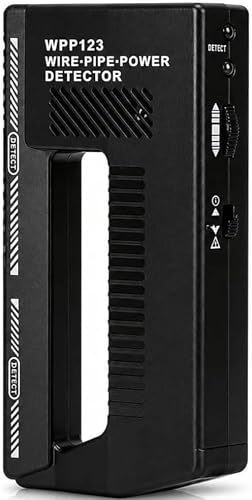
Pithon Grips WPP123 High Sensitivity in-Wall Detector
Best for basic drywall wire checks - 6
 Check it
Zircon® MetalliScanner® m40 Electronic Metal Detector
Best for deep metal in hard surfaces
The best metal detectors for walls by use
The Povlen is the most complete choice for general wall scanning, while Zircon is stronger for deep metal in hard surfaces. The other picks focus on clear displays, close target pinpointing, simple magnetic checks or basic drywall safety.
Our score weighs specs, features and buyer feedback against what you’re shopping for. The products are listed from highest score to lowest score.
Povlen Stud Finder Wall Scanner Detector with: Best for full wall scanning
- Wood, metal, pipe and live AC wire detection
- 5 scanning modes
- Metal detection up to 2.36 in
- Backlit LCD with audio alerts
Five modes cover common wall checks, including studs, metal, pipes and live AC wires. The backlit LCD and audio alerts help you mark edges and centers while moving across the surface.
Pros
- Most complete scan coverage here
- Detects live AC wires in all modes
- Deep metal mode
Cons
- Needs recalibration if lifted or shaken
- Cement use is excluded
Povlen is the strongest all-around choice when you want one tool for several wall checks. Its 5 modes include 3 stud modes, a metal mode and an AC mode.
The stud modes cover 1/2 in, 1 in and 1 1/2 in depths. The metal mode reaches up to 2.36 in, while the AC mode reaches up to 2 in for live, unshielded wires.
A backlit LCD shows the edge and center of a detected object, and audio alerts help when you are watching the wall instead of the display. The scanner uses 1 included 9V alkaline battery and weighs 8.8 oz.
Calibration matters with this tool. Turn it on, select a mode, hold the scan button to calibrate, then move slowly across the wall.
If you shake or lift it, recalibrate before continuing.
Povlen also has a shock-resistant and dust-resistant ABS design. Its stated use covers wood, metal, joists, pipes and live AC wires in walls, floors and ceilings, but cement is excluded.
JAXWQ Stud Finder: Best for clear LCD guidance
- Wood, metal and live AC wire detection
- Stud, deep and metal scan modes
- Backlit LCD
- Audio alerts and battery display
JAXWQ combines several scan modes with a backlit display showing the center, edge and location of detected objects. It suits home projects where visual guidance matters as much as an audible alert.
Pros
- Backlit display shows object position
- Multiple scan modes
- Compact 8.1 oz body
Cons
- Depth limits are not stated here
- Battery type and inclusion are not stated here
JAXWQ suits you if a clear screen is central to your wall-scanning routine. Its backlit LCD shows the center, edge and location of detected studs, along with battery status.
The tool has stud, deep and metal scan modes. Its described uses include wood, metal, pipes and live AC wires behind walls, floors and ceilings.
Audio alerts add a second way to follow a signal. That combination can help when glare, low light or an awkward drilling position makes the screen harder to read.
In daily use, the screen gives you a steady reference while you move. You can watch the indication grow as you approach a target and then slow down as the center comes into view.
The deep scan mode is the one to consider when a target may sit farther back or when the object is larger than a single fastener. It is better suited to pipes and plumbing style checks than a basic shallow pass.
The metal scan mode suits work where hidden metal is the main concern. That makes it useful for locating plumbing and other metalwork before you commit to a hole.
At 8.1 oz, JAXWQ is slightly lighter than Povlen. The body measures 7.8 x 3.23 x 1.81 in, and its power source is battery powered, with the battery type and inclusion not stated here.
The lighter body helps during repeated passes across a wall. It is easier to keep flat and steady, which supports a more consistent reading from one sweep to the next.
Pick JAXWQ when display guidance and several detection modes matter most. Choose Povlen instead if its stated metal and AC depth ranges are more important to your project.
DR.ÖTEK Metal Detector Pinpointer: Best for pinpointing exposed targets
- IP68 fully waterproof design
- 360-degree side scan
- LCD, audio and vibration alerts
- One-touch interference cancellation
This handheld pinpointer is better for narrowing down a target after a larger scan than for mapping an entire wall. Its LCD, light, vibration and audio alerts give you several ways to follow a signal.
Pros
- Fully waterproof IP68 design
- Lightweight 5.92 oz body
- Includes belt loop, wire, manual and 9V battery
Cons
- Not a wall-sized scanner
- Pinpointing tool rather than a stud finder
The DR.ÖTEK Metal Detector Pinpointer is best used after a broad scan has already identified a likely target area. Its handheld shape helps you narrow the signal instead of sweeping an entire wall.
A 360-degree side-scan function detects metal around the probe, while the LCD, audio and vibration alerts give you different ways to follow the strongest signal. One-touch signal cancellation helps reduce interference in complex areas.
The MT6 Pro has an IP68 rating and can be fully submerged in water. It weighs 5.92 oz and operates at 7 KHz.
Its package includes the MT6 PRO pinpointer, retractable hanging wire, belt loop, user manual and 9V battery. The red metal and ABS plastic body also has a built-in LED light for low-light work.
Use this as a close-location tool, not as your only wall scanner. It is useful when a larger detector finds metal and you need to identify the target position before making a small access hole.
Klein Tools MSF100 Magnetic Stud Finder and: Best for simple metal fastener checks
- Rare-earth magnet
- Detects metal studs and fasteners
- Bubble vial
- Felt pad backing
The compact Klein Tools finder uses a magnet rather than batteries or electronic modes. It is a practical choice for locating metal studs and fasteners within wooden studs while marking a level line.
Pros
- No battery required
- Very light and compact
- Bubble vial helps alignment
Cons
- Finds magnetic metal only
- No live-wire detection
Klein Tools is the simplest option for finding magnetic metal without batteries or electronic calibration. Its rare-earth magnet detects metal studs and fasteners within wooden studs.
The compact body weighs 1.76 oz and uses an N52 magnet with a PC-ABS housing. A felt pad backing helps protect drywall and plaster while you move the tool over the surface.
A center top notch and bottom opening help with marking. The built-in bubble vial also helps you align a mark, which is useful when you are locating several fasteners along a straight line.
The trade-off is limited target coverage. This manual tool does not provide live-wire detection, depth modes or an LCD, and it responds to magnetic metal rather than every hidden material.
Pick it for a quick fastener or metal-stud check. If you need to identify pipes, AC wires or non-magnetic metal, choose an electronic scanner instead.
Pithon Grips WPP123 High Sensitivity in-Wall Detector: Best for basic drywall wire checks
- Live AC wire detection up to 30 mm
- Metal pipe detection up to 24 mm
- Adjustable alarm
- LED and sound alerts
Pithon Grips focuses on live wires and metal pipes behind standard hollow drywall. It requires open-air calibration before every scan and does not detect AC voltage through metal pipes, metal-shielded walls or thick concrete.
Pros
- Simple metal and voltage modes
- Very light body
- Adjustable sensitivity
Cons
- Drywall and interior use only
- Limited depth compared with the deeper scanners
Pithon Grips is aimed at basic indoor checks behind standard hollow drywall. Its metal mode detects metal pipes, conduits, rebar, studs and nails, while its voltage mode detects live AC wires up to 30 mm.
Metal detection reaches up to 24 mm. A solid LED and continuous tone indicate metal, while a flashing LED and intermittent beep indicate a live AC wire.
Calibration is required before every scan. Turn the unit on away from walls and metal, select metal or voltage mode, then adjust the tuner until the light and sound stop.
The 1.6 oz plastic body has adjustable sensitivity and uses battery power. Move it slowly while keeping it flat against the wall.
Pithon Grips will not detect AC voltage through metal pipes, metal-shielded walls or thick concrete. It also is not a wood-only stud finder, so choose it for its wire and metal focus rather than general framing work.
Zircon® MetalliScanner® m40 Electronic Metal Detector: Best for deep metal in hard surfaces
- Ferrous metal detection up to 4 in
- Non-ferrous metal detection up to 2 in
- Wide and pinpoint scan modes
- LED signal-strength arrays
Zircon is the specialist pick for locating hidden metal in plaster, concrete, reclaimed lumber and other non-metallic surfaces. Wide scan finds larger areas, while pinpoint scan helps locate small screws and nails.
Pros
- Deepest ferrous-metal range here
- Works in concrete and plaster
- Wide and pinpoint modes
Cons
- Does not provide the broader stud and AC modes of electronic wall scanners
- Non-ferrous depth is lower than ferrous depth
Zircon is the best specialist option for deep metal detection in walls and hard surfaces. It locates magnetic metal up to 4 in and non-magnetic metal up to 2 in.
The m40 has wide scan and pinpoint scan modes. Wide scan helps identify larger areas of metal in walls or concrete, while pinpoint scan helps locate small objects such as screws and nails.
LED arrays show signal strength. The tool is designed for metal detection in drywall, plaster, wood, concrete, paneling, tile and other non-metallic surfaces.
Its stated uses include lath and plaster walls, reclaimed lumber, plumbing, ductwork, rebar, nails and screws. That range makes it a better fit for remodeling work where a standard stud scanner may not cover the surface.
The 12 in tool operates manually and has a 12 in search coil. Its IP54 rating and plastic construction suit scanning work, but the product does not offer the broader stud and live-wire modes found on Povlen or JAXWQ.
How do you choose a metal detector for a finished wall?
Choose a wall detector by target, surface and depth. A tool for finding a nail in drywall has a different job from one used to locate rebar in concrete or a live wire before drilling.
For a general home project, look for separate stud, metal and AC modes. Povlen and JAXWQ cover that wider mix, while Pithon Grips focuses on metal pipes and live wires in drywall.
For plaster, concrete or reclaimed lumber, prioritize the stated metal depth and surface coverage. Zircon reaches ferrous metal up to 4 in and is the most specialized choice in this group.
For fasteners inside wooden studs, a magnetic tool may be enough. Klein Tools is light, manual and battery-free, but it will not replace a scanner that checks wires or non-magnetic targets.
If the job involves pipes specifically, compare this list with our guide to the best metal detectors for pipes. For nails hidden in timber, see the best metal detector for finding nails in wood.
How do you scan a wall without false signals?
Calibrate in the correct place, move slowly and check a signal from more than one direction. Keep the detector flat and avoid lifting or shaking it during the pass.
Calibration sets the baseline for the scan. It helps the tool separate the wall itself from a change in signal that may point to a hidden object.
Povlen requires recalibration if it is lifted or shaken. Pithon Grips requires open air calibration away from walls and metal before every scan.
Those steps affect workflow in different ways. One tool may need fresh calibration after a slip, while another needs the open air step repeated for each new area.
Move at a steady pace rather than in quick bursts. A slow pass gives the sensors time to respond and lets you see where the signal starts to rise.
Keep the base flat and in full contact with the surface. Tilting the tool or letting one edge lift can change the reading and make a target seem to move.
Mark the left and right edges of a signal, then scan vertically and horizontally. A target seen consistently from both directions is easier to center than one found in a single fast pass.
Edge marking helps with studs and larger objects. It shows the width of the target and helps you place a screw or anchor near the middle rather than near a weak edge.
Use a light pencil mark and keep the detector clear of it while you recheck. That keeps the surface clean and avoids the mark interfering with contact.
Do not treat a detector alert as permission to drill. Live wires and plumbing can create serious hazards, so stop and use appropriate safety procedures when the target is uncertain.
When a signal is unclear, scan again from a different direction and compare the result. A consistent response is more trustworthy than a single brief beep.
Take care on crowded walls where several targets sit close together. Studs, fasteners, pipes and wires can overlap, so a careful second pass can prevent a costly mistake.
Store the tool with a clean sensing face and away from strong impacts. A scanner that is dropped or left damp may not give a steady response on the next job.
Can a metal detector find more than metal in a wall?
Some wall scanners also detect wood studs, joists, pipes and live AC wires. Those functions matter because a safe drilling spot depends on more than whether the wall contains metal.
A wall holds structure, services and fixings layered together. Framing carries the load, pipes carry water and wiring carries current, so each layer changes the risk of drilling in a spot.
Povlen identifies wood, metal, pipes and live AC wires, while JAXWQ offers stud, deep and metal scan modes. Zircon focuses more on metal and does not provide the same broad stud scanning role.
That difference reflects focus rather than quality. A broad scanner suits general home work, while a metal focused tool suits remodeling where the question is where metal sits in a hard surface.
Wood detection helps with shelves, cabinets and heavy hanging. Knowing the edge and center of a stud lets you place fixings where they can hold weight rather than relying on the board alone.
Pipe detection helps you avoid leaks and damage to concealed plumbing. A metal pipe can sit close to the surface, so a careful scan can save a repair far larger than the job.
Live AC wire detection adds a safety layer a metal only tool cannot provide. It matters most where wiring runs through walls at drilling height and a cable could be struck by a screw or bit.
A detector cannot find every hidden object in every wall. Material thickness, shielding, target depth and the selected mode all affect the result.
Plaster, drywall, concrete and timber each present a different surface for the signal. A tool that works well on one material may need another mode or a slower pass on a different surface.
Shielding and metal layers can reduce or block a signal. Depth should be read as a guide rather than a promise, because size, shape and material affect how strong a response the tool can produce.
For a wider explanation of possible finds, read What Can You Find With a Metal Detector?. Our guide to [What Is a Metal Detector Used For?
The Basics](/what-is-a-metal-detector-used-for/) covers common jobs beyond wall scanning.
Use the right mode for the question you are asking. Stud mode suits framing, metal mode suits metalwork and plumbing, and AC mode suits live wiring on the same wall.
Which metal detector for walls should you choose?
Pick Povlen for the broadest combination of stud, metal, pipe and live AC wire modes. Choose JAXWQ if a backlit LCD with center, edge and battery information is your main priority.
That choice suits a general home project where several hidden targets may appear on the same wall. One tool can check framing for hanging, metal for plumbing and live wiring for safety before you drill.
Choose Zircon for deeper ferrous-metal scanning in plaster, concrete or reclaimed lumber. Pick Pithon Grips for a light drywall tool focused on metal pipes and live AC wires.
Deeper metal range matters most in hard surfaces where a standard scanner may not reach the target. Plaster and concrete can place metal farther from the surface than a typical drywall board does.
Pithon Grips suits standard hollow drywall when the main checks are pipes and live wires. Its light body and simple modes suit quick indoor safety checks, within its stated depth and surface limits.
Use Klein Tools for simple magnetic fastener checks, and choose DR.ÖTEK when you need to pinpoint a target after a larger scanner has found its general location.
The magnetic option suits a narrow job where fasteners sit inside wooden studs and no battery or calibration is wanted. It is a quick manual check rather than a broad survey of the wall.
The pinpointer suits close work after a broad scan. It helps narrow a signal to a tighter area before you make a small access hole or place a fixing.
Consider the wall first and the tool second. Drywall, plaster, concrete and reclaimed lumber each place different demands on depth, mode selection and surface coverage.
Consider your comfort with setup as well. A tool with multiple modes and calibration steps rewards a careful user, while a simple manual finder suits a quick and focused check.
Care for the tool you choose by keeping the sensing face clean, storing it safely and checking its power supply before a job. A well kept scanner gives a steadier response and a clearer mark.
A wall detector is built for concealed objects, not every metal-detection task. For outdoor ground work, compare our guide to the best metal detector for meteorites or see the best saltwater metal detectors for wet beach conditions.
Choose the option that matches your surface, your target and your tolerance for setup. That match turns a scan into a confident placement rather than a guess behind the wall.
Our top 3 picks at a glance
-
1
Best for full wall scanning
Povlen Stud Finder Wall Scanner Detector with
9.7/10 our score
See it on Amazon -
2
-
3
Best for pinpointing exposed targets
DR.ÖTEK Metal Detector Pinpointer
9.5/10 our score
See it on Amazon
Frequently asked questions
What is the best metal detector for walls?
The Povlen Stud Finder Wall Scanner Detector with is the best metal detector for walls for most home projects because it combines stud, metal and AC scanning in 5 modes. It detects metal up to 2.36 in and shows edges and centers on a backlit LCD.
Choose Zircon when deeper ferrous-metal detection or concrete scanning matters more than stud and wire modes.
Can a metal detector find metal inside a finished wall?
Yes. A wall scanner can find metal studs, fasteners, pipes, conduits and other metal behind drywall, plaster or some hard surfaces.
Results depend on the material, target type, depth and scan mode.
Move slowly, keep the tool flat and mark the signal before drilling.
What is the difference between a wall scanner and a pinpointer?
A wall scanner sweeps across a broad area to locate hidden objects and show their position. A pinpointer is a small handheld tool that narrows down a target after you already have a general signal.
The DR.ÖTEK Metal Detector Pinpointer is better for close locating than for mapping a full wall.
Can a wall metal detector find live electrical wires?
Some wall scanners detect live AC wires, but coverage and depth vary by model. Povlen includes an AC mode and continuous wire alerts, while Pithon Grips detects live AC wires up to 30 mm in suitable drywall.
Treat every alert as a warning and follow safe electrical work practices.
How do you scan a wall for hidden metal?
Start with the correct mode, calibrate the tool as directed, place it flat against the wall and move slowly in a straight line. Mark the edges, then scan from another direction to check the target center.
Do not rely on one pass or one tool when drilling near wiring or plumbing.


