Are Coin Capsules Safe for Coins?
Coin capsules are generally safe for coins when they are PVC-free or made for archival storage, fit securely, and stay clean and dry. The wrong size, rough handling, or trapped moisture can still harm a coin's surface.
On this page (7 sections)
Coin capsules are generally safe for coins when they use suitable plastic, fit correctly, and are handled with care. Their safety depends on material, size, and your habits.
PVC-free acrylic is a strong choice for long-term storage because it is described as stable and archival safe. A holder with unclear material information may suit short-term sorting, but offers less confidence for years of untouched storage.
A poor fit can let a coin slide, rub, and collect dust around its rim. That movement may seem small, but it can affect a bright or delicate surface.
The capsule mainly limits contact with fingers, dirt, and nearby objects. It does not replace clean handling or a dry storage space.
Think of it as the first layer, not the whole plan. You still need clean hands, a clean surface, and a place away from damp air and heat.
Clear walls let you check the coin without touching it. That helps you spot dust, a shifted coin, or a holder that has not closed properly.
The best capsule is one you will use consistently. A secure, correctly sized holder kept clean will protect better than a perfect holder left open in a damp drawer.
Choose a suitable material, match the inside size to the coin, and keep both clean and dry. Handle the capsule edges rather than the coin itself.
What makes coin capsules safe for coins?
Safe coin capsules use a stable material and hold the coin without forcing it. Air-Tite says its holders are PVC-free and archival safe, while its acrylic construction is hard, clear, and smooth to the touch.
Fit matters just as much as material. A capsule that is too small can press against a coin, while one that is too large can let it move when the holder is shaken or stored upright.
A clear capsule also lets you inspect the coin without touching it. That helps reduce fingerprints, but you still need to check the inside for dust before closing it.
For a broader overview of storage choices, see our guide to coin storage boxes. It explains how capsules compare with boxes, flips, holders, and display options.
Which materials are safest for coin capsules?
PVC-free acrylic is a useful choice for long-term coin storage. The Air-Tite bar holder in this guide uses acrylic plastic and is described as PVC-free and archival safe.
Some capsules simply identify the material as plastic. That doesn't automatically make them unsafe, but it gives you less information about long-term storage suitability.
Avoid placing a coin in a capsule that smells strongly of plastic, feels sticky, or has a rough interior. If you are unsure about a holder, use it for short-term organization and choose a clearly identified archival option for valuable coins.
Can the wrong capsule size damage a coin?
The wrong size can increase rubbing or pressure, so measure the coin before choosing a capsule. Diameter and depth both matter, especially for thicker pieces, bullion, and coins with raised designs.
A direct-fit capsule should match the coin closely. A gasket-style capsule can cover more sizes, but the insert must hold the coin evenly rather than letting it shift from side to side.
Use our guide to coin capsule sizes before ordering. It helps you compare the coin's diameter and thickness with the holder's inside measurements.
How does a foam gasket protect a coin?
A clean, evenly fitted foam gasket can reduce movement inside a larger capsule. The SPLF set includes foam gaskets divided into 20, 25, 30, 35, 40.6, and 46 mm sizes, with a listed thickness of 3 mm.
That flexibility suits collectors storing coins with different diameters. It also creates more parts to inspect, so replace a gasket if it becomes dirty, compressed, or uneven.
Choose this style when you need one storage system for several coin diameters. Its crescent-shaped opening is designed to make each case easier to open, but you should still open it over a clean, soft surface.
The foam is useful when the coin would otherwise slide inside the case. It isn't a reason to force an oversized coin into a smaller opening.
How should you handle a coin capsule?
Hold the capsule by its edges, work over a clean surface, and avoid touching the coin's faces. Oils from your fingers can leave marks, while grit inside a capsule can rub against the coin.
Before closing the holder, inspect both halves and remove loose dust with a gentle method that won't drag particles across the coin. Don't wipe a collectible coin simply because it has fingerprints or spots.
Press the capsule together evenly until it closes. If one side sits higher than the other, open it and check the coin's position instead of forcing the closure.
If you need help with a stuck holder, follow our guide on how to open plastic coin holders. Use a method that avoids prying against the coin or scratching the capsule.
Which capsule suits a 1 oz silver bar?
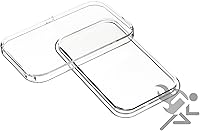
The Air-Tite Bar Direct Fit holder suits collectors storing most 1 oz silver bars that match its inside dimensions. It has an inside size of 1.158 x 2.0 in, an outside size of 1.357 x 2.197 in, and an inside depth of 0.098 in.
The capsule has one compartment, a transparent finish, and a snap closure. That single compartment holds the bar in place without extra dividers or inserts that could add pressure.
Air-Tite describes the holder as PVC-free and archival safe for long-term storage. Its acrylic plastic is hard, crystal clear, and smooth to the touch, with a non-yellowing agent.
The clear cover lets you identify the bar and check its condition without opening the holder. That helps when several bars are stored together and need quick identification.
Press the snap closure together firmly and evenly. If the cover and base do not sit level, open the capsule and check the bar position rather than forcing the edges together.
This is a direct-fit bar holder, not a general round-coin capsule. Its inside size is 1.158 by 2.0 inches, with an inside depth of 0.098 inches, so length, width, and thickness all need checking.
Measure the bar before use, and leave it out if its dimensions exceed the inside space. A bar that is too wide or too thick should not be forced in, as pressure at the seal can stress the holder and the bar.
This style suits collectors with most 1 oz silver bars that match those inside measurements. It is less suited to mixed collections where bars vary in size or finish.
Keep the capsule clean before closing it, and store closed holders in a dry place without heavy stacking. A quick visual check before storage helps the holder do its job.
Which capsule fits an American Silver Eagle?
The Air-Tite H40 holder is made for US 1 oz American Silver Eagles, with a 40.6 mm inside diameter and 3.17 mm inside depth. It is not intended for Morgan, Peace, or Ike silver dollars, large dollars, or silver rounds.
Its outside diameter is 44.45 mm and its outside thickness is 5.4 mm. Those outside measurements determine how the holders sit in a tray, box, or display space.
The close fit can limit movement, but only if the coin matches the intended size. With an inside diameter of 40.6 mm and an inside depth of 3.17 mm, the holder is made for US 1 oz American Silver Eagles.
That direct fit is the main benefit of this style. A correctly sized coin should sit with little room to shift, which reduces rubbing during normal handling and storage.
The holder is not intended for Morgan, Peace, or Ike silver dollars, large dollars, or silver rounds. Using the wrong coin type can leave too much space or create pressure, depending on the actual diameter and depth.
Check that the coin lies flat before closing the capsule. If it sits at an angle or the seal does not close evenly, open it and verify that the coin and holder match.
Choose a general holder instead if your collection includes several coin shapes or diameters. A flexible system may be easier to manage than buying a separate direct-fit holder for each type.
For a smaller standard coin, compare the best coin holders for formats that match your storage plan. Matching the holder to the coin first will make storage simpler and safer.
How should you store coins inside capsules?
Keep closed capsules in a stable, dry indoor location away from heat, damp air, and rough handling. A capsule can reduce dust and contact, but it cannot correct moisture already trapped inside.
Store holders so they won't fall, rub against sharp objects, or sit under heavy pressure. A box or tray can add organization, while a display case can keep selected pieces visible.
For display, compare the best floating coin display case if you want a coin presentation format beyond loose capsules. If you use slabs, learn what a coin slab is before mixing slabbed and raw coins in the same storage system.
A slab box is another option for larger certified holders. Our guide explains what a slab box for coins is and where it fits in a collection.
Are coin capsules safe for valuable coins?
Coin capsules can be a sensible first layer of protection, but the coin's condition, material, and value should guide the final storage choice. A clean, well-fitted, PVC-free capsule is more suitable for long-term storage than an unknown or damaged holder.
Don't clean, polish, or dip a collectible coin just to improve its appearance. If a coin has active corrosion, residue, or a storage problem, consult a qualified numismatic conservation professional before changing its holder.
The best choice depends on the coin. Pick the Air-Tite bar holder for most matching 1 oz silver bars, the Air-Tite H40 for US 1 oz American Silver Eagles, and the SPLF set when foam gaskets and multiple diameters are more useful.
For the question are coin capsules safe for coins, the decision rule is simple: use a suitable material, match the inside size, keep the coin and capsule clean and dry, and handle the edges rather than the coin's surface.
Frequently asked questions
Are coin capsules safe for coins?
Yes, coin capsules are generally safe when the material is suitable for long-term storage, the fit holds the coin without pressure, and the capsule stays clean and dry. PVC-free acrylic capsules are a strong choice for extended storage, while loose or poorly fitting holders need more care.
Can coin capsules scratch coins?
A correctly fitted capsule should limit movement, but dirt, grit, or a loose coin can create rubbing during handling. Clean your hands, inspect the capsule before use, and choose a size that supports the coin without forcing it into place.
Are foam gaskets safe for collectible coins?
Foam gaskets can help hold a coin in place by filling extra space around it. Check that the gasket fits evenly, remains clean, and does not press hard against the coin's edge or surface.
Should coins be stored in airtight capsules?
A snug capsule can reduce exposure to dust and handling, but it does not remove moisture that is already trapped inside. Store dry coins in a stable indoor location and avoid sealing a damp coin or wet capsule.