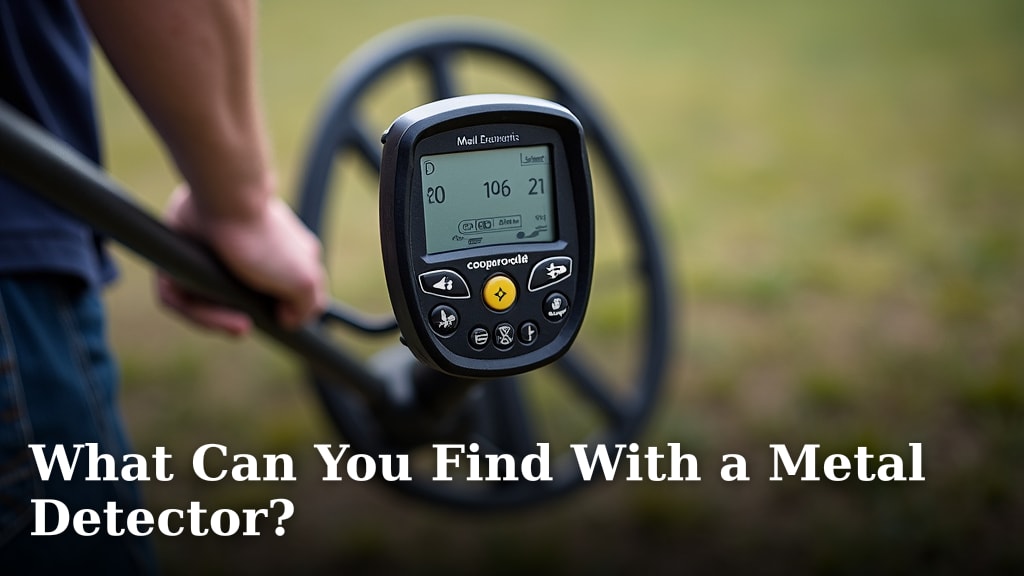
What Can You Find With a Metal Detector?
You can find coins, jewelry, relics, and lost items with a metal detector. It’s a tool that senses metal buried underground. Many people use it for hobbies, treasure hunting, or even finding dropped keys.
From old coins in a park to a lost wedding ring at the beach, the finds vary. We found that most hobbyists start with searching for coins and jewelry. It’s a real-world scavenger hunt that can be both fun and surprisingly rewarding.
- Most common finds: Coins, pull tabs, and foil scraps.
- Valuable targets: Lost rings, pendants, and historical relics.
- Surprising items: Old buttons, nails, and sometimes military artifacts.
- What it can’t find: Non-metallic objects like wood or plastic.
- Success depends on your location, equipment, and a bit of patience.
Below, we break down exactly what you can expect to find based on where you search and what settings you use. Let’s explore the most common discoveries and how to improve your chances of finding the good stuff.
What Types of Objects Can You Uncover?
You can find a wide variety of metal objects buried just beneath the surface. The type of find depends heavily on where you are searching. A busy park will yield different items than a quiet beach or an old farm field. Your machine’s settings also play a huge role in what it detects. We found that understanding these factors is the first step to a successful hunt.
Common Finds in Parks and Yards
Parks, schoolyards, and your own backyard are fantastic starting points. These areas have seen a lot of foot traffic over many years. As a result, they are often filled with lost personal items. Most hobbyists report that modern coins are their most frequent discovery. You might go home with pockets full of dimes and quarters after a weekend outing.
Coins and Modern Currency
This is the bread and butter of metal detecting. You will find everything from recently dropped pennies to older coins from decades past. In the United States, you can legally keep any coin you find (U.S. Treasury Department). The thrill of pocketing a silver quarter or a wheat penny keeps many people searching. It’s like finding a quarter on the sidewalk, but the quarter is from 1950.
Clad vs. Silver Coins
Most coins made after 1964 are “clad,” meaning they are a mix of cheaper metals. Coins made before 1965, like Washington quarters and Roosevelt dimes, contain 90% silver. These are worth more than their face value. Finding one is a great day. You will hear a distinct, clear tone on your detector.
Jewelry You Might Find
Rings, necklaces, and bracelets are the high-value treasures people dream of. We found that simple bands and costume jewelry are more common. But lost wedding rings and pendants definitely turn up. Beaches and parks with sports fields are hotspots. A lost engagement ring is a life-changing find for both you and its owner.
Trash and Modern Debris
Let’s be realistic. You will dig a lot of trash. Pull tabs from soda cans, bottle caps, and foil wrappers are everywhere. This is the reality of the hobby. Learning to recognize the signals for these items helps you ignore them. It saves you from digging every piece of junk. Think of it as clearing away the clutter to find the treasure.
Exciting Discoveries at the Beach
Beaches are a unique environment. The sand is loose, making digging easier. Constant foot traffic and water movement mean items are lost and found regularly. The best hunting is often in the wet sand near the water line or in dry sand where people set up for the day.
Modern Lost Jewelry
Beaches are number one for modern lost jewelry. People lose rings while swimming, necklaces while playing, and earrings while lounging. Stainless steel and gold are common materials. Many detectors have a “beach mode” that helps cancel out interference from saltwater and mineralized sand.
Historic and Valuable Items
In areas with long histories, beaches can yield old coins, buttons, and artifacts. Shipwreck relics can sometimes be found near old ports. However, it’s important to know the laws. In the U.S., laws vary by state and park. Always get permission and research regulations before you search public or historic beaches.
Hunting for Relics and Historical Objects
This is where metal detecting becomes a hands-on history lesson. Relic hunting involves searching old home sites, battlefields, and ghost towns. You are looking for objects from past centuries. These finds tell stories about the people who lived there. It requires research and often permission from landowners.
Types of Relics You May Find
- Buckles and Buttons: From clothing and military uniforms.
- Currency: Old coins like Spanish reales or colonial coppers.
- Tools and Utensils: Hand-forged nails, hinges, or parts of old farming equipment.
- Military Artifacts: In areas near former camps or battles, you might find buttons, buckles, or dropped projectiles.
Always consult with local historical societies or use resources like state historic preservation offices for guidance. The National Park Service has strict rules against detecting in national parks and on federal lands.
What Your Detector Actually Reveals
Your machine doesn’t show you a picture of the object. It gives you an audio tone and a visual target ID number. This information tells you two key things: conductivity and likely depth. High-conductivity metals like silver and copper give a strong, high tone. Low-conductivity metals like iron give a low, grunty tone.
| Target Type | Typical Conductivity | What the Signal Means |
|---|---|---|
| Iron (nails, foil) | Low | A low, often broken tone. Usually junk, but sometimes a historical artifact. |
| Foil (gum wrappers) | Low-Mid | A medium, sometimes shaky tone. Often trash. |
| Zinc (modern pennies) | Mid | A mid-tone. Your most common coin signal. |
| Copper/Silver (old coins, jewelry) | High | A strong, high, clear tone. This is the sound you love to hear! |

Improving Your Chances of a Good Find
Success isn’t just luck. It’s about being in the right place with the right approach. We found that hunters who learn to read their machine and research locations have the best results. Patience is key. You will have days with only trash, and that’s okay.
Location, Location, Location
Search where people have gathered for a long time. Old homesteads (with permission), community parks, and swimming holes are prime spots. Look for old maps to find forgotten roads or structures. The deeper you research history, the deeper you can search for its lost objects.
Master Your Machine’s Settings
Every detector has different modes and settings. Learn what the “discriminate” function does—it lets you ignore certain types of metal. Start with an “all-metal” mode to see everything. Then, gradually learn to discriminate out iron junk. Read your manual. Practice in your yard with known buried items.
Items You Will Not Find
It’s crucial to know a metal detector’s limits. It only detects metal. You will not find glass, plastic, wood, or stone artifacts. If it’s not made of or containing metal, the detector will be silent. Also, very small aluminum items, like some modern foil, can be missed or mistaken for other trash.
Your Metal Detecting Find Checklist
- Pocket Coins: Clad dimes, quarters, and pennies.
- Shiny Jewelry: Lost rings, pendants, or earrings.
- Historical Relics: Old buttons, buckles, or tokens.
- Modern Debris: Pull tabs, bottle caps, and foil.
- Unique Items: Old toys, tools, or military items.
Remember, every piece of trash you dig is one less piece in the ground, and it gets you closer to the treasure. The real find is the fun of the hunt and the connection to history.
Conclusion
So, what can you find with a metal detector? You can uncover a fascinating mix of the everyday and the extraordinary. Your most frequent discoveries will likely be modern coins and foil trash, which is part of the hobby. But with patience and the right location, you can also find lost jewelry, historical relics, and items with personal stories. The real reward is the hunt itself and the tangible connection you make to the past. Your next step is simple: research local laws, get permission, and head to a promising spot like an old park. Your next great find is waiting just beneath the surface.
Frequently Asked Questions
Should I search for gold rings or old coins first?
We recommend starting in public parks to search for modern coins. This helps you learn your machine’s signals in a common environment. Old coins and jewelry often produce similar high tones, so practice on easier targets first to build your skills.
Can I legally keep whatever I find?
Laws vary greatly by location. You can typically keep items on public property like beaches if there are no specific restrictions. However, you must research and follow all local, state, and federal regulations, especially regarding historic sites and private land.
How much can I expect to find on a typical outing?
Results depend heavily on where you search. In a popular park, you might find a dozen or more coins in a few hours. In a new area, you may only find a few pull tabs. Managing expectations is key; some days are better than others.
Do I need to clean my metal detecting finds?
Many people enjoy cleaning their finds to see the details. For coins, a gentle rinse with water is often enough. Be cautious with historical relics, as aggressive cleaning can damage them. For valuable or old items, consult a professional conservator.
Is metal detecting worth the investment in a detector?
For most people, the value comes from the hobby itself—the outdoor time, exercise, and potential for discovery. Finding even a few lost coins can help offset the initial cost. We suggest it’s best viewed as a rewarding pastime, not a get-rich-quick scheme.