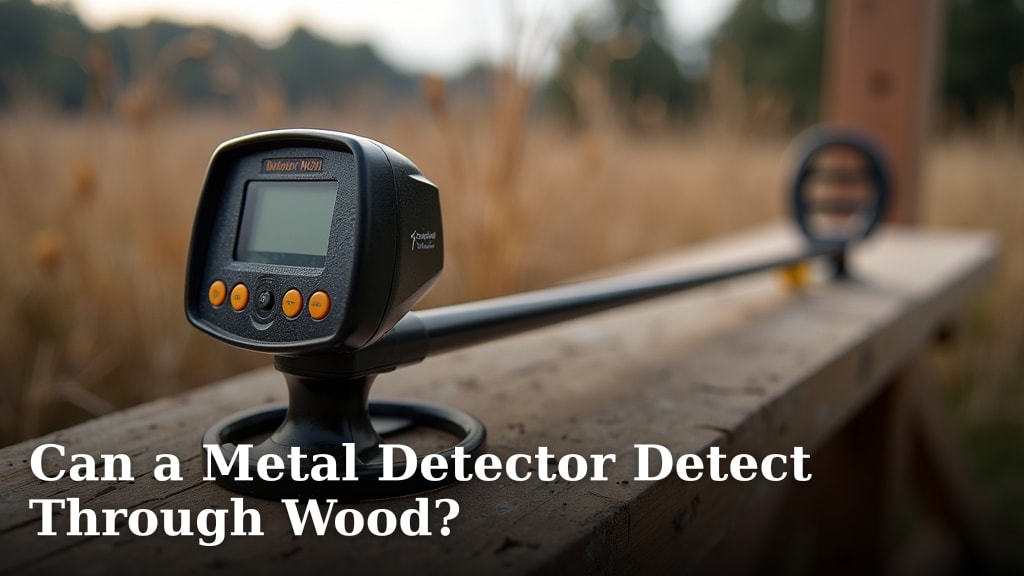
Can a Metal Detector Detect Through Wood?
Yes, a metal detector can detect metal through wood, but its effectiveness depends on a few factors. The thickness of the wood and the type of metal you’re searching for play a big role. Generally, thinner wood is easier for a metal detector to penetrate.
Think of wood as just another layer for your detector to scan through. While it’s not as easy as detecting in open air, a good detector can still pick up signals. We found that detector settings and the size of the metal object also influence how well it works.
- Metal detectors can find metal hidden under wood.
- Wood thickness is a key factor in detection.
- Metal type and detector settings matter a lot.
- Larger metal objects are easier to find.
- It’s possible, but not always as simple as open ground.
Let’s walk through exactly how wood affects your metal detecting and what you can do to get the best results. Let’s walk through exactly how wood affects your metal detecting and what you can do to get the best results.
Detecting Metal Underneath Wooden Surfaces
Yes, your metal detector can find metal objects hidden beneath wood. It’s a common situation for many treasure hunters. Think about old wooden floors, fences, or even buried items covered with wooden debris. Wood doesn’t completely block the detector’s signal. It acts more like a filter or a cushion. We found that the metal detector’s ability to “see” through wood depends on several factors.
The core principle is that metal detectors work by sending out a magnetic field. When this field encounters a metal object, it creates a disturbance. The detector’s coil picks up this disturbance, and you hear a beep. Wood itself is not metallic. So, it doesn’t create a signal. It just sits in the path of the signal. It can weaken or distort the signal slightly.
How Wood Affects the Detection Signal
Wood isn’t a perfect insulator for the electromagnetic waves your metal detector uses. So, the signal can pass through it. However, wood does have some properties that can interfere. The density and moisture content of the wood are important. Denser wood or wood with a lot of moisture can absorb more of the detector’s energy.
Imagine shining a flashlight through a thin curtain versus a thick blanket. The curtain lets more light through. The blanket blocks much of it. Wood is similar. A thin, dry piece of wood is like a thin curtain. It lets the detector’s signal pass through with minimal loss. A thick, wet piece of wood is more like the thick blanket. It can significantly reduce the signal’s strength.
Moisture Content: A Key Player
This is often overlooked, but moisture in wood can really change how well your detector works. Water conducts electricity, even in small amounts. So, damp wood can absorb and scatter the magnetic field from your detector. This makes it harder to pick up faint signals from small or deep metal targets.
We found that dry, aged wood is much easier to scan through than fresh, damp lumber. If you’re detecting over an old wooden shed or a dry wooden deck, you’ll likely have better luck. If you’re scanning a damp, freshly cut log, it’s going to be a tougher challenge. It’s why experienced detectorists often check the weather and the condition of their target surface.
Wood Thickness: The More, The Less
This one is pretty straightforward. The thicker the wood, the more material your signal has to travel through. Each inch of wood adds a layer of resistance. So, a thin layer of wood on top of a coin is much easier to scan than a thick plank of wood. You might need to adjust your expectations based on the thickness of the wood.
For instance, detecting a nail head sticking out of a thin fence post is different from trying to find a buried treasure chest under a foot of old wooden planks. The thicker the wood, the closer your metal object needs to be to the surface of the wood for the detector to reliably pick it up. We found that a difference of just a few inches in wood thickness could mean the difference between finding a target and missing it entirely.
Understanding Your Metal Detector’s Role
Not all metal detectors are created equal. Some are designed for specific purposes. Some are better at discriminating between different types of metal. Others are built to have greater depth penetration. This penetration is key when you’re trying to find metal under wood.
A detector with a high-frequency coil might be great for tiny gold nuggets in sand. But it might struggle more with deeper targets under wood. A detector with a lower frequency and a larger coil is often better for deeper targets. It can send its signal out further and receive fainter echoes. We found that many general-purpose detectors perform well under wood, but it’s worth knowing your detector’s strengths.
Coil Size and Type Matter
The coil is the part of your metal detector that sends and receives the signals. Larger coils generally send their signal out further and can detect deeper objects. However, they can also be less sensitive to very small targets. Smaller coils are more sensitive to tiny targets but typically don’t detect as deep.
When dealing with wood, a larger coil might be more beneficial. It can send a stronger signal through the wood. It’s like using a wider beam of light to see through fog. However, if you’re looking for something very small, like a tiny ring, you might need to experiment. Sometimes a smaller coil can still work if the target is shallow enough and the wood isn’t too thick or wet.
Detector Settings for Wood Detection
Most modern metal detectors have adjustable settings. These can make a big difference when you’re trying to scan through wood. The gain or sensitivity setting controls how much amplification your detector uses. Turning up the gain can make your detector more sensitive to faint signals. This helps when the wood is weakening the signal.
However, you need to be careful. Too much gain can cause the detector to get too much “noise.” This is false signals from the ground, electrical interference, or even the wood itself. You’ll want to find a balance. Many detectors also have a ground balance feature. This helps tune out mineralized soil. It can also help ignore some interference from non-metallic materials like wood. We found that carefully adjusting these settings can significantly improve your results.
Types of Metal and Their Detectability
The type of metal you’re looking for plays a big role. Different metals react differently to a magnetic field. Iron, for example, is a ferrous metal. It produces a strong, distinct signal. This makes it generally easier to detect, even under wood. Other metals like aluminum or gold can produce weaker signals.
We found that larger, more conductive metals like a big iron bolt will create a much stronger echo than a tiny silver ring. The size and conductivity of the metal object are just as important as the wood covering it. A large piece of iron buried under a foot of dry wood is still likely to be found. A small, less conductive metal object might be missed if it’s under even a few inches of wood.
Practical Tips for Detecting Through Wood
So, how can you increase your chances of success when detecting metal under wood? It’s all about being strategic. First, inspect the wood. Is it thick or thin? Is it dry or damp? This will give you clues about what to expect.
Second, use the right detector settings. Boost your sensitivity carefully. Ensure your ground balance is set correctly. If your detector has different modes, consider using a general-purpose or “all-metal” mode if you’re not trying to filter out specific types of trash. We found that a slow, deliberate sweep of the coil is often more effective than a fast one.
Third, listen carefully. Even faint signals can be indicators. Try to pinpoint the target by sweeping from different directions. If you get a repeatable signal, mark the spot. Sometimes, the target might be just under the surface of the wood, or it might be deeper. You might need to carefully remove some wood to check.
Here’s a quick checklist to help you remember:
- Assess wood thickness and moisture.
- Adjust detector sensitivity higher, but avoid overload.
- Sweep your coil slowly and steadily.
- Listen for faint but repeatable signals.
- Pinpoint the target accurately.
- Be prepared to remove wood if necessary.
Think of it like this: you’re trying to hear a whisper in a moderately noisy room. You can probably still hear it if you listen carefully and maybe even ask the person to speak a bit louder. Your metal detector can do the same thing with metal under wood. It just requires a bit of patience and understanding.
Conclusion
Detecting metal through wood is definitely possible with the right approach. Remember that wood’s thickness, moisture, and your metal detector’s capabilities are key. Your detector’s sensitivity, coil size, and settings can all be adjusted to improve your chances. Also, the type and size of the metal object itself makes a big difference. Don’t get discouraged by a bit of wood! By understanding these factors and applying the practical tips we’ve shared, you can boost your success. Take a moment to check your wood and your detector settings before your next search.
Frequently Asked Questions
Will my metal detector work if the metal is buried under a wooden deck?
Yes, your metal detector can likely find metal under a wooden deck. The effectiveness will depend on the deck’s wood thickness and moisture content, as well as your detector’s sensitivity. We found that older, drier decks are usually easier to scan than newer, damp ones.
Can I detect metal under very thick or wet wood?
Detecting through very thick or wet wood is more challenging. The moisture and density of the wood can absorb or scatter your detector’s signal. You might need a detector with excellent depth penetration and be prepared for fainter signals.
Does the type of wood affect detection depth?
Yes, the type of wood can make a difference. Denser hardwoods or wood with high moisture content will impede the signal more than lighter, drier woods. We’ve found that softer, drier woods allow for better signal penetration.
What’s the best metal detector setting for finding metal under wood?
You’ll typically want to increase your detector’s sensitivity or gain setting carefully. Ensure your ground balance is properly set to ignore interference. A slow sweep speed is also recommended for better signal reception through wood.
How close does the metal need to be to the wood to be detected?
The closer the metal object is to the underside of the wood, the easier it will be to detect. Thicker wood requires the metal to be closer to the surface to get a strong enough signal. We found that just a few inches of difference in depth can impact detectability.