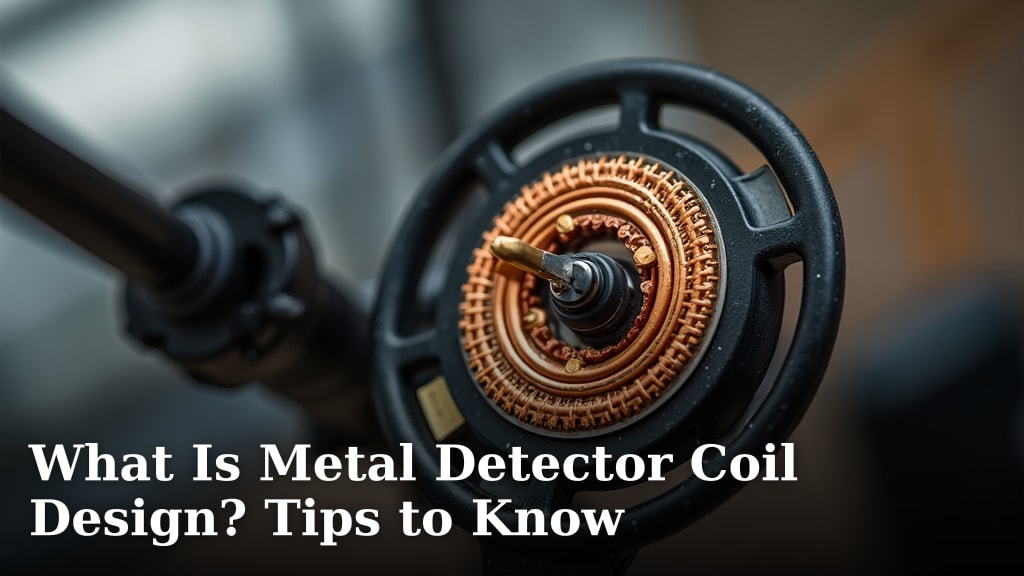
What Is Metal Detector Coil Design? Tips to Know
Metal detector coil design is all about the shape, size, and winding of wire within the coil. This design directly affects how well your detector finds different types of metal objects. A well-designed coil is key to better depth and target separation, making your hunts more successful.
We found that understanding coil design helps you choose the right detector for your needs. Different coil types are better for various conditions, like searching in trashy areas or seeking very small targets. It’s about finding the perfect balance for your specific detecting style.
- Coil design impacts depth and target ID.
- Shape, size, and winding are key factors.
- Different coils suit different ground conditions.
- Choosing the right coil enhances your finds.
Let’s take a closer look at what goes into making a great metal detector coil and what you should know before you buy.
Understanding Metal Detector Coil Design Basics
Metal detector coil design is more than just a circle of wire. It’s the heart of your detector’s ability to find things. The shape, size, and how the wire is wound all play a big role. We found that different designs excel in different searching scenarios. Your coil is how your detector “sees” underground.
How the Coil Works
Your metal detector coil works using electromagnetism. A current flows through the coil, creating a magnetic field. When this field hits a metal object, it creates a small electrical current in that object. Your detector’s coil then picks up this tiny signal. Think of it like sending out a radio wave and listening for the echo. Your coil is how your detector “sees” underground, and learning about its history can provide context.
Electromagnetic Field Generation
The coil sends out an electromagnetic field from its transmitter coil. This field reaches down into the soil. The strength and shape of this field are heavily influenced by the coil’s design. A wider field might cover more ground but could miss very small items. A tighter field might be better for pinpointing.
Receiving the Signal
As the field interacts with metal, it creates a return signal. Your detector’s receiver coil picks up this signal. The receiver coil is usually positioned to capture these returning signals effectively. The way the coils are arranged inside the housing matters.
Key Components of Coil Design
Several factors go into designing a metal detector coil. Each impacts performance in its own way. Understanding these can help you choose the best coil for your needs.
Coil Shape
Most coils are round, but you can find elliptical or even square ones. Round coils are generally good all-around performers. They offer a nice balance of depth and ground coverage. Elliptical coils can be better for sweeping through brush or narrow spaces. They also offer a different sweep pattern for ground coverage.
Coil Size
Larger coils usually detect deeper. This is because they create a wider and stronger magnetic field. However, larger coils can be heavier. They might also have more trouble separating targets close together. Small coils are lighter and better at finding tiny targets. They can also be more sensitive in trashy areas.
Coil Winding Technology
There are two main ways coils are wound: concentric and Double-D (DD). Concentric coils have a transmitter and receiver coil wound in a circular pattern, often with a central target pinpointing. DD coils have two half-moon shaped windings. They are known for excellent depth and great performance in mineralized ground.
| Type | Pros | Cons | Best For |
|---|---|---|---|
| Concentric | Good target pinpointing, generally lighter | Can struggle in highly mineralized soil | General searching, coin hunting |
| Double-D (DD) | Excellent depth, handles mineralized ground well, good target separation | Can be slightly heavier, pinpointing might be less precise | All-purpose, gold prospecting, mineralized areas |
Factors That Influence Coil Performance
Beyond the basic design, other elements affect how well your coil performs. We found that these details can make a real difference in your success.
Frequency and Its Impact
Coil frequency is measured in kilohertz (kHz). Higher frequencies are more sensitive to small, low-conductivity targets. Think tiny jewelry or small gold nuggets. Lower frequencies are better for detecting deeper, larger, or more conductive targets. This often means deeper coins or relics. Many detectors offer multiple frequencies for versatility.
Ground Mineralization and Coil Choice
The type of soil you are searching in is a big deal. Highly mineralized ground can create “noise” that tricks your detector. Double-D coils are often recommended for these conditions. They tend to handle mineralization better than concentric coils. Some detectors have ground balancing features to help with this.
Target Separation Ability
Imagine searching in an area with lots of junk metal. You want your coil to tell you if there’s a good target nearby. This is target separation. Coils designed for better separation can distinguish between closely spaced items. Smaller coils and certain DD designs often excel here.
Tips for Choosing and Using Your Coil
Selecting the right coil can greatly improve your detecting experience. It’s about matching the coil to your goals and environment.
Matching Coil to Your Detector
Not all coils work with all detectors. Always check your detector’s manual or manufacturer’s website. They list compatible coils. Using an incompatible coil can damage your detector or simply not work at all. Stick to the manufacturer’s recommendations for best results.
Common Coil Types and Their Uses
You’ll see several common types. Standard coils are usually 8-12 inches and are good all-around. Small coils (under 8 inches) are great for trashy sites and tiny targets. Large coils (over 12 inches) offer maximum depth but are less agile. Specialized coils exist for water hunting or deep relic hunting.
Coil Care and Maintenance
Your coil is your detector’s sensor, so treat it well. Avoid banging it on rocks or hard surfaces. Keep it clean after each outing. Check the coil cable for any damage. A damaged cable can cause erratic signals or no signal at all. Store your detector somewhere safe, out of direct sunlight, to protect the coil.
Quick Coil Selection Checklist
- Do you hunt in heavily mineralized soil? (DD coils often perform better.)
- Are you looking for tiny targets or just large coins? (Smaller, higher frequency coils might be best.)
- Is the area filled with iron trash? (A smaller coil with good target separation helps.)
- Do you need maximum depth for large targets? (A larger coil might be your best bet.)
- Is the detector compatible with the coil you are considering? (Always check manufacturer specs.)
- What is your budget? (Specialty coils can be more expensive.)
Conclusion
You now understand that metal detector coil design is more than just a wire loop. It’s the core of how your detector finds targets underground. We’ve seen how coil shape, size, winding technology, and even operating frequency all play a role. These factors directly impact depth, target separation, and performance in different soil conditions. By matching the right coil to your detector and your hunting style, you’ll improve your chances of a successful find. Take a moment to consider your typical hunting spots and the types of targets you seek, then make an informed coil choice.
Frequently Asked Questions
How does coil size affect metal detecting?
Generally, larger coils detect targets deeper because they create a wider magnetic field. However, larger coils can be heavier and may struggle to separate closely spaced targets. Smaller coils are lighter and better for finding tiny items or hunting in trashy areas.
What’s the difference between Concentric and Double-D coils?
Concentric coils typically offer better pinpointing and are often lighter. Double-D (DD) coils excel in mineralized ground and provide excellent depth and target separation. DD coils are shaped like two half-moons, while concentric coils have transmitter and receiver windings arranged in a circular pattern.
Should I use a different coil for mineralized soil?
Yes, it’s often recommended. Highly mineralized soil can create a lot of “noise” that can interfere with your detector’s performance. Double-D coils are usually better at handling these conditions because of their design, which helps cancel out ground interference.
Can I use any coil with my metal detector?
No, not all coils are compatible with all detectors. You must check your detector’s manual or the manufacturer’s website to see which coils are recommended. Using an incompatible coil could damage your detector or simply not work correctly.
How does coil frequency impact what I can find?
Coil frequency, measured in kHz, determines sensitivity to different targets. Higher frequencies are best for small, low-conductivity items like tiny gold nuggets or thin jewelry. Lower frequencies are better for finding deeper, larger, or more conductive targets, such as larger coins or relics.